 Save
Save My sister called me in a panic the week before her engagement dinner, asking if I could make something that looked restaurant-worthy but wouldn't stress me out in her tiny kitchen. Black currant cheesecake came to mind—I'd eaten it at a Scandinavian café months before and couldn't stop thinking about that balance of creamy richness and sharp berry tang. What I didn't expect was how therapeutic the whole process would be, from swirling that jewel-toned compote into the batter to watching her guests actually pause mid-conversation to savor each bite.
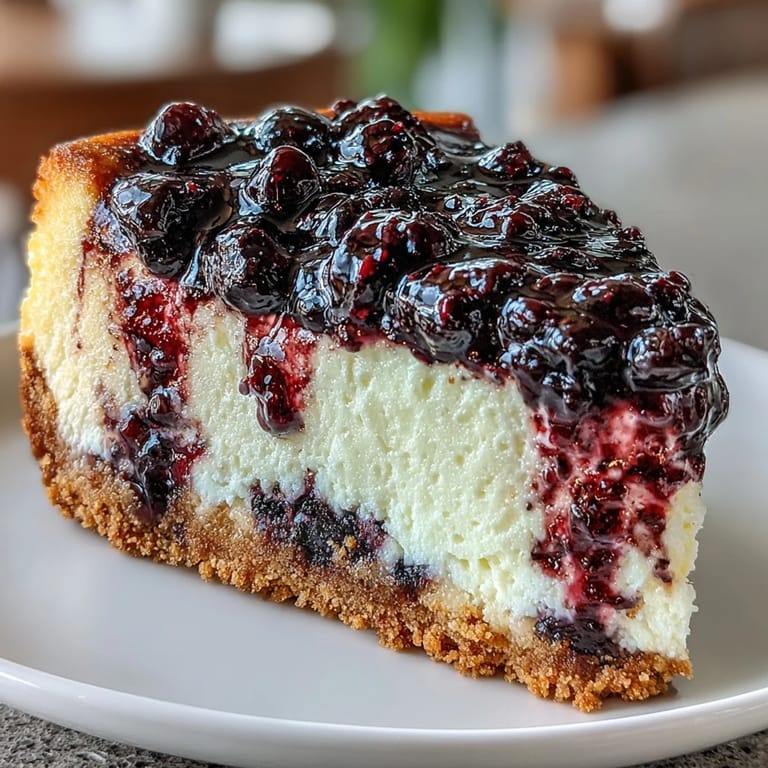
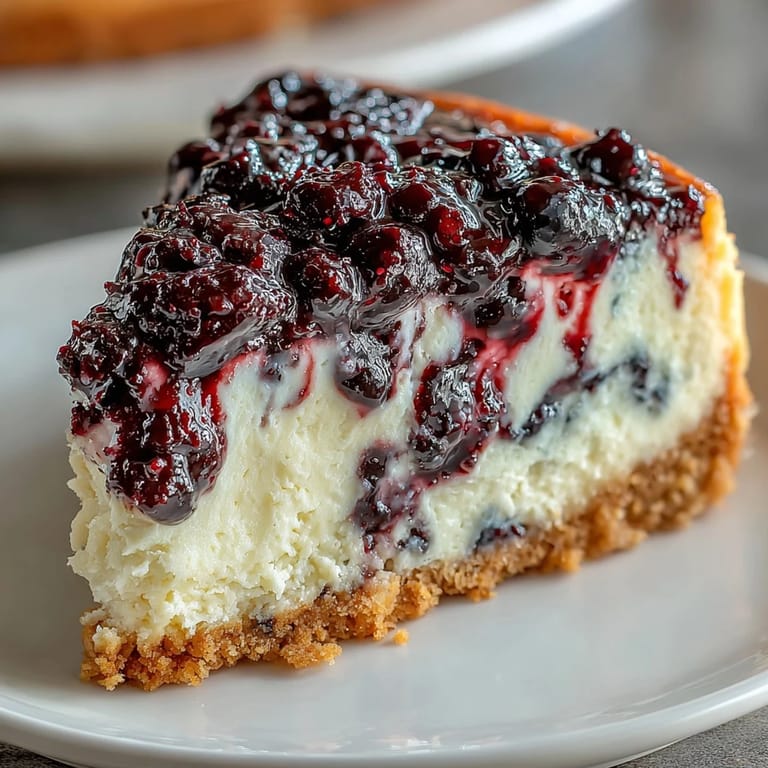
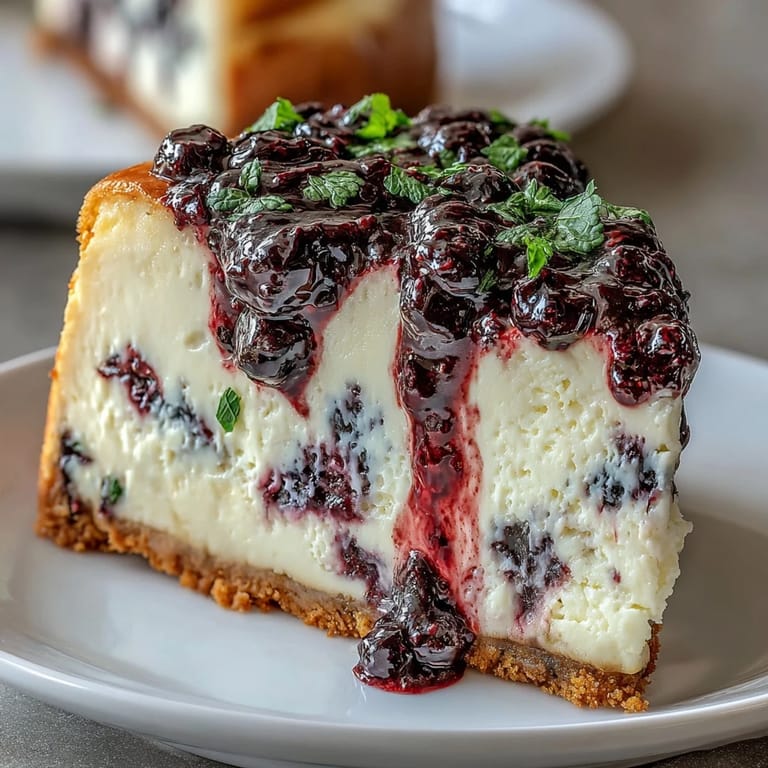
I remember the smell of that cooling cheesecake—how it transitioned from hot cream and butter to something almost floral as it reached room temperature. My mom kept opening the fridge to peek at it, even though I kept reminding her the chilling time was non-negotiable. When we finally sliced into it the next evening, the marbling was perfect, almost like brushstrokes of deep purple against ivory, and somehow that made everyone's first bite taste even better.
Ingredients
- Digestive biscuits or graham crackers, crushed (200 g): The foundation matters more than you'd think—these create a tender, slightly sweet base that won't crack or crumble when sliced, and honestly, the buttery flavor sets up the entire dessert.
- Unsalted butter, melted (80 g): Always unsalted so you control the seasoning, and melting it first helps the crust bind without getting tough from overmixing.
- Granulated sugar for crust (2 tbsp): Just enough to balance the salt without competing with what comes next.
- Black currants, fresh or frozen (250 g): The star—their tartness is what makes this cheesecake sing instead of just tasting sweet and heavy.
- Lemon juice (1 tbsp): Brightens the compote and keeps the black currants from tasting one-dimensional.
- Cornstarch slurry (1 tsp cornstarch mixed with 1 tbsp water): This is your secret weapon for achieving that glossy, spreadable compote texture without overcooking the berries.
- Cream cheese, room temperature (700 g): Cold cream cheese means lumps and a dense texture, so genuinely let it sit on the counter while you prep everything else.
- Granulated sugar for filling (200 g): Beats in with the cream cheese to create that smooth, cloud-like base.
- Large eggs, room temperature (3): Room temperature eggs incorporate more evenly and help prevent overmixing, which is the enemy of a crack-free cheesecake.
- Sour cream (180 ml): This adds that subtle tang that keeps the cheesecake from tasting cloying, and it creates a silkier texture than cream cheese alone.
- All-purpose flour (1 tbsp): A tiny amount stabilizes the filling without making it dense or cakey.
- Pure vanilla extract (2 tsp): Real vanilla is worth it here because there aren't many flavors competing for attention.
- Lemon zest (from 1 lemon): This echoes the compote and keeps the whole dessert feeling cohesive.
Tired of Takeout? 🥡
Get 10 meals you can make faster than delivery arrives. Seriously.
One email. No spam. Unsubscribe anytime.
Instructions
- Set up your stage:
- Preheat the oven to 160°C, line your 23 cm springform pan with parchment paper on the bottom, and let your cream cheese and eggs warm to room temperature on the counter—this takes about 20 minutes and genuinely changes the outcome.
- Build the crust:
- Crush your biscuits until they look like damp sand, then mix with melted butter, sugar, and salt and press firmly into the pan bottom. Bake for 10 minutes until it smells golden and toasty, then let it cool while you move forward.
- Make the compote:
- Combine black currants, sugar, and lemon juice in a small saucepan over medium heat and let them bubble away for about 5 minutes until the berries soften and release their gorgeous deep juice. Stir in your cornstarch slurry and simmer just until it thickens to a spreadable consistency, then set aside to cool completely—this step prevents it from melting into the filling.
- Create the filling:
- Beat room-temperature cream cheese with sugar until it's genuinely smooth and creamy, which takes longer than you'd think but pays off. Add eggs one at a time, beating just enough after each to combine, then fold in sour cream, flour, vanilla, lemon zest, and salt using gentle movements—this is where overmixing sneaks in and creates cracks later.
- Swirl and bake:
- Pour the filling over the cooled crust, then spoon dollops of cooled compote across the surface and drag a skewer or thin knife through it in loose patterns—don't overthink the swirls, they look more organic when you keep them simple. Place the springform pan in a larger roasting tin, pour hot water around it until it reaches halfway up the sides, and bake for 50–60 minutes until the edges look set but the very center still trembles slightly when you gently jiggle the pan.
- Cool gradually:
- Turn off the oven, crack the door open about 3 inches, and leave the cheesecake inside for 1 hour—this gradual cooling prevents the top from cracking from temperature shock. Remove it completely and let it cool to room temperature on the counter, then refrigerate for at least 4 hours, ideally overnight, before slicing.
 Save
Save Three days after my sister's dinner, she sent me a photo of the leftover cheesecake with a note saying her fiancé had eaten two slices for breakfast and asked if she could negotiate making it a birthday tradition. That moment—when a dessert becomes less about impressing people and more about just wanting to taste it again—that's when I know a recipe has actually landed.
The Black Currant Advantage
What makes black currant special compared to other berries is its balance of sweetness and acidity without being aggressive. Blueberries tend to disappear into cheesecake, and strawberries often taste one-dimensional, but black currants have this almost wine-like complexity that keeps each bite interesting. If you've never cooked with them before, this dessert is the perfect gateway because the compote lets you taste exactly what they bring to the table.
Water Bath Wisdom
The water bath is honestly the difference between a cheesecake that looks cracked and sad and one that looks professionally made. It sounds fussy, but what it actually does is surround the cheesecake with gentle, even heat so the outside doesn't set too fast while the center is still wet. The first time I skipped it thinking I was being efficient, the top split like it had been cleaved with an axe—never again.
Variations and Confidence Builders
Once you've made this recipe once, you'll realize the technique is the real skill, and the flavoring is almost infinitely flexible. I've made versions with raspberry compote when black currants weren't available, and I've experimented with adding a touch of cardamom to the filling when I was feeling adventurous. The structure stays solid; you're just swapping what goes on top or what essence you weave through the center.
- Blueberry or raspberry compote works beautifully if black currants aren't available in your area, though the flavor will be slightly less tart and complex.
- For a gluten-free version, simply substitute gluten-free biscuits in the same quantity and the crust bakes identically.
- A sprinkle of fresh lemon zest on each slice right before serving adds an extra bright note that some people find irresistible.
 Save
Save This cheesecake sits at that beautiful crossroads where it's elegant enough for a special occasion but comforting enough to make just because Thursday feels like it deserves something beautiful. Once you've experienced how that black currant tartness plays against creamy richness, you'll find yourself wanting to make it again.
Recipe FAQs
- → How do I prevent cracks on the surface?
Avoid overmixing the filling and bake the cheesecake in a water bath to maintain moisture. Also, allow it to cool gradually in the oven before refrigerating.
- → Can I substitute other fruits for black currants?
Yes, blueberries or raspberries make excellent alternatives, providing a similar sweet-tart contrast in the compote.
- → What is the purpose of the water bath during baking?
The water bath ensures even heat distribution and prevents the cheesecake from drying or cracking by maintaining moisture.
- → How long should the dessert be chilled before serving?
Chill for at least 4 hours or overnight to allow the flavors to develop and the texture to set properly.
- → Is it possible to make a gluten-free version?
Yes, using gluten-free biscuits or crackers for the crust accommodates gluten intolerance without compromising texture.