 Save
Save I'll never forget the first time I created this wreath board for a holiday dinner party—my hands were shaking a little as I arranged the cheeses and fresh rosemary around that creamy center dip. There was something magical about watching a simple platter transform into an edible work of art that drew everyone to the table before we'd even sat down. It was then I realized that the most memorable appetizers aren't always complicated; they're the ones that make people feel celebrated before they take their first bite.
I served this board at my sister's engagement party last December, and I watched her pick out a piece of brie with prosciutto while laughing with her fiancé, completely absorbed in the moment. That's when I knew—this wasn't just appetizer; it was an invitation for people to slow down, connect, and enjoy something beautiful together. The wreath shape itself seemed to bring people around the same focal point, creating this natural gathering spot that felt intimate even though there were thirty of us.
Ingredients
- Brie cheese, sliced into wedges (100 g): The star that melts slightly at room temperature—choose one that's perfectly ripe but still holds its shape, and slice it just before assembly so it doesn't dry out or lose that creamy interior
- Aged cheddar, cubed (100 g): Look for a sharp, aged variety that has those delightful crystalline bits; they add textural interest and a punch of flavor that keeps people coming back for more
- Goat cheese, cut into rounds (100 g): The tangy contrast that makes palates come alive—use a thin knife dipped in hot water between cuts for clean edges that look intentional
- Prosciutto, folded (80 g, optional): Paper-thin, salty, and dramatic—it's the ingredient that transforms this from vegetarian-friendly to something truly indulgent for meat lovers
- Salami, sliced (80 g, optional): Choose a quality cured salami; the spice and richness pair beautifully with sharp cheeses and sweet fruits
- Red grapes, halved (1 cup): The jewels of the board—their sweetness balances the saltiness of cured meats and cheese perfectly
- Green grapes, halved (1 cup): Visual contrast and a slightly different flavor note; halve them just before serving to prevent browning
- Pomegranate arils (1/2 cup): These ruby-like seeds are what make people gasp when they see the board—they're tart, beautiful, and worth the effort to extract
- Cherry tomatoes (1 cup): Halve some and leave others whole for visual variety; they bring freshness and a pop of bright acidity
- Mini cucumbers, sliced (1/2 cup): The refreshing palate cleansers that prevent cheese and meat fatigue—slice them just before arranging
- Roasted almonds (1/2 cup): The textural anchor; their nuttiness complements aged cheese and dried fruit in the most satisfying way
- Mixed olives, green and black (1/2 cup): Choose pitted if possible, or warn guests about the pits—their briny complexity is essential to the board's depth
- Dried cranberries (1/4 cup): Tart and chewy, they're the unexpected ingredient that ties everything together with their festive color
- Fresh rosemary sprigs (6–8): These aren't just decoration—guests will nibble them for their piney aroma and flavor; choose sprigs with sturdy stems
- Olive branches, washed and edible (a few small branches): Only use food-safe varieties; they create the literal wreath structure and smell incredible when guests lean in to admire the board
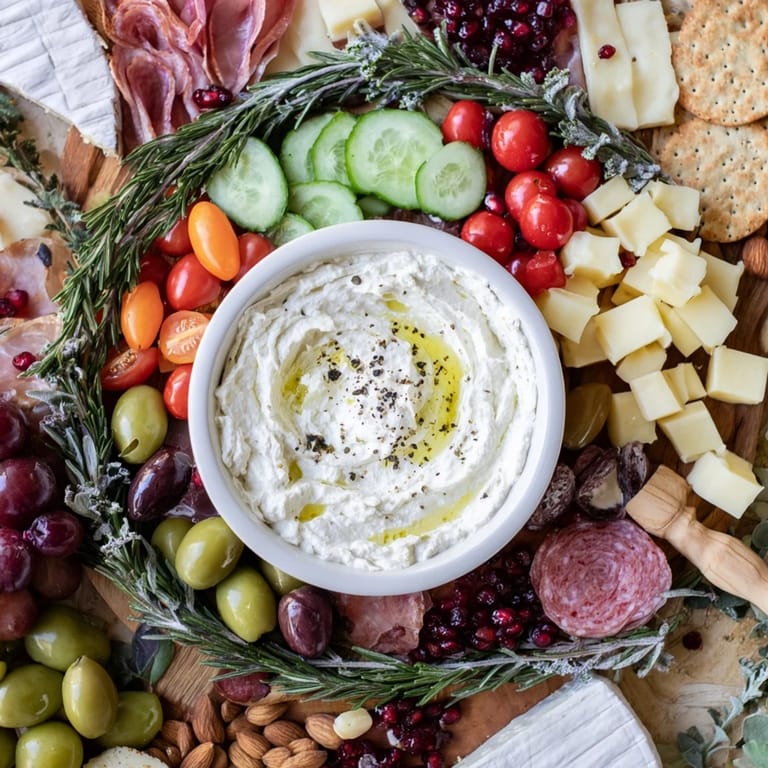
- Whipped feta dip (1 cup): The creamy anchor that brings everything together—make it yourself by blending feta with Greek yogurt and lemon, or buy quality store-made; it's the heart of the board
- Olive oil (1 tablespoon): Use your best, most flavorful oil—it's meant to be tasted, not just seen
- Freshly cracked pepper (1/2 teaspoon): Fresh cracks matter; they add visual sophistication and a gentle heat that awakens the palate
Tired of Takeout? 🥡
Get 10 meals you can make faster than delivery arrives. Seriously.
One email. No spam. Unsubscribe anytime.
Instructions
- Set the foundation:
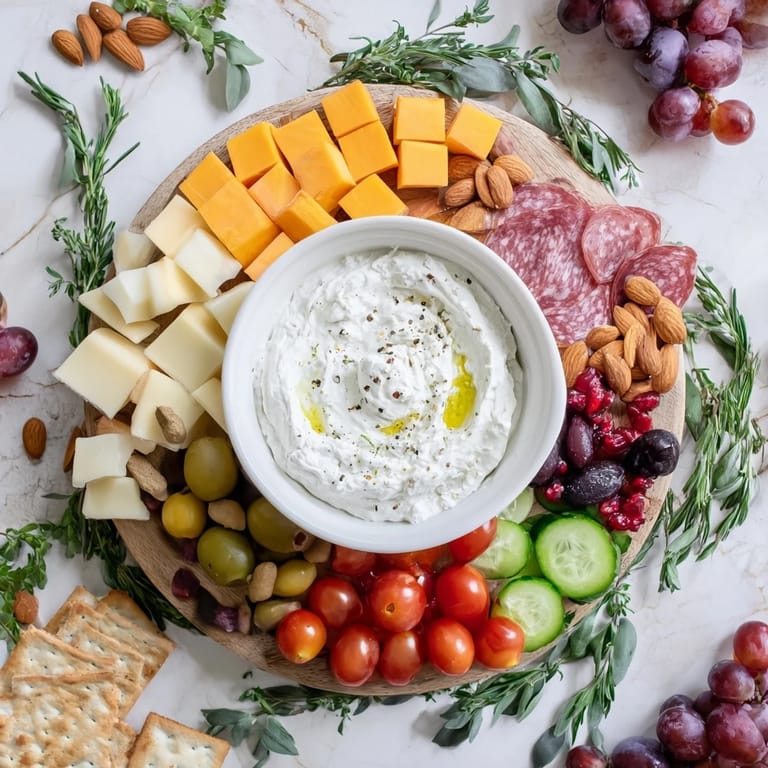
- Place a small bowl in the very center of your largest round board or platter. This bowl is your anchor—imagine it as the trunk of a tree around which everything else will grow. Fill it with your whipped feta dip, letting it mound slightly. Drizzle that beautiful olive oil over the top in a thin stream, and finish with freshly cracked pepper that catches the light. Step back and admire it; this is already beautiful.
- Create the wreath base with herbs:
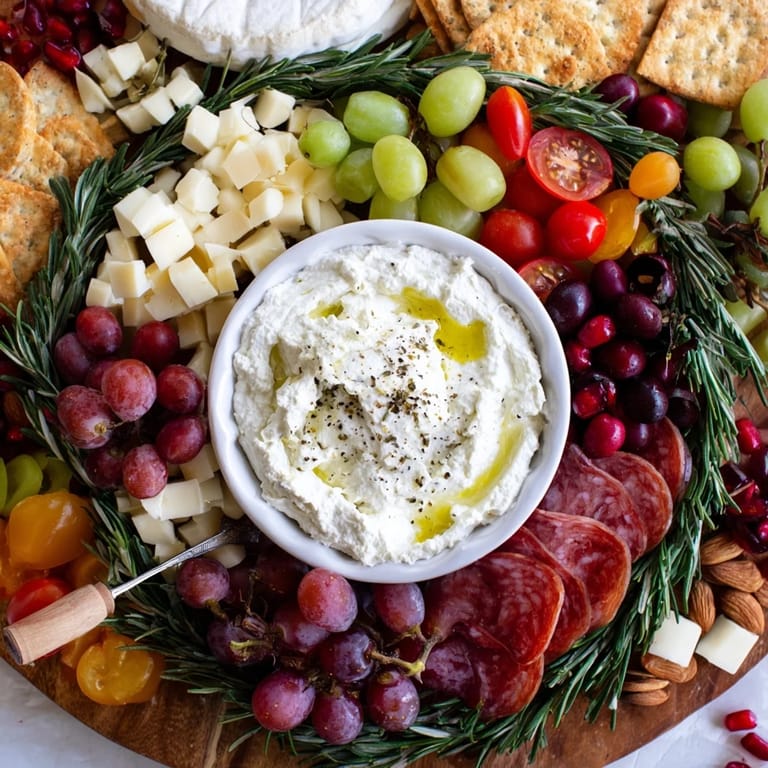
- Arrange your rosemary sprigs and olive branches in a circular shape around the bowl, angling them outward like rays of sun. They should form a loose wreath pattern—not rigid, but intentional. Tuck the stems slightly under other elements as you go, which hides the woody parts and creates an organic, gathered look. This foliage becomes the literal wreath that defines your board's shape.
- Layer the cheeses with intention:
- This is where the magic starts. Arrange your cheese wedges, cubes, and rounds around the foliage, alternating varieties in a pattern that feels balanced and colorful. Place brie next to aged cheddar next to goat cheese; let each color and shape speak. Fill gaps thoughtfully, creating an almost tessellating pattern that draws the eye around the board continuously. Leave small pockets of breathing room—a board that's too crowded loses its elegance.
- Nestle the cured meats:
- Fold or roll your prosciutto and salami into loose, sculptural shapes—think small rose buds or half-moons. Tuck them between cheese pieces, letting them cascade naturally. They're delicate and dramatic, so let them be the visual stars they are. If you're keeping this vegetarian, simply skip this step and add extra cheese or another element you love.
- Add the fresh fruits and vegetables:
- Scatter your grapes, cherry tomatoes, and cucumber slices around the board, nestling them gently among the cheeses and meats. These ingredients are the board's freshness—they should look like they've been tucked in, not strewn randomly. Let some sit on top of soft cheeses; let others rest in the negative space you've intentionally left. They should feel like a surprise discovery as guests explore.
- Scatter the final treasures:
- This is the joy of finishing a board—pomegranate arils, almonds, olives, and dried cranberries are your final flourishes. Scatter them where color is needed, where texture needs variation, where your eye says something is missing. These smaller elements act as connectors that pull the entire design together. A cluster of pomegranate arils here, a small handful of almonds there, dark olives to echo the deep rosemary greens.
- Balance and refine:
- Step back. Look at your wreath from above and from arm's length. Is one side visually heavier than the other? Does the eye know where to travel? Adjust as needed—move a cheese wedge, add more grapes to a sparse area, rotate a rosemary sprig that's pointing awkwardly. Think of it like arranging flowers; there's an art to it, but the art comes from trust and a gentle hand. You're creating visual rhythm, not rigidity.
- Serve with ceremony:
- Bring your board to the table with pride. Place good bread or crackers nearby if desired, and let guests discover the board's story as they build their own combinations. Watch them light up when they spot the pomegranate arils, or when they taste brie with rosemary. That moment when someone realizes they can combine elements in unexpected ways? That's the real magic.
 Save
Save There's something I learned that winter: people don't just come for food; they come for connection, and a board arranged with care says "I see you, I'm glad you're here" louder than any words. My friend Margaret stood at that wreath board for a solid ten minutes, just selecting ingredients and telling stories about her travels while eating—and I realized the board had done exactly what it was meant to do: it created a reason for people to linger, to talk, to be present with each other.
The Art of Board Assembly
Building a stunning board is less about following rules and more about understanding balance. Think in terms of color, texture, and flavor contrast rather than perfect geometry. Soft items like brie and goat cheese anchor the board and give crackers and bread something to rest against; hard items like aged cheddar and almonds provide visual interest and satisfy different cravings. Fresh items like grapes and tomatoes prevent palate fatigue; salty items like olives and cured meats make people thirsty and keep them mingling. The wreath shape itself creates natural flow—guests automatically circle around, discovering new combinations as they move around the board. This is intentional design in appetizer form.
Make It Your Own
This is a template, not a rulebook. In summer, I've replaced the dried cranberries with fresh cherries and added sliced peaches to the mix. In spring, I've used edible flowers and tender young herbs. The beauty of a cheese and charcuterie board is its flexibility—it's a canvas for whatever looks beautiful and tastes good to you. If you're cooking for someone with allergies or dietary restrictions, simply swap components: vegan cheese and cashew dip work beautifully, as do roasted chickpeas instead of nuts, or extra vegetables instead of cured meats. The wreath structure itself adapts to your guests and your pantry.
Pairing Suggestions & Serving Wisdom
This board is endlessly versatile, and knowing what to serve alongside elevates the entire experience. A crisp Sauvignon Blanc echoes the freshness of the fruits and herbs; a light Pinot Noir complements both cheese and cured meats without overpowering the delicate flavors; a festive sparkling wine turns this appetizer into celebration. Beyond wine, good bread—crusty sourdough, grissini breadsticks, or delicate water crackers—gives guests the vehicle they need to fully enjoy each component. I've found that offering two types of bread (one hearty, one delicate) gives everyone options. And here's a secret: set out small plates and napkins generously. People are more likely to explore boldly when they feel they can eat without mess.
- Chill your serving board and all ingredients beforehand so everything stays fresh longer
- Arrange the board no more than two hours before serving to maintain visual appeal and prevent browning of cut fruits
- Set small forks near olives, pitted or not, so guests know what to expect and can eat with grace
 Save
Save This board has become my go-to for every gathering because it works—it looks stunning, tastes delicious, and creates the exact moment I want: people standing around something beautiful, talking, tasting, discovering new flavor combinations, feeling celebrated. Make it with joy, and it will show.
Recipe FAQs
- → What cheeses work best for this wreath?
Soft cheeses like brie and goat cheese provide creaminess, while aged cheddar adds sharpness and texture variation.
- → Can I omit the meats for a vegetarian version?
Yes, simply exclude cured meats and use hummus instead of feta dip to keep it vegetarian-friendly.
- → How do I keep the wreath shape intact?
Arrange ingredients evenly around the board, layering herbs and components carefully to maintain a balanced, circular form.
- → What herbs are used for the foliage effect?
Fresh rosemary sprigs and small olive branches create a fragrant, edible greenery accent around the dip center.
- → Are there suitable wine pairings with this board?
Light wines like Sauvignon Blanc, Pinot Noir, or sparkling varieties complement the flavors and enhance the festive feel.
- → Can I add other fruits for color?
Yes, starfruit slices or kiwi can be added for extra vibrant hues and a pleasant tartness.