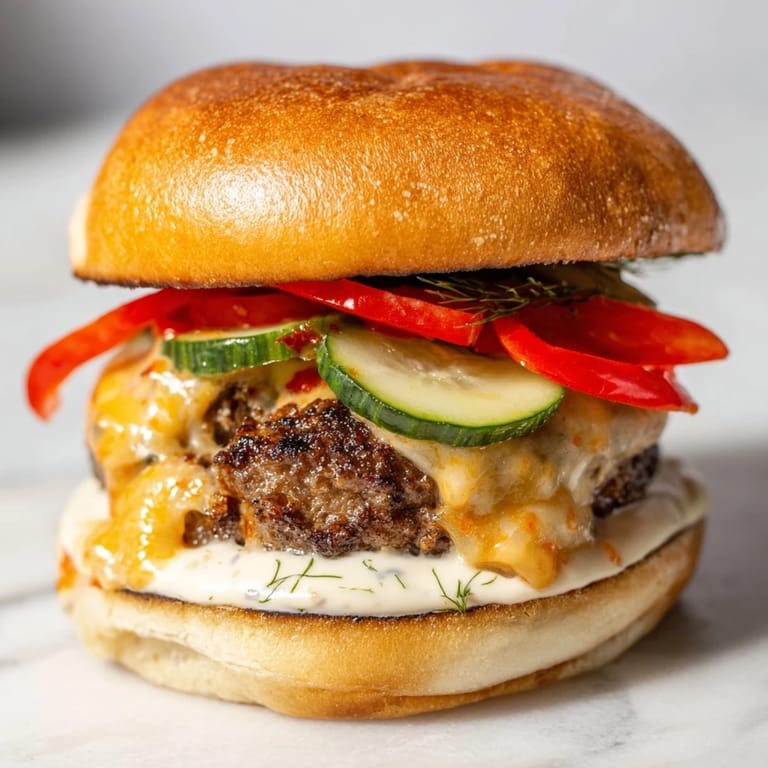
 Save
Save The first time I made these burgers was on a sweltering afternoon when my friend arrived with a craving for something bold but not overwhelming. I had just discovered pepper-jack cheese at the market and wanted to test it against something cool and tangy. That fire-and-ice concept clicked instantly—the heat builds, then the yogurt dip sweeps in like a rescue. Now whenever someone says they want spicy food, this is the first thing I think of.
I remember my sister taking a huge bite and her face doing this comical transformation—shock, then delight as the spice hit, then pure satisfaction when she got a forkful of that creamy dip. She made me promise to write down exactly how I built it because she wanted to recreate it at home.
Ingredients
- Ground beef: Use about 500g for four generous patties; keep it cold and handle it minimally so the burgers stay tender and juicy.
- Red chili pepper: One small one finely chopped distributes the heat evenly without creating surprise pockets of fire.
- Smoked paprika: A half teaspoon adds depth and a subtle smokiness that echoes whatever heat source you're cooking with.
- Ground cumin: A quarter teaspoon is enough to make people wonder what's making this taste so complex.
- Pepper-jack cheese: Four slices melt beautifully and their inherent spice layer doubles down on the theme.
- Cucumber: Slice it thin so it stays crisp and contributes a cooling crunch between every layer.
- Red bell pepper: Thinly sliced strips add color and a sweet vegetal note that balances the heat.
- Greek yogurt: Plain yogurt is essential here; the tang and coolness are what make this burger work.
- Fresh dill: Two tablespoons chopped fresh is worth seeking out; it brightens the entire dip with an unexpected herbal note.
- Lemon juice: One tablespoon wakes up the yogurt and prevents it from tasting flat.
Tired of Takeout? 🥡
Get 10 meals you can make faster than delivery arrives. Seriously.
One email. No spam. Unsubscribe anytime.
Instructions
- Build the patty base:
- Combine your ground beef with the chopped chili, paprika, cumin, salt, and pepper in a bowl. Handle it gently and shape four equal patties; overworking the meat makes them dense instead of tender. Let them rest while you prepare everything else.
- Get the grill ready:
- Heat your grill or skillet over medium-high heat until it's properly hot; a drop of water should sizzle immediately. This creates that nice crust without cooking the inside to death.
- Cook the patties:
- Place each patty on the heat and resist the urge to poke it. Four to five minutes per side gets you to that perfect done-ness where the cheese can melt during the final minute.
- Melt the cheese:
- Lay a slice of pepper-jack on each cooked patty and cover the skillet or grill loosely for about sixty seconds until it's glossy and soft.
- Mix the yogurt dip:
- While the patties are cooking, combine your Greek yogurt with the fresh dill, lemon juice, minced garlic, salt, and pepper. Taste and adjust—you want it herbaceous and bright, not bland.
- Toast the buns:
- A light toasting on the grill or skillet keeps them from getting soggy and adds a gentle warmth that contrasts the cool dip.
- Assemble with intention:
- Spread yogurt dip on the bottom bun, layer cucumber slices, place your cheesy patty on top, add the red bell pepper strips, then lettuce or red onion if you're using them. Cap it with the top bun and serve immediately with extra dip on the side.
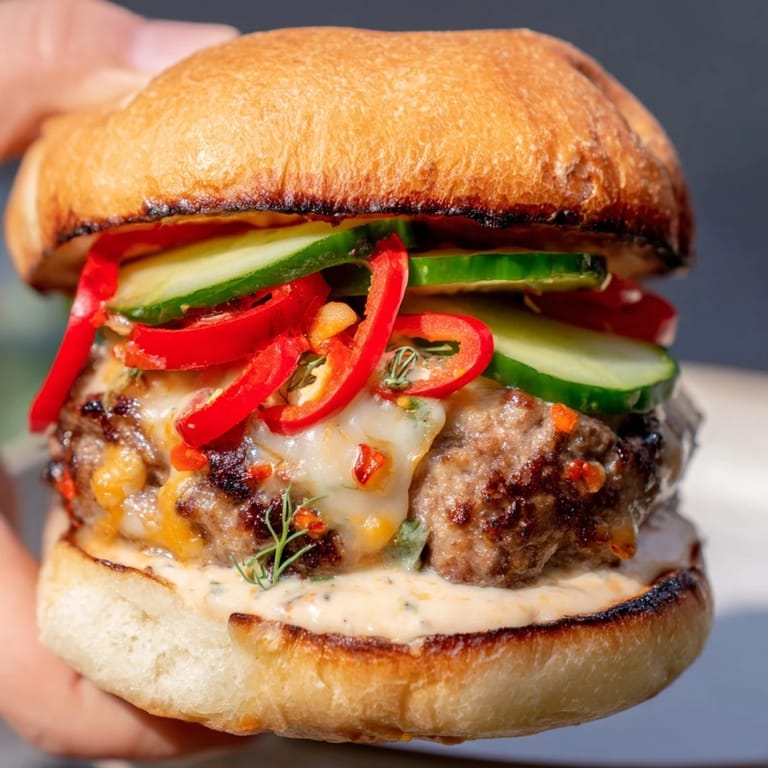 Save
Save What surprised me most was how this burger became a conversation starter. People who usually avoid spicy food found themselves coming back for another because the yogurt dip wasn't just a topping—it was a genuine part of the experience, not an afterthought.
The Heat and Cool Philosophy
This burger exists because of contrast. The smoked paprika, cumin, and fresh chili create a warming, layered heat that builds slowly rather than attacking your palate all at once. The moment that spice peaks, you get the relief of cool cucumber and that herbaceous yogurt dip. It's almost like a conversation between flavors—the burger speaks first, then the dip answers back. That back-and-forth is what makes it memorable instead of just hot.
Building Your Dip Right
The yogurt dip is easy to mess up if you treat it like an afterthought. Fresh dill is non-negotiable because dried dill tastes like old paper. The lemon juice keeps it bright instead of heavy, and the garlic should be minced fine so it distributes evenly. A lot of people skip tasting and adjusting, then wonder why their dip feels flat. Spend thirty seconds getting it right; it makes the entire burger better.
Variations That Work
This recipe welcomes tinkering. If you want more fire, add minced jalapeño to the patty mix or drizzle hot sauce on the assembled burger. For a lighter version, ground turkey works beautifully, or swap in plant-based mince and skip the cheese for a vegetarian version that's just as satisfying. The core idea—spicy meat, cooling yogurt, crisp vegetables—stays strong no matter what you adjust.
- Ground turkey cooks faster than beef, so watch for that and don't overcook it.
- If you go vegetarian, a well-seasoned plant-based patty holds its shape better than you might expect.
- The yogurt dip works as a dipping sauce for virtually any burger or even as a condiment for grilled vegetables.
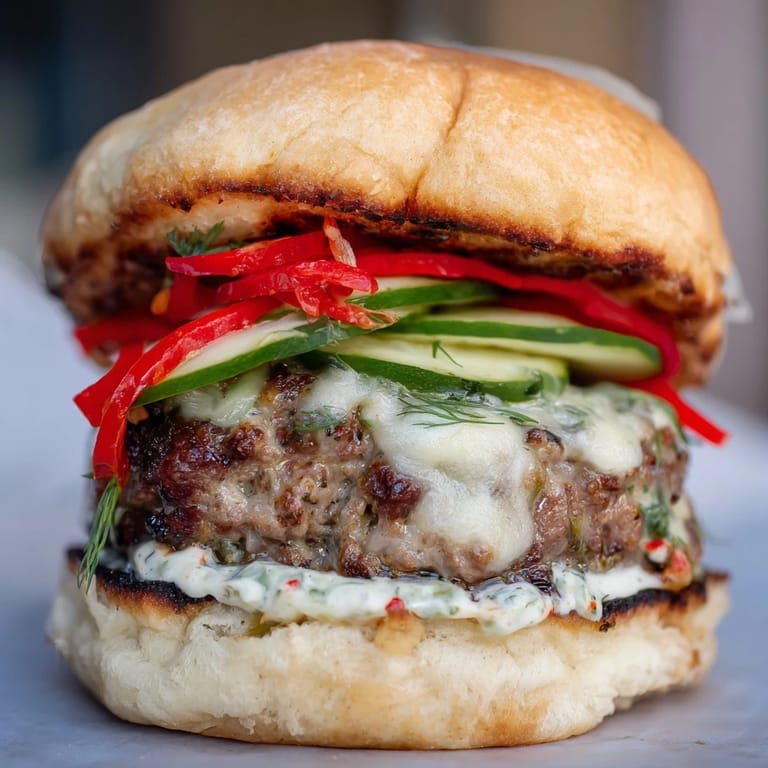 Save
Save This burger reminds me why I love cooking—it's about creating moments where flavors surprise and delight people you care about. Make these once, and someone will ask you to make them again.
Recipe FAQs
- → How can I add extra heat to the burger?
Incorporate jalapeños or a dash of hot sauce into the patties for an additional spicy kick.
- → Can I prepare a vegetarian version?
Yes, substitute ground beef with plant-based mince or ground turkey for a lighter or vegetarian option.
- → What type of cheese is used for melting on the patties?
Pepper-jack cheese is used; it melts well and complements the spicy flavors.
- → How is the cooling yogurt dip made?
The dip combines plain Greek yogurt with fresh dill, lemon juice, garlic, salt, and pepper, offering a tangy and refreshing contrast.
- → Are there gluten-free alternatives for this dish?
Yes, gluten-free buns can be used to accommodate gluten sensitivities.
- → What cooking tools are needed?
A grill or skillet, mixing bowl, spatula, knife, and cutting board are required for preparation.