 Save
Save The first time I assembled a gilded cheese platter, I was nervous—not about the cheeses, which I'd handled a hundred times, but about those fragile sheets of edible gold leaf sitting in my palm. A friend was hosting her engagement party, and she'd asked for something that looked like it belonged in a luxury magazine. I remember standing in my kitchen, tweezers trembling slightly as I peeled back the tissue-thin gold, watching it catch the afternoon light and thinking: this is ridiculous and magical all at once. That platter became the conversation starter of the evening, and I realized that sometimes the most elegant dishes require almost no cooking—just intention and a willingness to play with light.
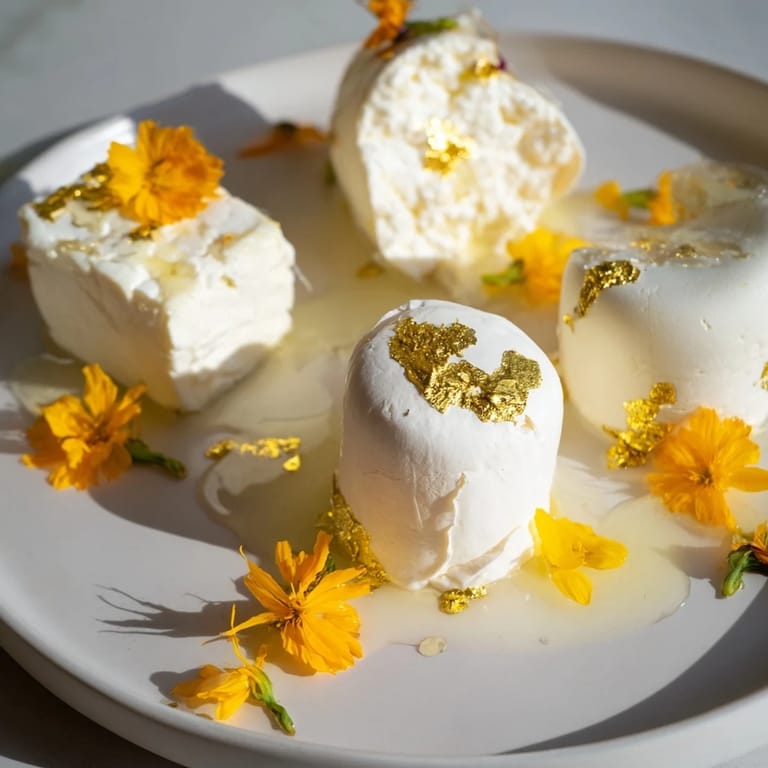
I made this platter for a small birthday dinner during the greyest part of winter, and it felt like bringing sunshine indoors. My guests actually gasped when they saw it—not because it was complicated, but because someone had taken the time to make something feel special just for them. The yellow flower petals scattered across the white cheeses looked like tiny moments of joy, and that's when I understood: this recipe isn't really about cheese. It's about saying you matter without having to say anything at all.
Ingredients
- Goat cheese log (chèvre), 150 g: Tangy and dense, it's the anchor of the platter and holds gold leaf beautifully without crumbling.
- Triple-cream brie, 150 g: Impossibly buttery, this is the show-off cheese that makes people close their eyes when they taste it.
- Fresh ricotta, 150 g: Mild and creamy, it provides contrast and doesn't compete for attention—the supporting actor that makes everyone shine.
- Feta, block-style and drained, 150 g: Salty and crumbly, it adds texture and a savory note that keeps the platter from feeling one-dimensional.
- Edible gold leaf, 1–2 sheets: Source from a reputable supplier and store in a cool, dry place; it's surprisingly durable once you handle it with clean, dry tweezers.
- Yellow edible flower petals, 2 tbsp: Marigold, calendula, and chrysanthemum all work; they add visual warmth and the faintest floral hint without overwhelming the cheese.
- Honey, 2 tbsp (optional): A light drizzle bridges sweet and savory, especially around the goat cheese.
- Fresh microgreens or herbs (optional): A small handful of peppery microgreens or delicate herb sprigs adds a final textural note.
- Baguette, thinly sliced: Toast lightly if you prefer crunch, or serve at room temperature for a softer base.
- Assorted crackers: Choose a mix of textures and flavors—some plain, some seeded—to complement different cheeses.
Tired of Takeout? 🥡
Get 10 meals you can make faster than delivery arrives. Seriously.
One email. No spam. Unsubscribe anytime.
Instructions
- Start with a clean canvas:
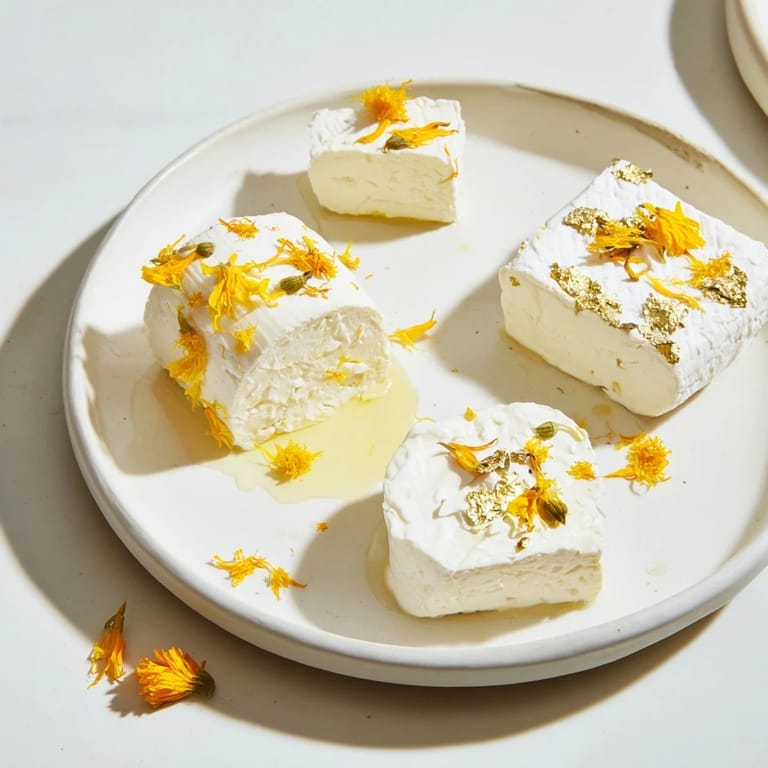
- Choose a platter that's large enough to let each cheese breathe—crowding ruins the elegance. Arrange the four cheeses in a loose arc or scattered pattern, leaving space around and between them so they don't look cramped.
- Apply the gold with intention:
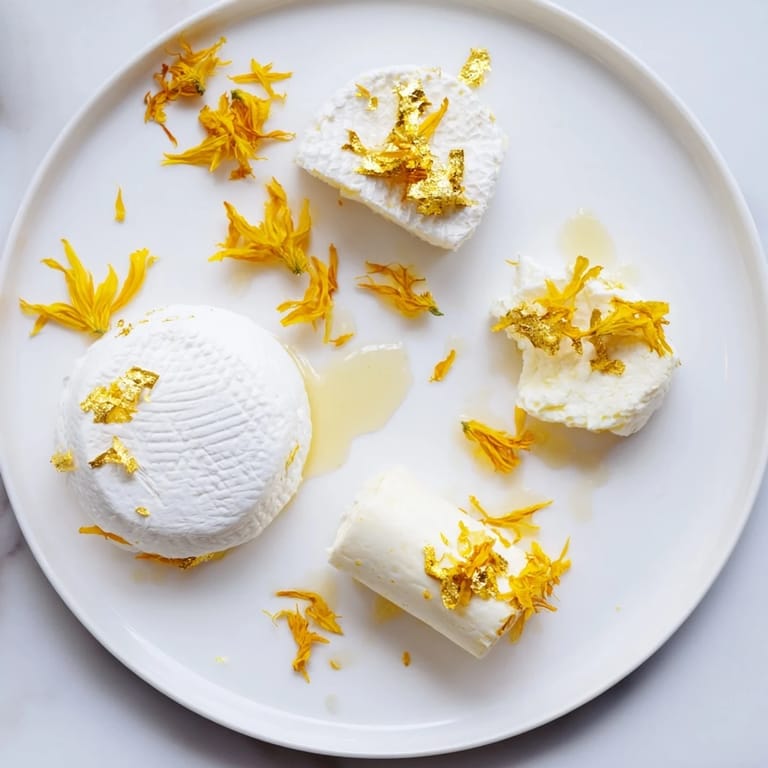
- Use clean, completely dry tweezers to pick up tiny pieces of gold leaf and gently press them onto the surface of each cheese. Work slowly; the leaf is delicate, but once it touches the cheese, it stays beautifully in place. Cover about one-third to one-half of each cheese's surface for a luxe look without overdoing it.
- Scatter the flowers:
- Tear or separate the edible flower petals and distribute them randomly over the cheeses and across the platter. Some will land on the gold, some on the bare cheese, some in the empty spaces—let it feel organic and unplanned.
- Finish with warmth and brightness:
- If using honey, drizzle a small amount around the goat cheese or brie in thin threads. Add a small handful of microgreens or fresh herbs wherever they look good to you.
- Complete the picture:
- Arrange warm baguette slices and a selection of crackers around the cheeses, giving them their own space so people can reach everything easily. Step back and look—you've just created something that feels like a celebration.
 Save
Save What moved me most was realizing that this platter works because it honors the cheeses themselves. The gold and flowers aren't masking anything—they're celebrating what's already there: the simplicity and integrity of good cheese. That's when cooking stops being about impressing people and starts being about love.
Choosing Your Cheeses Wisely
The magic of this platter lives in the balance of your four cheeses. Each one brings a different texture and flavor story, so choose blocks and logs that look fresh and haven't been sitting around. Goat cheese should be creamy without being grainy, brie should smell rich but not ammonia-like, ricotta should feel light and cloud-soft, and feta should crumble cleanly. Visit a good cheese counter if you can; a knowledgeable person there can point you toward cheeses that are at their peak. Cold cheeses are harder to work with, so take them out about 20 minutes before you start arranging—they'll be easier to handle and taste better too.
Timing and Temperature Matter
Assemble this platter no more than 2–3 hours before serving, which gives you enough time without letting the cheeses dry out or the gold leaf tarnish. If you're making it earlier, cover it loosely with plastic wrap and keep it in a cool part of your kitchen or refrigerator, pulling it out 15 minutes before guests arrive so the cheeses can soften into their best selves. The moment that gold leaf catches light and people see it for the first time is worth protecting—it's your moment to shine.
Serving Suggestions and Pairings
This platter is designed for moments that feel special, so think about what you're celebrating and what you're serving alongside it. Chilled champagne or crisp white wine is the obvious choice, but you could also pour something more unexpected—a dry rosé, a light sparkling cider, or even a delicate herbal tea if your guests prefer it. The yellow flower petals suggest spring or sunshine, so if you're serving this in winter, lean into the warmth by offering it with hot bread or warm spiced nuts. Some of the best versions I've made included thin slices of pear or candied walnuts nestled between the cheeses, adding sweetness and texture without competing for attention.
- Offer small cheese knives or butter spreaders so guests can carve their own portions respectfully.
- Keep crackers and bread within arm's reach so no one has to reach across the platter.
- Set out small plates nearby so people can build their perfect bite without standing around holding food.
 Save
Save This recipe taught me that sometimes the most elegant thing you can do is simply show up and arrange beautiful things with care. The Gilded Lily isn't about complexity—it's about presence.
Recipe FAQs
- → What cheeses are recommended for the platter?
Use a variety of creamy white cheeses such as goat cheese (chèvre), triple-cream brie, fresh ricotta, and feta for balanced textures and flavors.
- → How is the edible gold leaf applied?
Using tweezers or a fine brush, carefully place small pieces of edible gold leaf onto the cheese surface to create a delicate, shimmering effect.
- → Are the flower petals safe to eat?
Only use flowers labeled edible and sourced from reliable suppliers to ensure safety and freshness.
- → Can I substitute the bread for gluten-free options?
Yes, thinly sliced gluten-free baguette or crackers can be used to accommodate dietary needs without compromising taste.
- → What are good pairing suggestions?
Complement this elegant board with chilled Champagne or a crisp Sauvignon Blanc to enhance the overall experience.