 Save
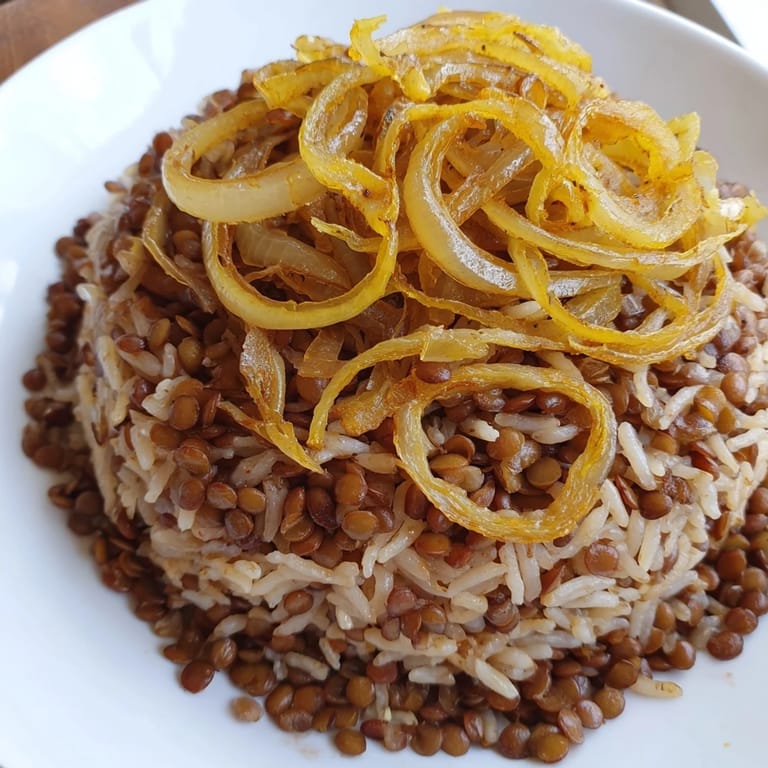
Save My aunt's kitchen in Beirut always smelled like caramelizing onions on Sunday afternoons, and mjadra was the reason why. Years later, I finally asked her for the recipe, expecting something complicated, but she laughed and said it was the simplest thing she made—just lentils, rice, and patience with the onions. That first time I made it myself, I understood; the magic wasn't in rare ingredients or difficult technique, it was in letting time do the work. Now whenever I cook this, that kitchen comes back to me in the steam rising from the pot.
I brought mjadra to a potluck once, expecting it to sit untouched while everyone fawned over fancier dishes. Instead, it disappeared first, and someone asked me the next day if I'd make it for their dinner party. That's when I realized this dish had something that couldn't be faked—genuine warmth in a bowl, the kind that makes people ask for seconds without thinking.
Ingredients
- Brown or green lentils (1 cup): These hold their shape beautifully and have an earthy flavor that balances the sweetness of the onions; rinse them well but don't soak.
- Long-grain rice like basmati (¾ cup): The key to fluffy, separate grains is rinsing until the water runs clear, which removes excess starch and prevents mushiness.
- Water or vegetable broth (4 cups): Broth adds depth, but water lets the spices and onions shine; use whichever feels right to you.
- Olive oil (5 tablespoons total): Good quality oil matters here since it's a main flavor player; I use Greek or Lebanese oil when I can find it.
- Ground cumin, allspice, and cinnamon (1 teaspoon, ½ teaspoon, ½ teaspoon): This warm spice blend is what makes mjadra distinctly Lebanese, so don't skip or substitute; buy whole spices if possible and grind them yourself for better flavor.
- Large yellow onions (3): The sweetness develops as they break down over heat, turning almost jammy; don't rush this step.
- Bay leaf, salt, and black pepper: The bay leaf adds subtle depth and is worth keeping in until the very end.
Tired of Takeout? 🥡
Get 10 meals you can make faster than delivery arrives. Seriously.
One email. No spam. Unsubscribe anytime.
Instructions
- Start the foundation:
- Heat olive oil in a large saucepan over medium heat, then add the rinsed lentils and bay leaf. Stir for about 2 minutes so the lentils get lightly toasted and smell nutty.
- Build the base:
- Pour in your liquid and bring it to a rolling boil, then turn the heat down and let it simmer uncovered for 15 minutes. You'll see the lentils soften and the liquid reduce slightly.
- Coax magic from the onions:
- While the lentils cook, heat olive oil in a large skillet over medium-low heat and add your thinly sliced onions with a pinch of salt. This low, slow approach is non-negotiable; stir them every few minutes as they gradually turn golden, then amber, then deep bronze. This takes 25 to 30 minutes, and your kitchen will smell unbelievable.
- Marry the grains:
- Once the lentils have had their 15 minutes, add the rinsed rice along with the cumin, allspice, cinnamon, salt, and pepper. Stir well so everything is evenly distributed.
- Finish with patience:
- Cover the saucepan and reduce heat to low, simmering for 20 to 25 minutes until the rice is tender and the liquid is absorbed. If it looks dry before the rice is done, add a splash of water.
- Compose and serve:
- Remove the bay leaf and fluff everything with a fork to separate the grains. Taste and adjust salt and pepper, then transfer to bowls and crown each one generously with caramelized onions.
 Save
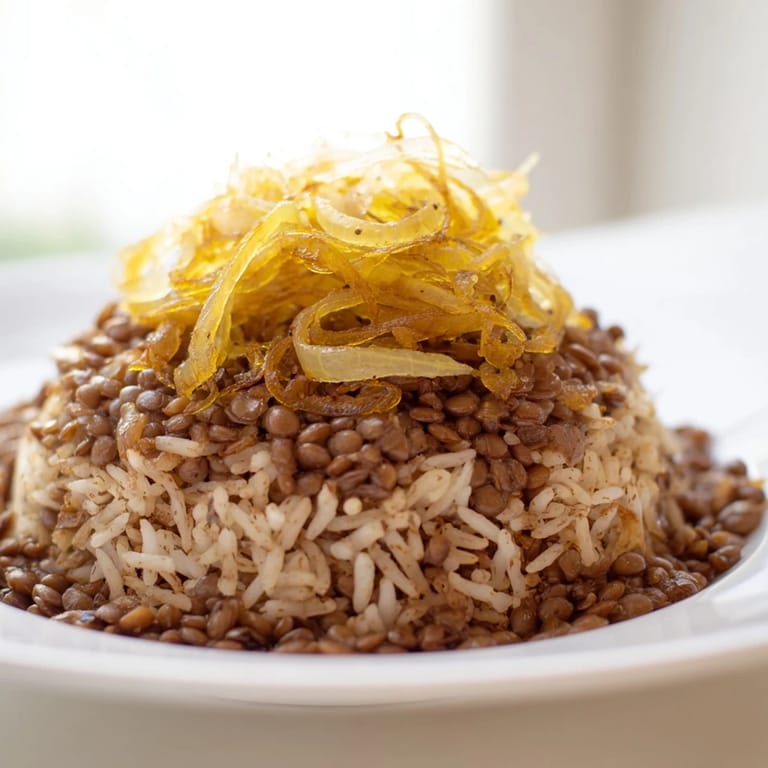
Save There's a moment toward the end of cooking when you lift the lid and the steam hits your face, and you know it's going to be good. My daughter walked into the kitchen during that exact moment once, and without tasting anything, she said it smelled like home. That's what mjadra does—it tastes the way a place feels.
The Story Behind the Spices
Lebanese cuisine doesn't shout; it whispers with layers. The cumin brings warmth, the allspice adds a subtle sweetness that echoes the caramelized onions, and the cinnamon ties everything together with an unexpected comfort that makes you pause and notice it. I once made mjadra without the cinnamon to save time, and the whole thing felt flat and forgettable. Now I understand that these three spices together are what separate this dish from a simple lentil rice bowl.
Why Caramelization Takes Time
Onions contain natural sugars, and caramelization is the process of breaking those sugars down over low, steady heat into something deeper and more complex. It can't be rushed or it becomes bitter instead of sweet. I learned this the hard way by cranking the heat, thinking I could save 15 minutes. What I got was burnt edges and regret. Now I set a timer and stir every few minutes, letting the transformation happen naturally. The reward is a sweet, almost jammy layer that makes every spoonful of mjadra sing.
Serving and Storing
Mjadra is delicious hot, but it's equally wonderful at room temperature, which makes it perfect for lunch the next day or taking to a picnic. Some people serve it with plain yogurt spooned on top, though you'd skip that if you're keeping it vegan. A side of fresh tomato and cucumber salad or tangy pickles cuts through the richness beautifully.
- Leftovers keep refrigerated for up to 4 days and actually taste better the next day as flavors meld.
- Reheat gently with a splash of water if needed, or eat cold straight from the fridge.
- If you want a creamier texture, substitute red lentils and reduce the cooking time by about 5 minutes.
 Save
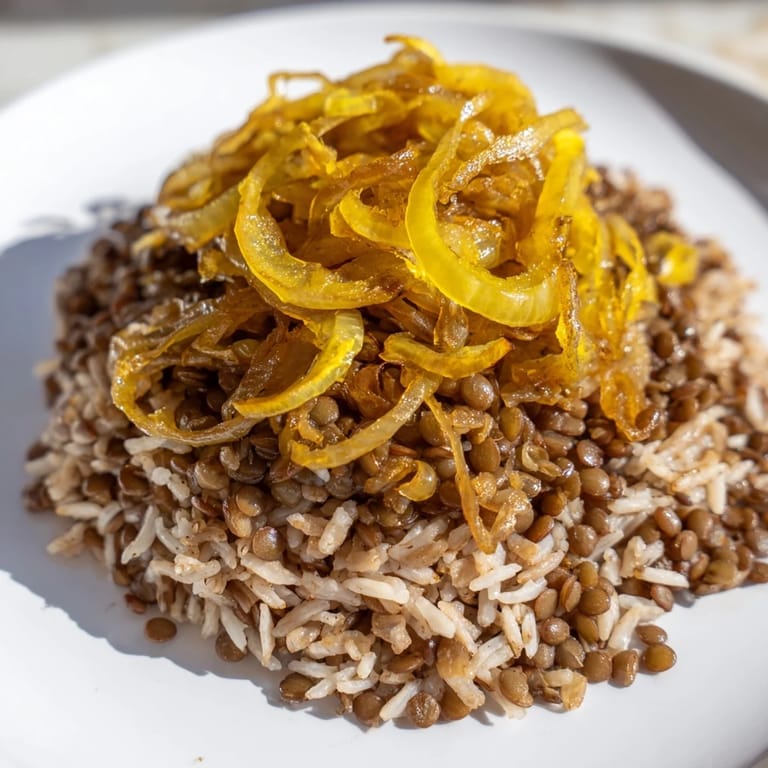
Save This recipe is proof that the best food doesn't need to be complicated, just thoughtfully made. Make it once, and you'll understand why it's survived generations.
Recipe FAQs
- → What type of lentils work best for this dish?
Brown or green lentils are preferred for their firm texture and ability to hold shape during simmering.
- → How can I achieve perfectly caramelized onions?
Cook onions slowly over medium-low heat with olive oil and a pinch of salt, stirring often, until deeply golden and sweet, about 25–30 minutes.
- → Can I substitute the rice with another grain?
Long-grain basmati rice is ideal for its fluffiness, but jasmine or other aromatic rice varieties can be used with adjusted cooking times.
- → How do the spices contribute to the flavor profile?
Cumin, allspice, and cinnamon provide warm, earthy, and subtly sweet notes that enhance the lentils and rice combination.
- → Is this dish suitable for special diets?
Yes, it is naturally vegan and gluten-free, making it accessible for various dietary preferences.