 Save
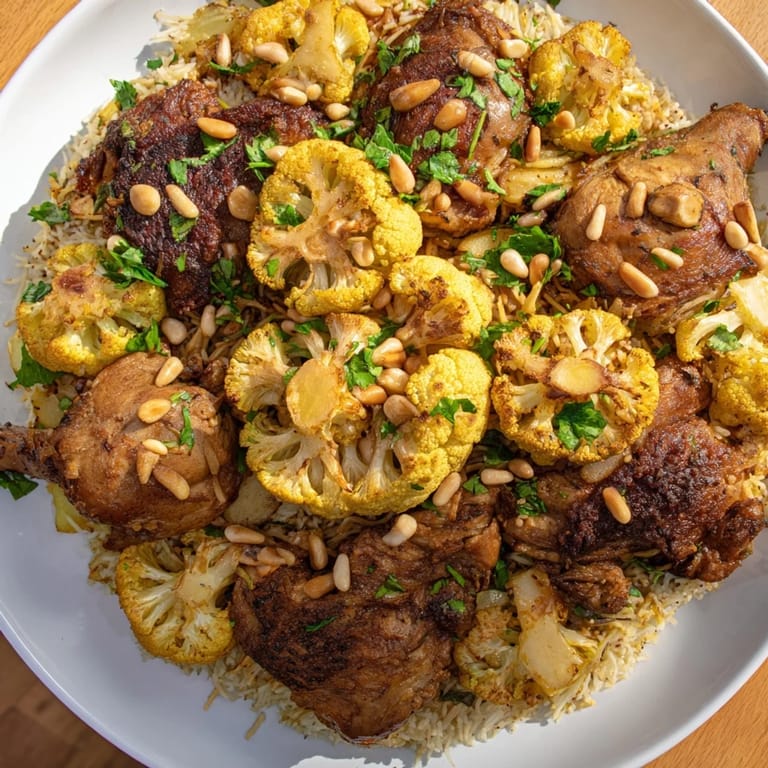
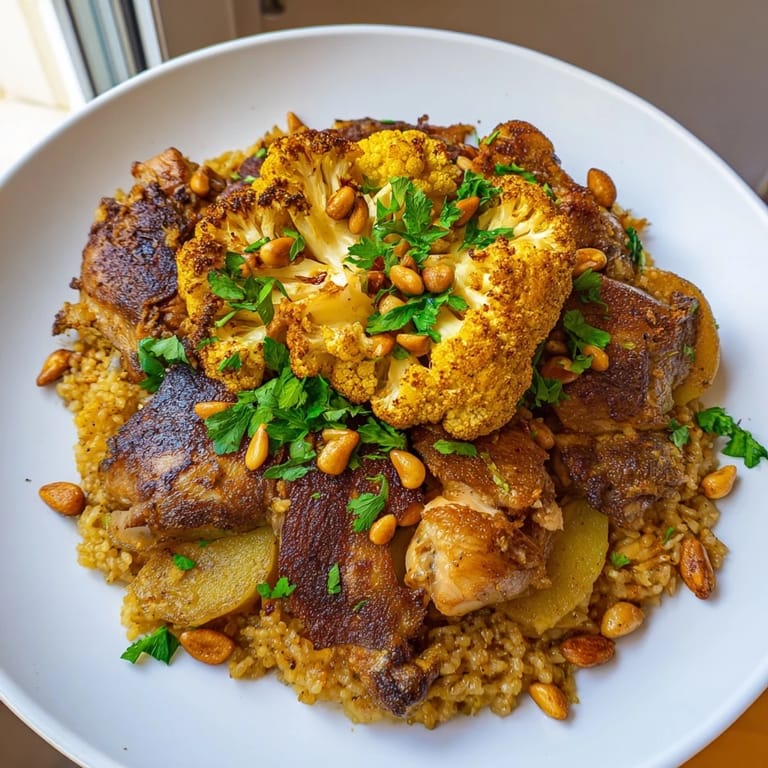
Save The first time I watched my neighbor invert a pot of maklouba onto a platter, I held my breath. This Palestinian dish is pure theater: fragrant rice, tender chicken, golden vegetables all layered together, then flipped with one decisive motion to emerge as a stunning, aromatic dome. It felt like magic, but really it's just patience and a heavy pot. Now I understand why families gather around the moment of the flip, why it matters so much to get this right.
I made this for my cousin's family the first time she came back from abroad, and the moment we flipped the pot and it released perfectly onto the platter, everyone cheered. Her eyes got misty because it tasted exactly like home. That's when I realized this dish isn't just food—it's a way of saying 'welcome back' without words.
Ingredients
- Bone-in chicken (1.2 kg, legs and thighs): Bone-in pieces stay juicy and add deep flavor to the broth; they're also easier to layer than a whole bird cut up.
- Basmati rice (2 cups): Long, delicate grains that stay separate and soak up every bit of spiced broth without clumping.
- Cauliflower florets (1 large head): Golden and crispy after frying, they create pockets of sweetness and texture against the savory rice.
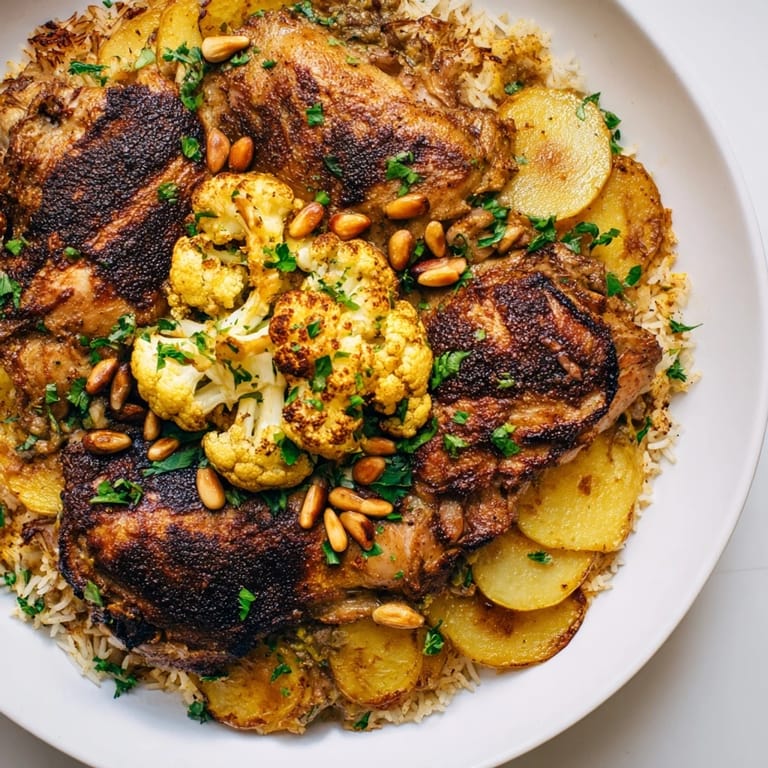
- Potatoes (2 medium, sliced): These go on the bottom and form a slightly crispy base that keeps the whole structure from sticking.
- Large onion (sliced): Translucent and deeply caramelized, it mellows the spices and adds gentle sweetness to the broth.
- Ground cumin (2 teaspoons): Earthy and warm, this is the backbone of the spice blend.
- Ground coriander (2 teaspoons): Bright and slightly citrusy, it balances the heavier spices.
- Ground cinnamon (1½ teaspoons): Just enough to add warmth without making the dish taste like dessert.
- Ground turmeric (1 teaspoon): Adds color, earthiness, and a subtle bitterness that deepens the overall flavor.
- Ground allspice (½ teaspoon): A secret whisper of clove, nutmeg, and cinnamon all at once.
- Ground cardamom (½ teaspoon): Floral and aromatic, this is what makes people pause and ask what that incredible smell is.
- Bay leaves (4): These steep slowly in the broth and anchor all the spices together.
- Chicken stock or water (5 cups): Homemade stock makes a richer dish, but water works beautifully too.
- Pine nuts or slivered almonds (¼ cup, toasted): Scattered on top, they add a delicate crunch and nutty richness.
- Fresh parsley (¼ cup, chopped): A bright green finish that cuts through the richness and makes the dish feel alive.
Tired of Takeout? 🥡
Get 10 meals you can make faster than delivery arrives. Seriously.
One email. No spam. Unsubscribe anytime.
Instructions
- Prepare the rice foundation:
- Rinse your rice under cold running water until the water runs clear, then soak it in salted water for 30 minutes. This removes excess starch and helps each grain cook independently. Drain it well before you layer it into the pot.
- Build the flavor base with chicken:
- Heat olive oil in your large pot over medium-high heat. Season chicken with salt and pepper, then brown it on all sides until golden—this takes about 6 minutes and creates layers of flavor. Remove it and set aside.
- Bloom the spices:
- In the same pot, soften your sliced onion until it turns translucent and sweet. Add all your spices and stir gently for a minute so they release their oils and perfume the oil. Return the chicken, pour in stock or water, bring it to a boil, then drop the heat low and let it simmer for 20 minutes.
- Crisp the vegetables:
- While the chicken cooks, heat vegetable oil in a separate deep pan. Fry your potato slices and cauliflower florets in batches so they have room to turn golden and crispy. Drain them on paper towels so they stay crunchy.
- Layer with intention:
- Remove the chicken from the broth and reserve the liquid. In your heavy-bottomed pot, arrange potato slices flat on the bottom—they're your protective layer. Layer chicken pieces next, then cauliflower, then your drained rice on top. Press gently so everything nestles together.
- Steam everything into unity:
- Pour reserved broth over the rice until it just covers it (usually 4 to 5 cups). Place the pot over medium heat and wait for the liquid to bubble at the edges. Lower the heat as far as it will go, cover the pot tightly with a lid, and leave it undisturbed for 35 to 40 minutes. Resist the urge to peek.
- Let it rest and settle:
- Turn off the heat and let the pot sit for 10 to 15 minutes. This final rest allows the rice to firm up slightly and makes inverting safer and more elegant.
- The dramatic flip:
- Take a large serving platter that's bigger than the mouth of your pot. Remove the lid, take a breath, place the platter firmly on top, hold both pot and platter, and flip it in one confident motion. Lift the pot away slowly and carefully. If any rice sticks, gently ease it onto the platter with a spoon.
- Finish with grace:
- Scatter toasted pine nuts and chopped parsley over the top while it's still steaming. The fresh parsley brings brightness, and the nuts add the final textural touch.
 Save
Save I've served maklouba at celebrations where three generations sat around one table, and I watched my grandmother smile quietly when she tasted it. For her, it was a taste of her own kitchen from years ago. That's when I understood that some dishes carry memory in them.
The Secret of the Potato Layer
Those potato slices on the bottom are not just a flavor component; they're a structural necessity and a gift. As they fry, they create a slightly crispy, oil-fried foundation that prevents the rice from clinging to the pot bottom. When you flip, they come up first and become the crown of the dome. Some families intentionally fry extra potatoes just for this reason, and they're right to do it.
Choosing Your Vegetables Wisely
While cauliflower is traditional, maklouba welcomes variation. Eggplant slices, carrot rounds, and even green beans fry beautifully and add their own sweetness and texture. The key is frying everything until golden before layering—this ensures crispness and concentrated flavor. Some cooks add a bit of eggplant and a few carrot slices alongside the cauliflower, creating a vegetable medley that feels abundant without overwhelming the rice.
- Eggplant should be salted and left to weep for 10 minutes before frying to remove excess water.
- Carrots need slightly thicker slices than you'd use for stew so they don't disappear into the rice.
- Never skip the frying step; it's what gives each vegetable its distinctive taste and texture.
Spice Layers and Aromatics
The spice blend in maklouba is built in stages, which is why it tastes so rounded and complex. Blooming the spices in hot oil before adding liquid releases their essential oils and deepens their flavor. This isn't the same as throwing them in at the end; the timing matters. Bay leaves steep slowly throughout cooking, distributing their subtle pine notes. Cardamom is the quiet luxury that makes people pause mid-bite and wonder what they're tasting.
 Save
Save Every time I make maklouba, I'm reminded that the best meals are the ones where the cooking brings people together, and the eating brings them home. This dish does exactly that.
Recipe FAQs
- → What is maklouba?
Maklouba is a layered Middle Eastern dish featuring spiced rice, vegetables, and meat cooked together and inverted before serving for a signature presentation.
- → How do I achieve the perfect layering?
Start by laying fried potato slices at the bottom, followed by browned chicken, fried cauliflower, and finally soaked rice. Press gently before cooking to maintain layers.
- → Which spices create the signature flavor?
Ground cumin, coriander, cinnamon, turmeric, allspice, cardamom, and bay leaves combine to produce maklouba’s distinctive warm and fragrant profile.
- → Can I make a vegetarian version?
Yes, simply omit the chicken and use vegetable broth, adding extra layers like eggplant or carrots to enrich the dish.
- → How is the dish cooked without losing moisture?
The pot is covered tightly during slow cooking, allowing steam to circulate and ingredients to absorb flavors without drying out.
- → What garnishes complement maklouba?
Toasted pine nuts or slivered almonds and fresh parsley offer texture and brightness when sprinkled on top before serving.