 Save
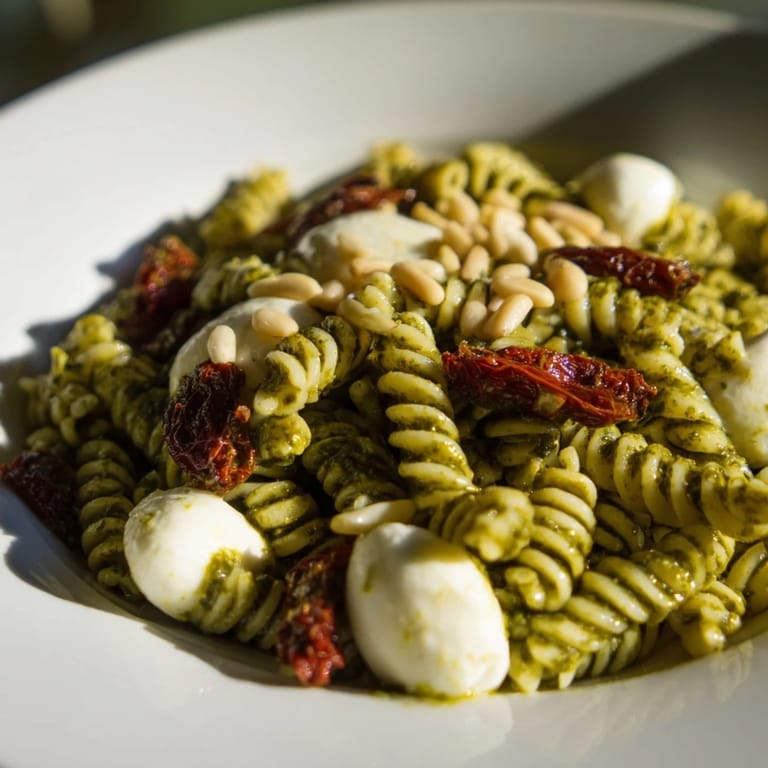
Save There's a moment every summer when someone asks me to bring something to the picnic, and I immediately think of this pesto pasta salad. It happened by accident the first time, really—I had leftover basil from a failed attempt at making my own pesto, some mozzarella that needed using, and a half-empty jar of sun-dried tomatoes in the pantry. Tossing them together with cold pasta felt like a small kitchen victory, and now it's become the dish I reach for whenever the weather gets warm and gathering happens.
I remember bringing this to a potluck where half the dishes were heavy and warm, and watching people's faces light up when they discovered something cold, bright, and genuinely exciting in the spread. An older woman asked for the recipe between bites, and I realized I'd never actually written it down—I'd just been making it the same way each time, intuition and taste buds doing the thinking. That afternoon, sitting on someone's back porch with a plate on my lap, it became a real recipe worth sharing.
Ingredients
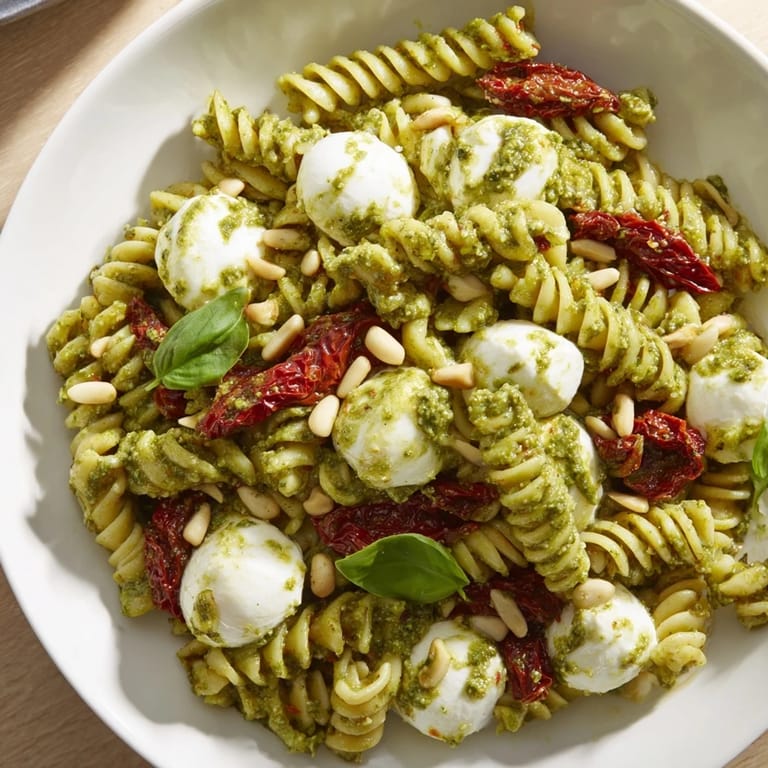
- Short pasta (fusilli, penne, or farfalle): Use 350 g (12 oz)—the shapes catch pesto and hold sauce better than long strands, and they're easier to serve at a picnic without the drama of long noodles.
- Basil pesto: 100 g (1/3 cup) is enough to coat everything without making it heavy; store-bought saves time and works beautifully here.
- Sun-dried tomatoes: Slice 100 g (2/3 cup) after draining them well—they add concentrated sweetness and a chewy texture that balances the creamy mozzarella.
- Fresh mozzarella balls: Use 200 g (7 oz) of bocconcini or dice fresh mozzarella into chunks; cold and creamy, they're the star alongside the pesto.
- Pine nuts, lightly toasted: Toast 40 g (1/4 cup) in a dry pan just until fragrant—this tiny step makes them nuttier and stops them from tasting raw and flat.
- Fresh baby spinach: 50 g (2 cups) optional, but the tender leaves add a subtle earthiness that nobody can quite name but everyone notices.
- Salt, pepper, and extras: Season generously after tasting; the lemon zest is optional but brings brightness that cuts through the richness.
- Extra virgin olive oil: 2 tbsp helps the pesto coat evenly and adds its own silky richness to each bite.
Tired of Takeout? 🥡
Get 10 meals you can make faster than delivery arrives. Seriously.
One email. No spam. Unsubscribe anytime.
Instructions
- Cook the pasta until just right:
- Boil 350 g pasta in salted water according to package directions, but pull it out when it's still got a tiny bit of resistance—al dente, not soft. The minute it's done, drain it and rinse under cold water while stirring gently with your fingers to cool it quickly without clumping.
- Make the pesto coating:
- In a large bowl, toss the cooled pasta with 100 g pesto and 2 tbsp olive oil, stirring until every piece is glossy and green. This is easier than you'd think, and it's the moment everything starts tasting like summer.
- Layer in the good stuff:
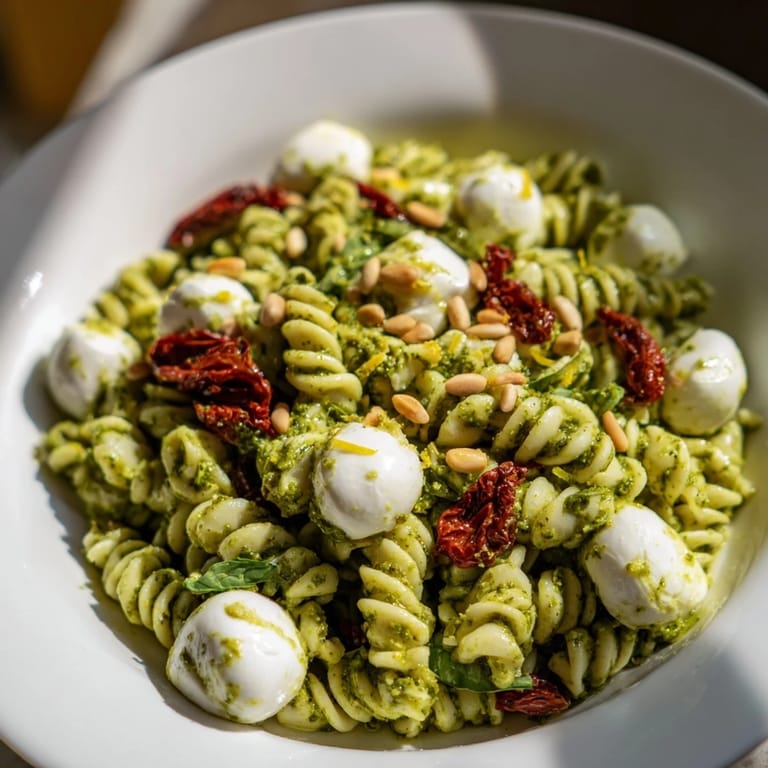
- Add the sun-dried tomatoes, mozzarella, toasted pine nuts, and spinach if you're using it—fold gently rather than toss hard so the mozzarella stays in soft chunks. The warmth of the pasta will soften it just enough without melting it into nothing.
- Taste and adjust:
- Sprinkle salt, grind pepper over the top, and add lemon zest if you want that brightness. Taste as you go, because pesto varies, and you might need more seasoning than the recipe suggests.
- Chill or serve:
- Eat it immediately if the pasta is still warm, or cover and refrigerate for an hour so everything melds together and the flavors get more interesting. Cold is better, honestly, but I've never complained about the warm version either.
 Save
Save This dish taught me that sometimes the simplest combinations—basil, cheese, tomato, pasta—become something people return to not because it's complicated, but because it feels like a small, edible hug on a warm day. There's something almost meditative about tossing everything together in one bowl and knowing it's going to be loved before anyone even tastes it.
Why This Works as a Summer Staple
A cold pasta salad lives in that perfect middle ground—it's substantial enough to be a real meal, but light enough that you don't feel weighed down in the heat. The pesto is already seasoned and flavorful, so there's no need for heavy dressings or complicated techniques. The mozzarella and pine nuts add texture and richness without the salad becoming creamy or thick, and the sun-dried tomatoes bring a natural sweetness that makes the whole thing feel balanced and crave-worthy.
Making It Your Own
The beauty of this salad is how forgiving it is—think of it as a framework rather than a rulebook. I've made versions with roasted red peppers instead of sun-dried tomatoes, added chickpeas when I wanted more protein, and swapped in fresh arugula for the spinach. The pesto does the heavy lifting, so almost anything you add will taste good as long as the flavors aren't fighting each other. One friend adds cherry tomatoes and red onion; another uses walnuts instead of pine nuts because that's what she had. Both versions are delicious, and both feel like the right recipe.
Storage and Serving Tips
This salad actually improves as it sits—the flavors deepen after a few hours in the fridge, and the mozzarella softens just slightly. It keeps well for about two days covered in the cold, though the texture is best in the first 24 hours. If you're taking it somewhere, pack it in a container that seals well, and throw in an extra handful of pine nuts and fresh basil at the last minute so they don't get buried or soggy.
- Pack the salad in a container that seals tight so the flavors don't escape and nothing gets jostled out of place.
- If you're worried about it being watery later, hold back on adding extra oil or pesto juice until just before serving.
- Always taste it one more time before serving, because salt and pepper can settle as things sit, and a quick seasoning adjustment makes all the difference.
 Save
Save This is the kind of recipe that quietly becomes a tradition, the dish you make without thinking because your hands already know how. It tastes like warmth, friendship, and the kind of summer moments that stay with you.
Recipe FAQs
- → What type of pasta works best for this salad?
Short pasta like fusilli, penne, or farfalle holds the pesto well and provides a pleasing bite.
- → Can I use homemade pesto for this dish?
Yes, homemade basil pesto brings a fresh, vibrant flavor that complements the other ingredients beautifully.
- → How should I toast the pine nuts?
Toast pine nuts lightly in a dry skillet over medium heat until golden and fragrant, stirring frequently to avoid burning.
- → Is it necessary to rinse the pasta after cooking?
Rinsing cools the pasta to stop cooking and helps it hold its shape when tossed with the pesto and other ingredients.
- → Can I prepare this salad ahead of time?
Yes, chilling the salad for an hour enhances the flavors, making it a great make-ahead option for gatherings.
- → Are there good ingredient substitutions to try?
Try swapping pine nuts with toasted walnuts or almonds for a different nutty flavor, and add fresh herbs like basil or arugula to boost freshness.