 Save
Save The first time I cooked Majboos, my neighbor's mother stood in my kitchen and watched me slice the onions without saying a word. I was nervous, fumbling with the spices arranged across my counter like an unfamiliar language. She finally smiled and said, "You're thinking too much. The rice knows what to do if you let the lamb teach it." That quiet confidence stuck with me, and now whenever that particular smell of cardamom and black limes fills the air, I remember her standing there, arms crossed, waiting to see if I'd trust the process.
I made this for my colleagues on a cold Thursday evening, and watching them close their eyes on that first bite told me everything. One person asked for seconds before finishing their first plate. Another asked if I'd learned to cook in the Gulf, and when I said no, just learned from someone who had, she nodded like that explained something important about the food. That evening changed how I thought about cooking for others.
Ingredients
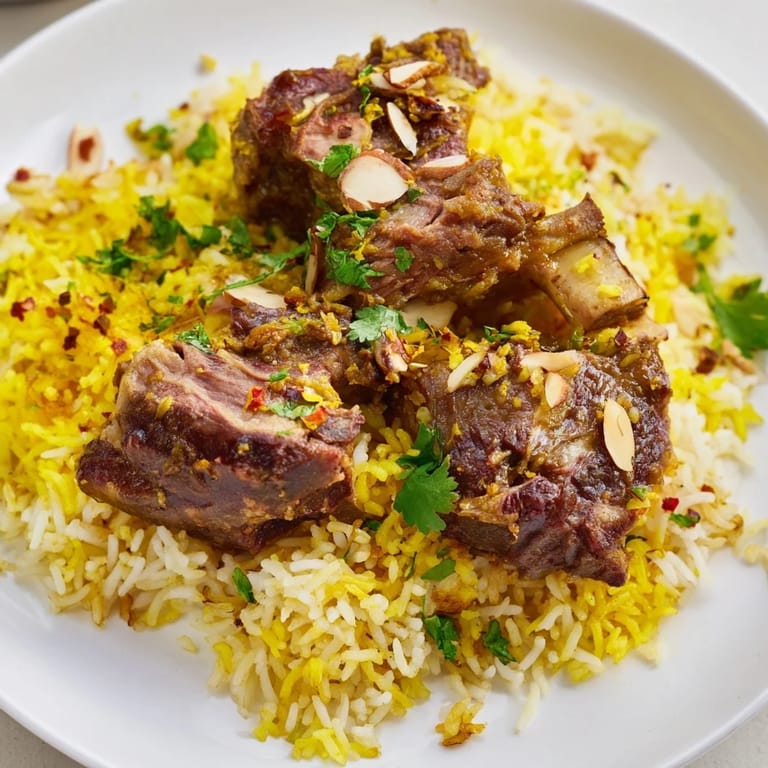
- Lamb, bone-in, cut into large pieces: The bones aren't just for show—they release a deep, mineral-rich flavor into the broth that no boneless cut can match. Ask your butcher for pieces that are substantial, almost fist-sized.
- Basmati rice, rinsed and soaked: Soaking for 30 minutes isn't a suggestion; it's the difference between rice that splits apart and rice that stays dignified. Rinse it until the water runs nearly clear.
- Onions, thinly sliced: These become the flavor foundation. Cook them patient and slow until they're golden and soft, which takes longer than you think but less time than you fear.
- Black limes (loomi): Dried and pierced, they add a subtle tartness and earthiness that's unmistakable. If you can't find them, don't skip this step—search a Middle Eastern market or order online.
- Ground spices—coriander, cumin, turmeric, cinnamon, cardamom, cloves: Keep these relatively fresh. Old spices taste like dust tastes. Toast them briefly in a dry pan before grinding if you can, or buy whole and grind yourself.
- Saffron threads, soaked in warm water: This is where you don't compromise. Real saffron costs money, but a pinch transforms rice into something luxurious. The water turns deep gold—that's the magic at work.
- Ghee or vegetable oil: Ghee is traditional and brings its own warm, nutty depth. If using oil, it's less forgiving but still works.
Tired of Takeout? 🥡
Get 10 meals you can make faster than delivery arrives. Seriously.
One email. No spam. Unsubscribe anytime.
Instructions
- Season the lamb gently:
- Salt and pepper seem simple, but this is your first chance to respect the meat. Don't be shy with seasoning—lamb can take it.
- Caramelize the onions with patience:
- Heat your ghee and watch the onions go from raw to golden to deeply brown. This takes 10 minutes and changes everything. You'll know it's right when your kitchen smells like a spice market and you can't resist breathing deeply.
- Build the aromatics layer:
- Garlic and green chilies go in for just a minute—you're adding them to the fat, not cooking them down. The heat will carry their fragrance into everything that comes next.
- Sear the lamb until it's kissed with color:
- Brown it on all sides, about 8 minutes total. You're not cooking it through; you're just giving it a crust that traps its flavor inside. Listen for that quiet sizzle that tells you it's working.
- Soften the tomatoes into submission:
- Once they break down and release their liquid, you'll see the pot transform into a sauce. This is when the smell becomes almost overwhelming.
- Toast the spices into the meat:
- Add your ground spices, black limes, and bay leaves, stirring constantly for about a minute. The heat wakes them up, and you'll smell their true personalities emerge—warm, layered, ancient somehow.
- Simmer the lamb until tender:
- Cover the pot and let it bubble gently for 45 to 50 minutes. The lamb should be so tender it almost falls from the bone when you touch it. This is when you can step away, though I usually hover because the smell is impossible to ignore.
- Build the rice layer with care:
- Remove the lamb and add your drained rice to the broth. Stir gently once, then arrange the lamb pieces on top like you're tucking them back into bed. Drizzle that precious saffron water everywhere.
- Cook rice low and covered:
- This is the final 25 to 30 minutes, and the trick is to not peek. Every time you lift the lid, steam escapes and the rice takes longer. Let it sit undisturbed until the liquid is absorbed and the rice is tender with a slight chew.
- Rest and fluff with intention:
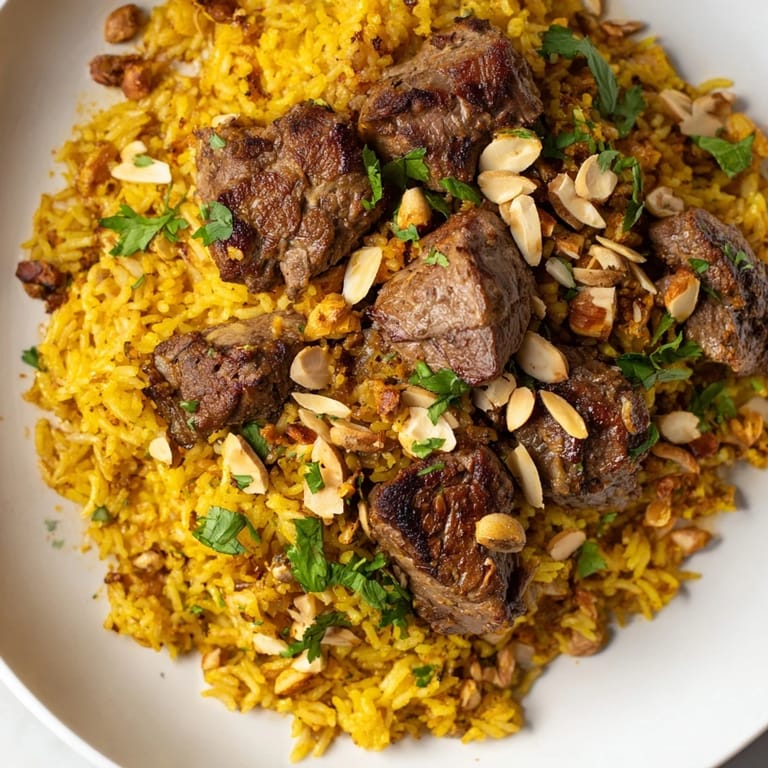
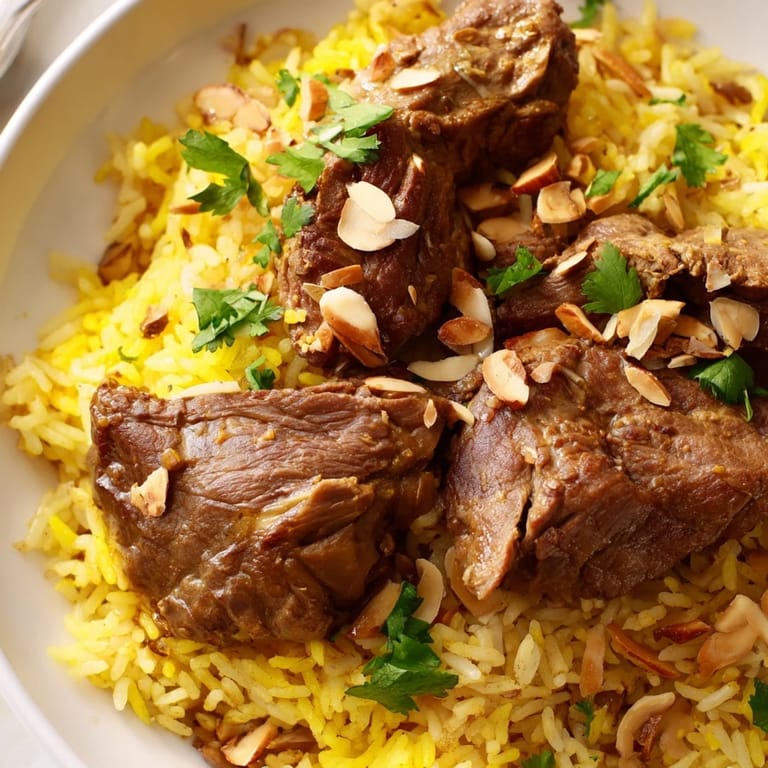
- Ten minutes covered off the heat allows everything to relax and absorb. Then fluff gently with a fork, arranging the lamb on top like it's the star it deserves to be.
 Save
Save There was a moment when my daughter tasted this for the first time and asked if this was what Arabic hospitality tasted like. I realized then that food isn't just about hunger—it's about belonging. Every time I make this dish now, I'm not just feeding people. I'm sharing a tradition that isn't even originally mine, and somehow that feels like the most honest kind of cooking.
Choosing Your Lamb Wisely
The quality of your lamb determines everything. Bone-in pieces are non-negotiable for this dish because they add a richness that boneless meat simply cannot match. I learned this the hard way when I tried to save money on my second attempt—the result was flavorful but flat. Go back to bone-in. Ask your butcher to cut pieces to roughly the same size so they cook evenly. If lamb feels expensive, remember that it feeds six people and becomes more fragrant and satisfying with each bite. You're not buying meat; you're buying the memory people will have at your table.
The Black Limes Question
I resisted black limes for years, thinking they were optional because the recipe box said so. They're not. These dried, pierced limes add a complexity that no amount of lemon juice or lime zest can replicate. They taste earthy and subtle, almost forgotten by the time you've eaten, but their absence is immediately noticeable. If you genuinely cannot find them, the dish is still good—but you'll taste what's missing. Most Middle Eastern markets stock them, and ordering online is now easier than ever. Buy a bag. Keep them in a cool, dark place. They last for years and transform curries and stews beyond just this one dish.
Building Layers, Not Just Cooking
Majboos is really a lesson in layering flavors. Each step adds something new—the sweetness of caramelized onions, the heat of spices awakened in fat, the mineral depth of bone broth. The rice sits at the bottom, absorbing all of this, becoming more than itself. When you serve it, you're serving a thousand small decisions that came before, each one intentional.
- Start with good ingredients because there's nowhere to hide in a dish this simple.
- Don't rush the onions—they're the foundation of everything that comes after.
- Trust that the covered pot is doing its job; resist the urge to peek constantly.
 Save
Save This dish is what happens when you stop trying to impress and start trying to nourish. Serve it warm with yogurt, a fresh salad, or a spicy tomato sauce on the side, and watch how people lean into their bowls.
Recipe FAQs
- → What kind of meat works best for this dish?
Lamb with bone-in pieces offers richer flavor, but chicken can also be used as a substitute.
- → How do black limes influence the flavor?
Black limes add a subtle sour and smoky note, enhancing the depth of the spices.
- → Should the rice be soaked before cooking?
Soaking basmati rice for about 30 minutes helps achieve a fluffier texture once cooked.
- → Can I adjust the spice level in the dish?
Yes, the level of green chilies can be modified to suit milder or spicier tastes.
- → What is the best way to garnish the meal?
Toasted slivered almonds and fresh cilantro complement the flavors and add texture.
- → What cookware is ideal for preparing this dish?
A large heavy-bottomed pot or Dutch oven ensures even cooking and helps develop complex flavors.