 Save
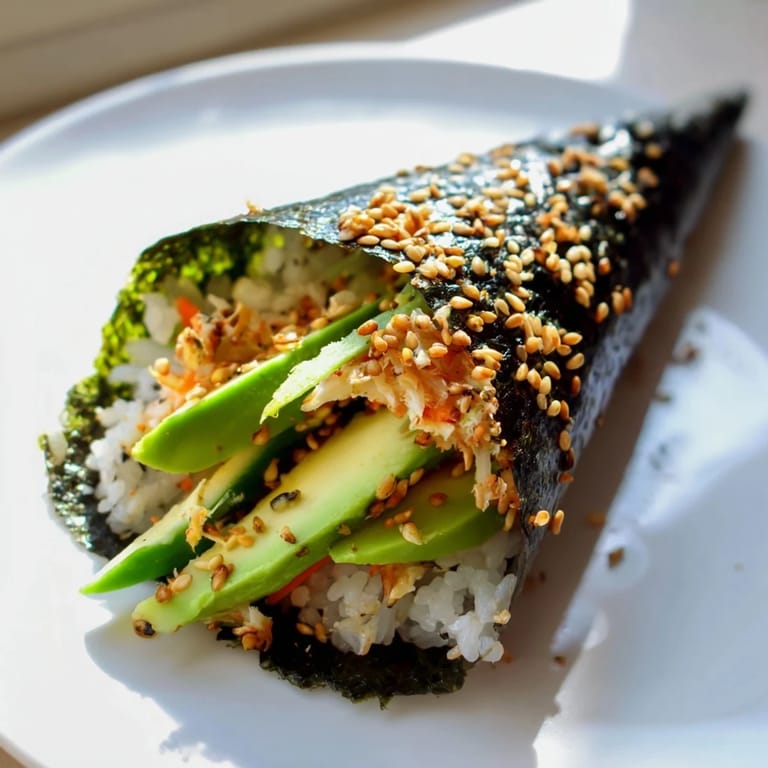
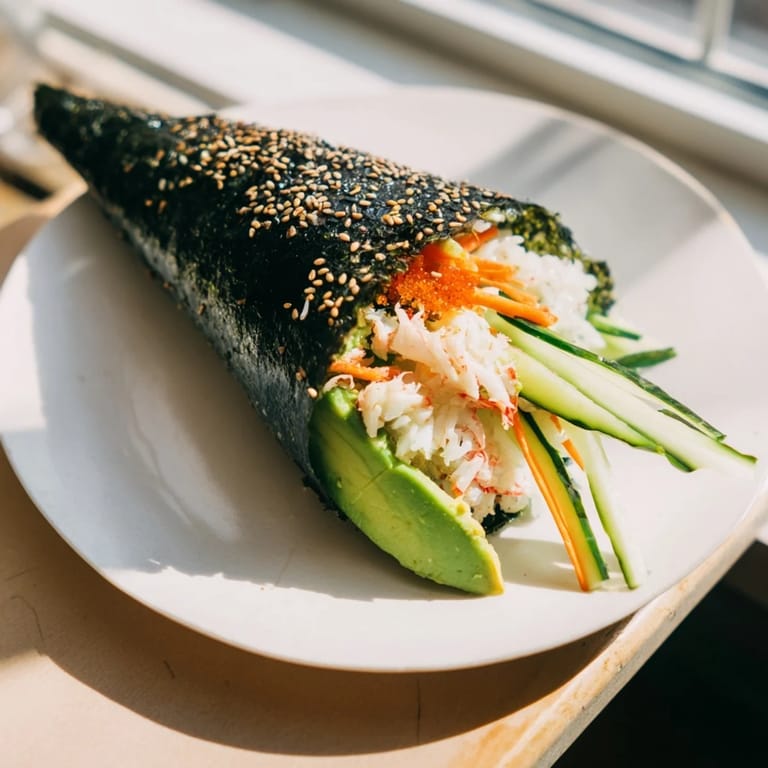
Save Experience the delicate balance of textures and flavors in these Sushi Rice Hand Rolls, where seasoned sushi rice meets creamy avocado, crisp cucumber, and sweet crab meat. Each hand roll is wrapped in roasted nori sheets, creating a satisfying hand-held treat that brings the essence of Japanese cuisine to your table. Perfect for gatherings or a special dinner at home, these temaki-style rolls offer a fun, interactive way to enjoy fresh sushi without needing extensive rolling skills.
Save The beauty of hand rolls lies in their simplicity and versatility. Unlike traditional maki rolls that require precise bamboo mat techniques, temaki allows you to assemble each piece individually, creating perfectly portioned cones that are easy to eat. The key to success lies in properly seasoned sushi rice and fresh, high-quality fillings. Whether you're a sushi enthusiast or new to Japanese cuisine, this recipe offers an accessible entry point into the art of homemade sushi.
Ingredients
Tired of Takeout? 🥡
Get 10 meals you can make faster than delivery arrives. Seriously.
One email. No spam. Unsubscribe anytime.
- Sushi Rice: 1 cup sushi rice (short-grain Japanese rice), 1 1/4 cups water, 2 tbsp rice vinegar, 1 tbsp sugar, 1/2 tsp salt
- Fillings: 1 ripe avocado (sliced), 1/2 English cucumber (julienned), 120 g (4 oz) cooked crab meat (real or imitation, shredded), 1 tbsp mayonnaise (optional, for mixing with crab), 1 tsp toasted sesame seeds (optional)
- Wrapping: 4 sheets nori (roasted seaweed), halved
- Accompaniments: Soy sauce (for serving), Pickled ginger (for serving), Wasabi (for serving)
Instructions
- Step 1: Prepare the Rice
- Rinse the sushi rice under cold water until the water runs clear. Drain well.
- Step 2: Cook the Rice
- Combine rice and water in a saucepan. Bring to a boil, then reduce heat to low, cover, and simmer for 15 minutes. Remove from heat and let stand, covered, for 10 minutes.
- Step 3: Season the Rice
- In a small bowl, mix rice vinegar, sugar, and salt until dissolved. Gently fold this mixture into the cooked rice. Cool rice to room temperature.
- Step 4: Prepare the Crab
- If desired, mix crab meat with mayonnaise for extra creaminess.
- Step 5: Set Up the Nori
- Place a half-sheet of nori, shiny side down, on your palm or a bamboo mat. Spread a thin layer (about 2–3 tbsp) of sushi rice diagonally across one corner.
- Step 6: Add Fillings
- Layer avocado, cucumber, and crab on top of the rice. Optionally, sprinkle with sesame seeds.
- Step 7: Roll into Cones
- Roll the nori into a cone shape, starting from the rice-filled corner and rolling tightly. Seal the edge with a few grains of rice.
- Step 8: Complete the Batch
- Repeat with remaining ingredients to make 8 hand rolls.
- Step 9: Serve
- Serve immediately with soy sauce, pickled ginger, and wasabi.
Zusatztipps für die Zubereitung
For the best results, use short-grain Japanese rice specifically labeled as sushi rice, as its sticky texture is essential for proper hand roll formation. When spreading the rice, keep your hands slightly damp with water to prevent sticking. The rice should be at room temperature before assembling—warm rice can make the nori soggy, while cold rice may not adhere properly. Work quickly once you start assembling to keep the nori crisp and maintain the optimal texture contrast between the crunchy seaweed and tender fillings.
Varianten und Anpassungen
This versatile recipe welcomes endless variations. For a spicy kick, add a dab of Sriracha to the crab mixture or drizzle spicy mayo inside your rolls. Substitute cooked shrimp or smoked salmon for the crab if desired. Vegetarians can replace the seafood with marinated tofu, tempura vegetables, or additional avocado and cucumber. The rice can be seasoned with different variations—try adding a touch of mirin for sweetness or a splash of sesame oil for nuttiness. For those avoiding nori, thin lettuce leaves or soy paper make excellent wrappers.
Serviervorschläge
Arrange the hand rolls on a platter with the points facing outward for an attractive presentation. Place small bowls of soy sauce, pickled ginger, and wasabi at each setting or in the center of the table for easy access. Consider adding other Japanese appetizers such as edamame, miso soup, or seaweed salad to create a complete dining experience. These hand rolls are best enjoyed immediately after assembly while the nori remains crisp, making them perfect for interactive dinner parties where guests can customize their own rolls.
 Save
Save Each hand roll offers approximately 110 calories, with 2.5g of fat, 18g of carbohydrates, and 4g of protein, making them a light yet satisfying meal option. Please note that these rolls contain fish/shellfish (crab), eggs (mayonnaise), and soy (soy sauce). Nori is generally gluten-free, but always check labels if gluten is a concern. For shellfish allergies, cooked chicken or tofu can be used as a substitute. With their balance of protein, healthy fats from avocado, and carbohydrates from seasoned rice, these hand rolls provide a nutritious and delicious way to enjoy the flavors of Japan at home.
Recipe FAQs
- → What type of rice works best for hand rolls?
Short-grain Japanese sushi rice is essential because its sticky texture helps the rolls hold their shape. Long-grain varieties won't provide the right consistency or adhere properly to the nori.
- → Can I prepare the rice ahead of time?
Yes, sushi rice can be made up to 4 hours in advance. Keep it covered with a damp cloth at room temperature to prevent drying. Refrigerating makes the rice hard and affects texture.
- → What's the best way to store leftover assembled rolls?
Hand rolls are best enjoyed immediately, as the nori softens quickly from the rice moisture. If storing, keep components separate and assemble just before eating for optimal texture.
- → Can I substitute the crab meat?
Cooked shrimp, smoked salmon, cooked chicken, or seasoned tofu work well as alternatives. Each provides a different flavor profile while maintaining the roll's structure and appeal.
- → How do I prevent the nori from getting soggy?
Ensure the sushi rice has cooled completely before assembling. Spread rice thinly and avoid overfilling. Serve immediately after rolling, as nori naturally absorbs moisture over time.