 Save
Save The first time I tasted muhammara, it wasn't from a recipe—it was at a small restaurant tucked into a Damascus street, and the dip arrived glowing like liquid rubies under the warm glow of a brass lamp. I remember watching the owner's hands move with such certainty, layering flavors I couldn't name, and thinking how something so vibrant could taste both smoky and bright at once. Years later, when I finally tried making it at home, I realized the magic wasn't in fancy technique but in respecting each ingredient enough to let it shine. This recipe has become my way of bringing that moment back to my kitchen, one roasted pepper at a time.
I brought this to a potluck once thinking it would be a nice side dish, and I watched it vanish before anything else on the table touched a single crumb. My friend Sarah dipped a piece of pita and closed her eyes like she'd traveled somewhere—she texted me the recipe request before she'd even gotten home. That's when I knew this wasn't just another dip; it was the kind of dish that changes how people think about appetizers.
Ingredients
- Red bell peppers (3 large): The foundation—choose ones that feel heavy and have thick walls, as they'll roast more evenly and won't collapse into bitterness.
- Walnuts (1 cup, lightly toasted): Toasting them yourself releases an earthiness that bottled walnuts never quite match, and it's worth the five extra minutes.
- Garlic cloves (2): Raw garlic brings sharpness that mellows as the dip sits, so resist the urge to add more than the recipe calls for.
- Breadcrumbs (2 tbsp): These act as a gentle thickener and bind everything together without making the texture gluey—gluten-free versions work beautifully.
- Pomegranate molasses (2 tbsp): The soul of muhammara, this tart syrup is non-negotiable; there's no real substitute, though balsamic vinegar mixed with a touch of sugar comes close in a pinch.
- Smoked paprika (1/2 tsp): This is where the haunting, campfire quality comes from—don't skip it or use regular paprika.
- Aleppo pepper (1/2 tsp): If you can't find it, red chili flakes work, but Aleppo pepper has a fruity warmth that feels more authentic and less aggressive.
- Cumin (1 tsp): Ground cumin ties all the warm spices together, giving muhammara its distinctly Middle Eastern soul.
- Extra virgin olive oil (2 tbsp, plus more for serving): Use something you'd actually taste alone, because you will taste it here.
- Lemon juice (1–2 tbsp): This brightens everything and prevents the dip from tasting heavy; add it slowly and taste as you go.
- Toasted sesame seeds (1 tbsp, optional): A garnish that adds visual charm and a subtle nuttiness that makes people notice the extra care.
Tired of Takeout? 🥡
Get 10 meals you can make faster than delivery arrives. Seriously.
One email. No spam. Unsubscribe anytime.
Instructions
- Char those peppers until they're blistered:
- Set your oven to 220°C (425°F), place whole peppers directly on a baking tray, and let them roast for 20–25 minutes, turning halfway through. You're aiming for blackened, blistered skin that will slip right off—the peppers themselves should feel slightly soft but not collapsed.
- Steam them into submission:
- Once charred, transfer the hot peppers to a bowl, cover it tightly with plastic wrap or a plate, and let them sit for 10 minutes. This steam loosens the skin and makes peeling effortless—a trick that feels like magic the first time you try it.
- Peel away the blackened skin with gentle confidence:
- Let the peppers cool enough to handle, then rub off the charred skin under cool running water, working gently so you don't lose any of the precious roasted flesh. Remove the seeds and stems, and don't stress about a few flakes of skin—they add character.
- Pulse everything into coarse togetherness:
- In a food processor, add the roasted peppers, walnuts, garlic, breadcrumbs, cumin, smoked paprika, Aleppo pepper, salt, and black pepper. Pulse until the mixture looks like wet sand with walnut-sized pieces still visible—over-processing makes it feel like paste instead of dip.
- Blend in the liquid gold, tasting as you go:
- Add pomegranate molasses, olive oil, and lemon juice, then process until smooth but still textured—it should feel chunky enough that your spoon doesn't glide through it. Taste and adjust: more molasses if it needs tang, more lemon if it feels flat, more salt if the spices seem muted.
- Transfer, dress, and celebrate:
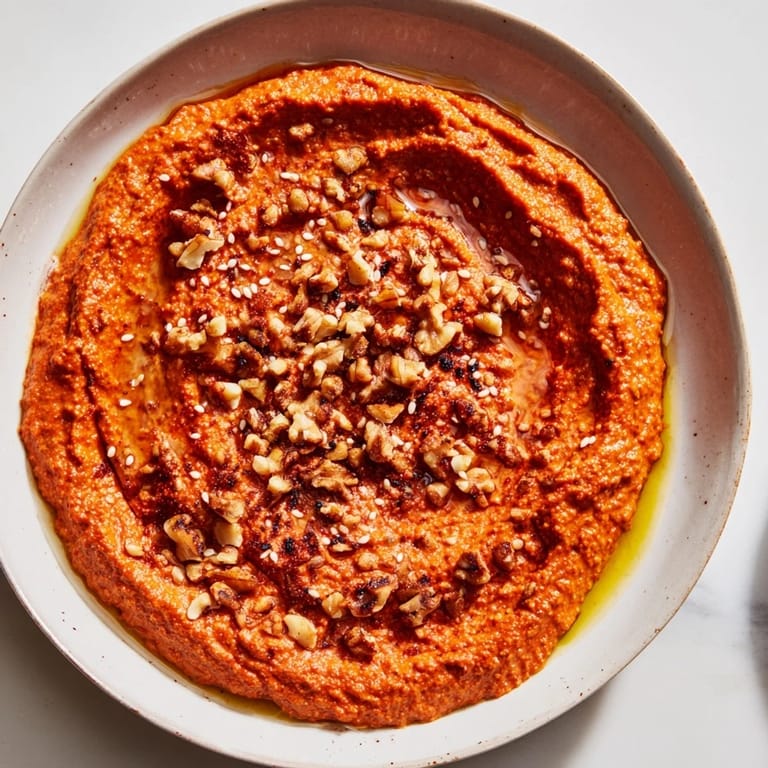
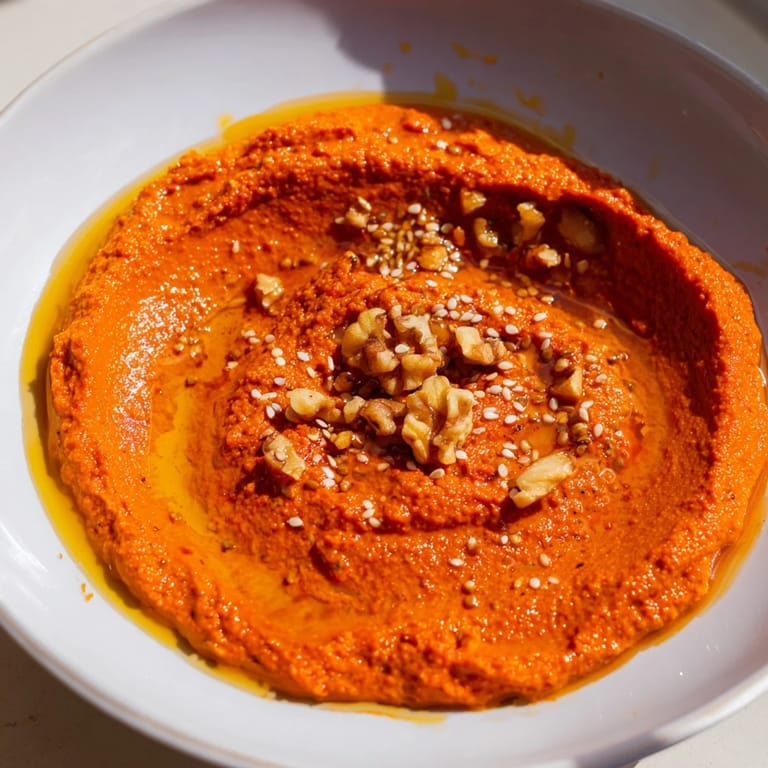
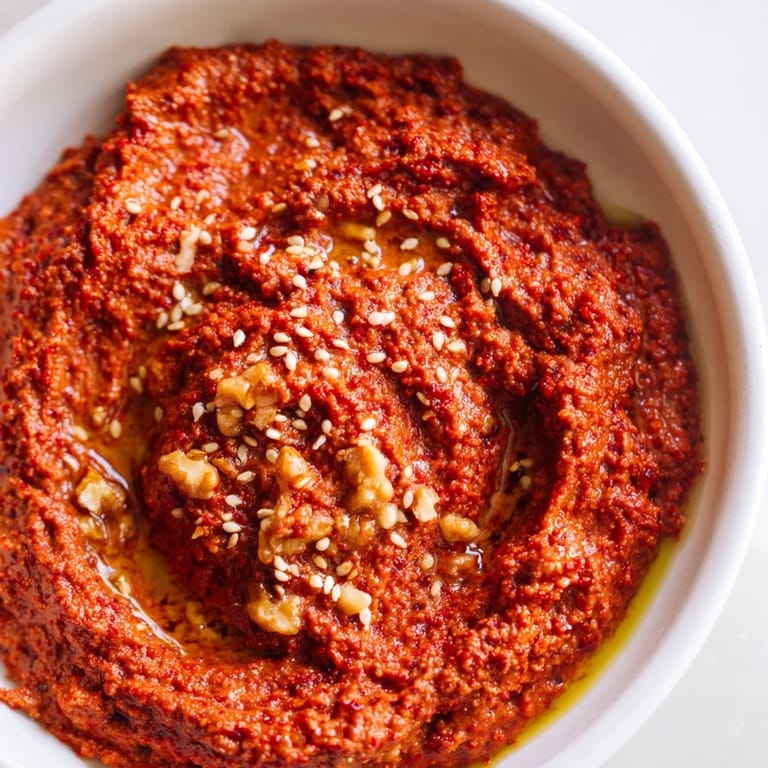
- Scoop the muhammara into a shallow serving bowl, create a well in the center with the back of a spoon, and drizzle with a generous glug of olive oil. A sprinkle of sesame seeds and maybe a pinch more paprika finishes it with quiet elegance.
 Save
Save I remember bringing a small container to my neighbor's house during a difficult week, and she called me three days later just to say it had been the brightest spot in her kitchen. That's when I realized muhammara isn't just about feeding people—it's about handing someone a moment of warmth in a bowl.
The Story Behind the Smoke
Muhammara belongs to a family of Levantine dips so old and essential that nearly every household has a slightly different version. The name comes from the Arabic word for red (ahmar), but the real poetry is in how it tastes like you've spent hours layering depth when you really haven't. What makes it sing is the respect you give to the charring—that almost burnt edge where flavors become something greater than their parts. The first time I made it, I was timid about the flames, and the result was sweet and one-dimensional; the second time, I let those peppers char hard, and suddenly it was alive.
Grilling as an Alternative Path
If you have access to a grill or open flame, char those peppers directly over the fire and the muhammara becomes something almost haunting—the smoke gets into every fiber, and the flavor deepens in ways an oven can't quite match. I did this once over a gas stove burner out of curiosity, holding the pepper with tongs and rotating it slowly, and the kitchen filled with this incredible campfire smell that my partner could identify from the next room. It's messier, slightly more dramatic, and absolutely worth trying if you're feeling brave.
Building a Mezze Board That Sings
Muhammara is never really alone—it's part of a conversation that includes hummus, baba ghanoush, olives, fresh pita, and maybe some pickled vegetables. I've learned that the secret to a stunning mezze board is contrast: something creamy (the muhammara), something smoky, something briny, something fresh, and enough bread to tie it all together. When you serve it this way, suddenly you're not just offering dips; you're inviting people into a whole flavor landscape that makes them slow down and actually taste things.
- Roast your garlic cloves alongside the peppers if you want a mellower, sweeter garlic note instead of sharp.
- A tiny drizzle of pomegranate syrup on top of the olive oil before serving adds visual drama and a flavor reminder.
- Make extra—it keeps beautifully for five days refrigerated, and you'll want it on hand for quiet evenings with pita and tea.
 Save
Save This is the dip that reminds you why you cook in the first place—not out of obligation, but because sharing something this honest and alive feels like an act of love. Make it, serve it, and watch it disappear.
Recipe FAQs
- → What are the main ingredients in muhammara?
Roasted red peppers, toasted walnuts, pomegranate molasses, olive oil, garlic, breadcrumbs, and warm spices like cumin and smoked paprika form the core ingredients.
- → How can I achieve the smoky flavor?
Roasting red peppers until charred or grilling them over an open flame adds a smoky depth and enhances the dip's aroma.
- → Can I adjust the heat level?
Yes, modify the Aleppo pepper or red chili flakes quantity to suit your preferred spice level without overpowering the balance.
- → What is the best way to serve muhammara?
Serve with fresh pita, crackers, or vegetable sticks as part of a mezze spread or appetizer selection.
- → How long does muhammara keep after preparation?
Refrigerated in an airtight container, it stays fresh for up to five days, allowing flavors to further meld.