 Save
Save I'll never forget the year my friend Sarah suggested we skip the traditional cheese course and make it the entire event. She envisioned a board with twelve different cheeses, one for each day of Christmas, each with its own perfect companion. We spent an afternoon gathering cheeses from every corner of the world, and as we arranged them on her grandmother's enormous wooden board, something magical happened. The board became a journey, a story told in bites, and every guest discovered new favorite cheese combinations they never knew they needed.
I remember watching my mom's book club members that evening, how they abandoned their usual small talk and instead leaned in close to the board, comparing notes. "Try the Roquefort with the pear," one would whisper to another. It transformed a simple gathering into something memorable, everyone becoming experts in their own right.
Ingredients
- Brie: Creamy and approachable, this is your gentle introduction to the board. Choose one that's just slightly soft when pressed.
- Aged Cheddar: Sharp and reliable, it bridges familiar territory with sophistication. The bite gets better with time.
- Manchego: Nutty and buttery, this Spanish treasure has a subtle sweetness that opens doors to new pairing possibilities.
- Roquefort or Blue Cheese: Bold and unapologetic, this is the cheese that divides opinions and creates conversations.
- Goat Cheese: Tangy and elegant, it's the cheese that always surprises people who think they don't like goat cheese.
- Gruyère: Rich and complex, it's the cheese that tastes like tradition and comfort wrapped together.
- Camembert: Soft and earthy, like tasting the French countryside in one small bite.
- Gouda: Smooth and slightly sweet, it's the cheese that bridges casual and refined.
- Comté: Caramel notes and depth, this aged beauty is worth seeking out.
- Pecorino: Sharp and crystalline, it brings an Italian spirit to your board.
- Havarti: Buttery and approachable, this Danish gem is a hidden treasure that deserves more attention.
- Smoked Cheese: Choose smoked provolone or your favorite smoked variety for a cheese with character and personality.
- Artisanal bread or assorted crackers: The foundation for every pairing, choose varieties in color and texture for visual interest.
- Honey: Golden and sweet, it's the bridge between savory and dessert.
- Fig jam: Rich and concentrated, it transforms mild cheeses into something memorable.
- Whole grain mustard: Tangy and textured, it brings brightness to fatty cheeses.
- Seedless grapes: Fresh and clean, they reset your palate between bites.
- Dried apricots: Chewy and sweet, they're the flavor that makes people ask what you put on that cheese.
- Walnut halves: Earthy and substantial, they add texture and elegance to any pairing.
- Toasted almonds: Nutty and crispy, toasting them yourself makes all the difference.
- Fresh apple slices: Tart and crisp, toss them in a little lemon juice to keep them bright.
- Fresh pear slices: Delicate and sweet, they're the sophisticated option for richer cheeses.
- Dark chocolate: Quality matters here more than anywhere else on your board.
- Cornichons: Briny and crunchy, they're the palate cleanser no one expects but everyone thanks you for.
- Fresh herbs: Thyme and rosemary scattered across the board make it look like it came from a magazine.
Tired of Takeout? 🥡
Get 10 meals you can make faster than delivery arrives. Seriously.
One email. No spam. Unsubscribe anytime.
Instructions
- Divide your canvas:
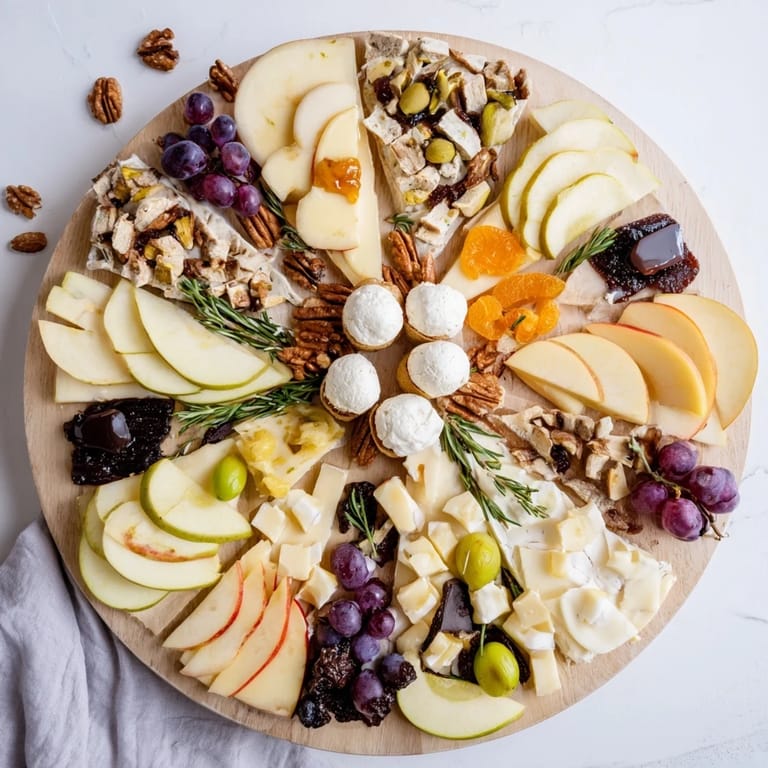
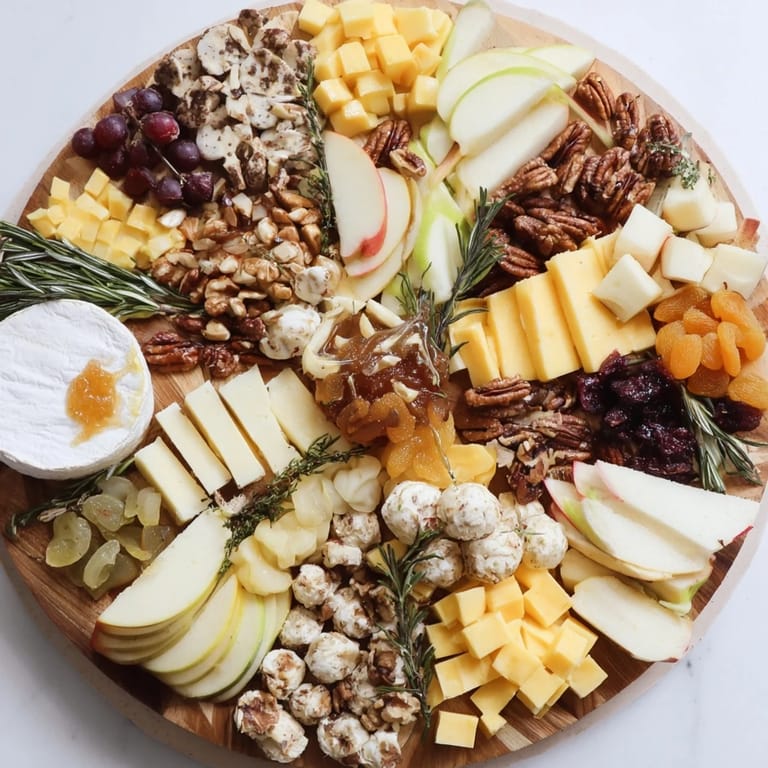
- Start with your largest, most beautiful board or platter. Close your eyes for a moment and imagine twelve distinct sections, each one telling its own story. If you have small bowls or ramekins, use them to create gentle boundaries between sections, or simply imagine lines dividing the space into twelve pie-shaped wedges. This visual organization is half the magic.
- Introduce each cheese:
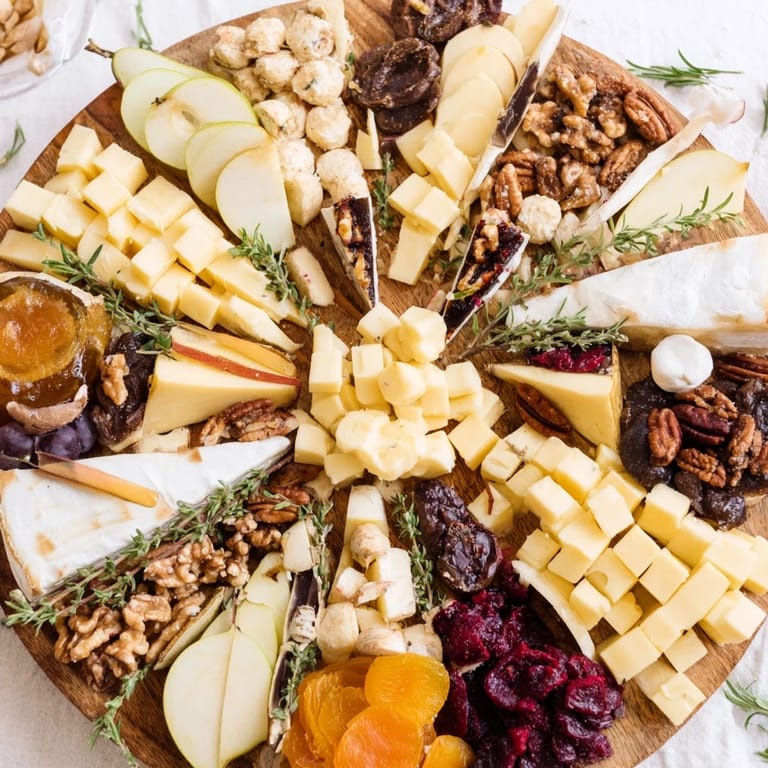
- Arrange your cheeses first, giving each section roughly 50 grams. Cut the harder cheeses like Cheddar and Manchego into small cubes or thin slices. Leave the Brie and Camembert whole or cut into small wedges. The Goat Cheese can be a small dollop. Think about the visual balance, alternating colors from pale to dark around the board.
- Create the first pairing—Brie with honey and apple:
- In the first section, place your Brie, add a small drizzle of honey right beside it, and tuck a thin apple slice nearby. The honey will pool slightly, inviting people to spread some on the cheese.
- Build the Cheddar moment:
- Next to this, place your aged Cheddar with a small spoonful of fig jam and a perfect walnut half. Notice how the deep amber jam sits against the golden cheese.
- Continue around the board:
- Follow the pairings: Manchego with quince paste and almond, Roquefort with pear and walnut, Goat Cheese with a sprinkle of fresh thyme and two grapes, Gruyère with a dot of mustard and a cornichon, Camembert with apple and almond, Gouda with a dried apricot and small dark chocolate square, Comté with grapes and walnut, Pecorino with pear and a tiny drop of honey, Havarti with fig jam and almond, and finally, Smoked Cheese with cornichon and dark chocolate.
- Frame with bread and crackers:
- Now arrange your crackers and bread slices around the outer edge, creating a frame for your twelve treasures. You want enough that every section has access, but not so much that it overwhelms the cheese.
- Crown it with herbs:
- Scatter fresh thyme sprigs and small rosemary branches across the board, letting them fall naturally between sections. They'll catch the light and make everything look intentional and elegant.
- Wait for the moment:
- Let the board sit at room temperature for about 15 minutes before serving. This allows all the cheeses to reach their optimal flavor and texture, when Brie becomes silky and Cheddar becomes more expressive.
 Save
Save That night, as everyone gathered around the board, I watched my usually quiet cousin lean over to try the Comté with grapes, and I saw her face light up. She'd never considered that combination before. That's when I understood that this board wasn't just about the cheeses anymore. It was about creating moments where people discover something new about themselves and their taste.
The Art of Cheese Selection
Don't feel locked into these exact twelve cheeses. The magic is in the variety, in creating a journey from mild to bold, from creamy to crystalline. When I shop for a board like this, I talk to the cheesemonger like I'm planning an expedition. I tell them I'm making a twelve-day adventure and ask which cheeses would be perfect traveling companions. Half the joy comes from discovering something new at the counter, some small-batch cheese you've never heard of before.
Pairing Like You're Building a Symphony
Each pairing should feel intentional, like you've thought through why that particular cheese meets that particular companion. Sweet with salty, earthy with bright, creamy with crisp. As you arrange, think about the conversation between flavors. The Roquefort with pear isn't random; it's a pairing that's been whispered across European dining tables for centuries. You're not just serving food; you're sharing wisdom.
Turning This Into a Moment
The beauty of this board is that it becomes a conversation starter, a focal point that brings people together. Consider setting out small cards with each day labeled one through twelve, or better yet, let your guests discover them as they explore. You might pair it with a good wine, passing around notes about which wine works with which cheese. Watch how people become curious, how they start asking each other questions, how they slow down and really taste.
- Serve this at a temperature where butter still feels like butter, not like plastic.
- Have small plates and napkins ready; this is a cheese board that people will linger over.
- The best part happens when someone finds a pairing you didn't predict and tells you it's their new favorite.
 Save
Save This board is more than appetizer; it's an invitation to slow down and really taste. Every time you make it, it becomes a little more personal, a little more yours.
Recipe FAQs
- → How should I arrange the cheese board?
Divide the board visually into 12 sections using small bowls, ramekins, or garnish lines, placing one cheese and its accompaniments in each area for an attractive presentation.
- → Can I substitute any ingredients for dietary needs?
Yes, gluten-free crackers can replace regular ones, and plant-based cheeses can be used for vegan options without losing delicious flavors.
- → What types of cheeses are best for this board?
A range of textured and flavored cheeses like Brie, Aged Cheddar, Manchego, Roquefort, and Camembert provides variety and international flair.
- → How do I enhance the flavor combinations?
Pair cheeses with sweet and savory accompaniments such as honey, fig jam, nuts, and fresh fruits to balance flavors and add complexity.
- → What beverages pair well with this cheese board?
Sparkling wine, light red wines, or cider complement the diverse flavors and textures, elevating the tasting experience.
- → Should the board be served warm or cold?
Serve at room temperature to allow the cheeses and accompaniments to reveal their full flavor profiles and textures.