 Save
Save The first time I tasted saltah, I was struck by how it seemed to break all the rules I thought I understood about eating. The bread wasn't a side or a vehicle—it was the foundation, softening and melding into something entirely new beneath the weight of spiced meat and broth. Years later, I finally understood why Yemeni families gather around communal bowls of this stew: it's not just food, it's the physical act of layering flavors and textures that makes the meal feel like coming home.
I remember watching my neighbor prepare this for her family during winter, the kitchen filling with that distinctive warm, slightly bitter fenugreek smell that somehow made everything feel more alive. She moved through each step like she wasn't even thinking about it, but when I tried to replicate it weeks later, I realized how much precision hides in those easy-looking movements. That's when I learned to respect the simple dishes—they demand attention in ways the complicated ones often don't.
Ingredients
- Beef or lamb, 500g, cut into 2cm cubes: The cube size matters more than you'd think—too small and they disappear into the broth, too large and they don't cook through evenly during the simmer.
- Vegetable oil, 2 tbsp: Use something neutral that won't compete with the spices; this is about coaxing out flavors, not adding your own.
- Onion, 1 large, finely chopped: Fine chopping means they'll practically dissolve into the base, creating body and sweetness without visible chunks.
- Garlic, 3 cloves, minced: Mince it small enough that it releases quickly when it hits the hot oil—this is where your first wave of aroma comes from.
- Tomatoes, 2 medium, chopped: Fresh tomatoes bring brightness; if yours are mealy, they'll still work, but acid matters more than perfection here.
- Green chili, 1, finely chopped (optional): If you include it, you're adding heat that builds gradually rather than hitting all at once like a fresh chili would.
- Potato, 1 medium, cubed: The starch helps thicken the broth naturally and gives you substance in every spoonful.
- Carrot, 1 medium, diced: Dice it small so it softens in the same timeframe as the meat.
- Water or beef broth, 4 cups: Broth deepens everything; water lets the spices be the star—choose based on what you're craving.
- Ground cumin, 1/2 tsp: This is the quiet backbone that makes everything taste warm and grounded.
- Ground coriander, 1/2 tsp: It brings a subtle citrus note that keeps the spices from feeling one-dimensional.
- Ground black pepper, 1/2 tsp: Fresh is better than old; if yours has been sitting, use a touch more.
- Ground turmeric, 1 tsp: This gives the stew its golden color and an earthy depth that's unmistakably Middle Eastern.
- Ground fenugreek, 1/2 tsp: Just a pinch here—the real payoff comes in the hulbah topping where it becomes something ethereal.
- Salt, 1 tsp, or to taste: Taste as you go; you might need more depending on whether you used broth or water.
- Ground fenugreek seeds, 2 tbsp (for hulbah): Don't skip the soaking step—it's what transforms bitter seeds into something cloud-like and almost sweet.
- Water, 1/3 cup plus more for soaking (for hulbah): Cold water activates the fenugreek's texture in a way hot water won't.
- Tomato, 1 small, finely diced (for hulbah): This adds a last-minute freshness that cuts through the richness perfectly.
- Cilantro, 1 small bunch, chopped (for hulbah): Herb-forward and slightly peppery—it's your signal that something special is happening in the bowl.
- Green chili, 1 minced, optional (for hulbah): A whisper of heat in the topping that doesn't overwhelm the delicate foam.
- Lemon juice, from 1/2 lemon (for hulbah): This is what prevents the dish from feeling too heavy, cutting through the fenugreek and meat with brightness.
- Yemeni flatbreads, 2 large (malawah or lahoh): If you can't find these, pita works, though it won't have quite the same tender structure that Yemeni breads provide.
Tired of Takeout? 🥡
Get 10 meals you can make faster than delivery arrives. Seriously.
One email. No spam. Unsubscribe anytime.
Instructions
- Sauté the base until it smells like dinner:
- Heat oil in a large pot over medium heat and add onions, letting them turn golden and soft—this takes longer than you think and is worth every minute. Once they're there, add your garlic and chili, stirring constantly for just under a minute so they perfume the oil without burning.
- Brown the meat so it has a proper crust:
- Push the onions to the side and add meat in a single layer if your pot allows, letting it sit long enough to develop color before stirring. This isn't about cooking it through; it's about building layers of flavor that will deepen over the next hour.
- Layer in the vegetables and spices:
- Add tomatoes, potato, carrot, and all your spices at once, stirring for about five minutes so everything gets acquainted. You'll notice the kitchen starting to smell serious and intentional—that's your signal you're on the right track.
- Add liquid and let time do the work:
- Pour in your water or broth, bring everything to a boil, then immediately reduce to a low simmer and cover. Resist the urge to fiddle with it; just let it cook for 1 to 1.5 hours until the meat is so tender it's practically surrendering.
- Prepare the hulbah while the stew simmers:
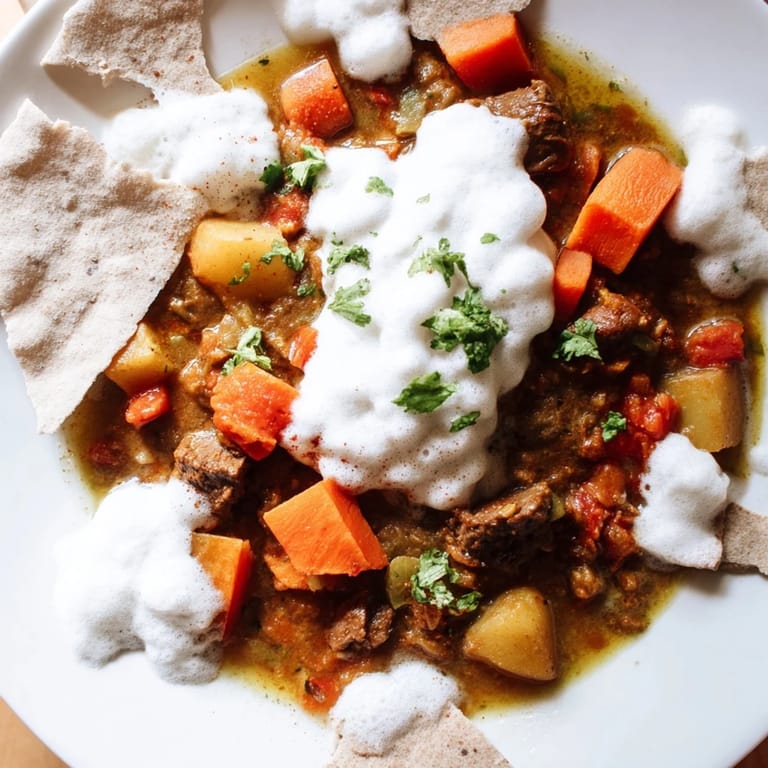
- Soak ground fenugreek in cold water for a full hour—this is when you can rest, do other things, or simply admire that you've already done the hard part. After soaking, drain the water and whisk the fenugreek vigorously with a small whisk or even a fork until it becomes light and foamy, almost mousse-like.
- Finish the hulbah with brightness:
- Fold tomato, cilantro, chili, and lemon juice into the foam gently so you don't deflate what you just created. Taste it and add salt—you want it to enhance the stew without overpowering the delicate texture you've worked to achieve.
- Assemble the bowls as you serve:
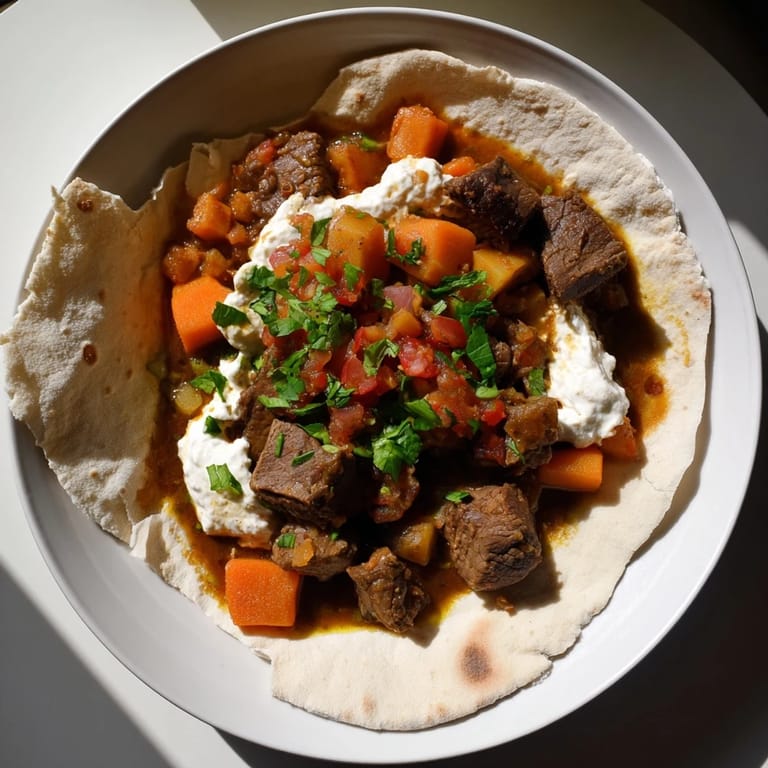
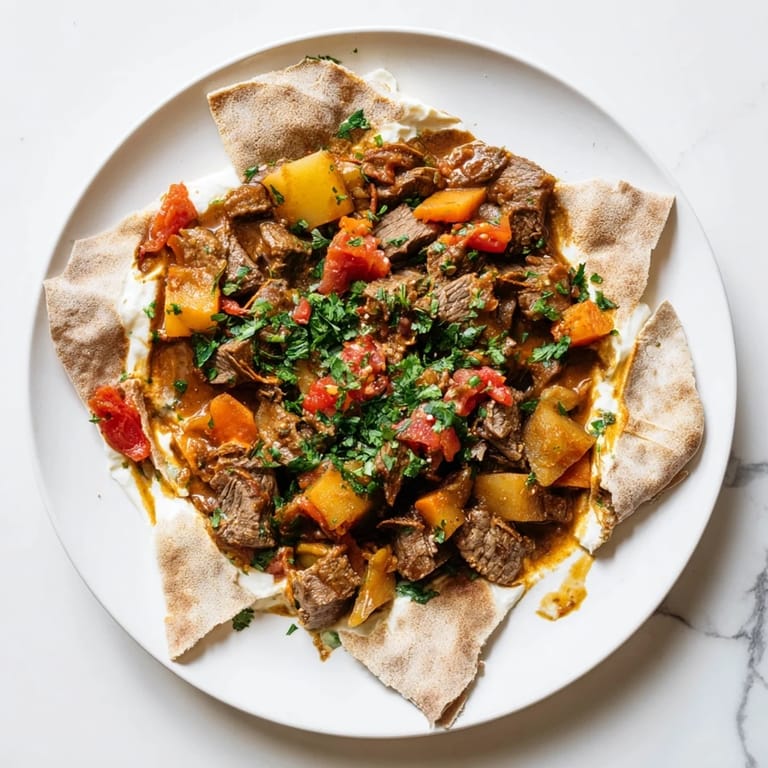
- Tear flatbread into bite-sized pieces and scatter them in the bottom of serving bowls, then ladle the hot stew over them so the bread softens but doesn't completely dissolve. Top with a generous spoonful of hulbah, letting it sit on top like the crown it deserves to be.
- Serve while everything is still hot:
- Bring bowls to the table immediately and let everyone mix their layers together before eating—this is part of the ritual, the moment when separate components become one dish.
 Save
Save I made this for friends once and watched them experience that moment of confusion before understanding—the moment when bread and broth and foam came together and suddenly nothing else made sense. By the end of the meal, they were cradling empty bowls and asking if I could teach them.
The Ritual of Layering
Saltah isn't just a recipe; it's a way of eating that asks you to slow down. The bread starts firm and becomes increasingly soft as the broth reaches it, the vegetables give up their shape and flavor to the whole, and the hulbah melts into every spoonful. This progression happens as you eat, so every bite changes slightly depending on how deep your spoon goes and how long you let everything marry together.
Why Fenugreek Matters More Than You'd Expect
Fenugreek is the ingredient that transforms saltah from a straightforward stew into something that tastes like someone spent a secret amount of time on it. The hulbah topping is where that magic happens—where bitter seeds become a light, almost sweet foam that's tangy with lemon and bright with herbs. It's the kind of thing that makes you wonder if you could eat just the topping by itself, and the answer is probably yes.
Bringing Saltah to Your Table
This is food that demands community. It's best eaten in bowls that everyone can gather around, mixed according to preference, experienced slowly rather than rushed. Make it when you have time to let the kitchen fill with those spices and when you have people who will understand that the bread matters and the foam matters and the way it all comes together matters most of all.
- If you can't find Yemeni flatbreads, pita or even naan will work in a pinch, though the texture will be slightly different.
- The stew can be made a day ahead and reheated gently; the hulbah should always be made fresh right before serving.
- Leftovers are meant to be, and cold saltah is somehow even better the next day when the flavors have had time to settle.
 Save
Save Saltah is one of those dishes that reminds you why people gather to eat in the first place. Make it and share it, and it becomes something that tastes like more than just food.
Recipe FAQs
- → What meats work best for this stew?
Beef or lamb cubes are ideal as they become tender and absorb the aromatic spices well during the slow simmering process.
- → How is the fenugreek topping prepared?
Ground fenugreek seeds are soaked in water, then vigorously whipped until a light foam forms, then mixed with diced tomato, cilantro, lemon juice, and a touch of salt.
- → Can flatbread be substituted?
Yes, traditional Yemeni malawah or lahoh are preferred, but pita or naan make suitable alternatives.
- → How long should the stew be simmered?
Simmer the stew covered on low heat for 1 to 1.5 hours until the meat is tender and vegetables soften.
- → Is it possible to make a vegetarian version?
Omit the meat and add additional root vegetables or beans for a satisfying vegetarian dish.