 Save
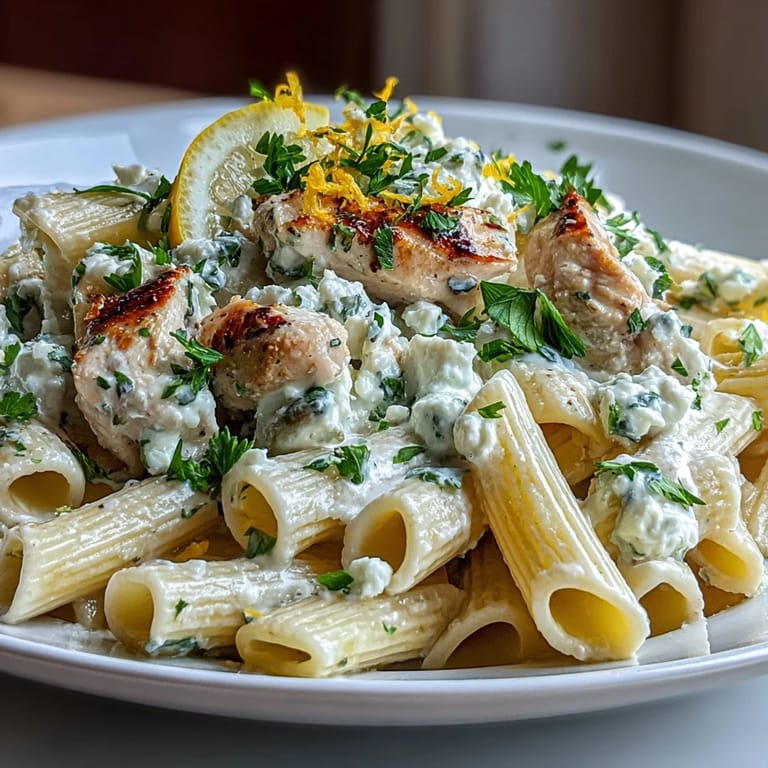
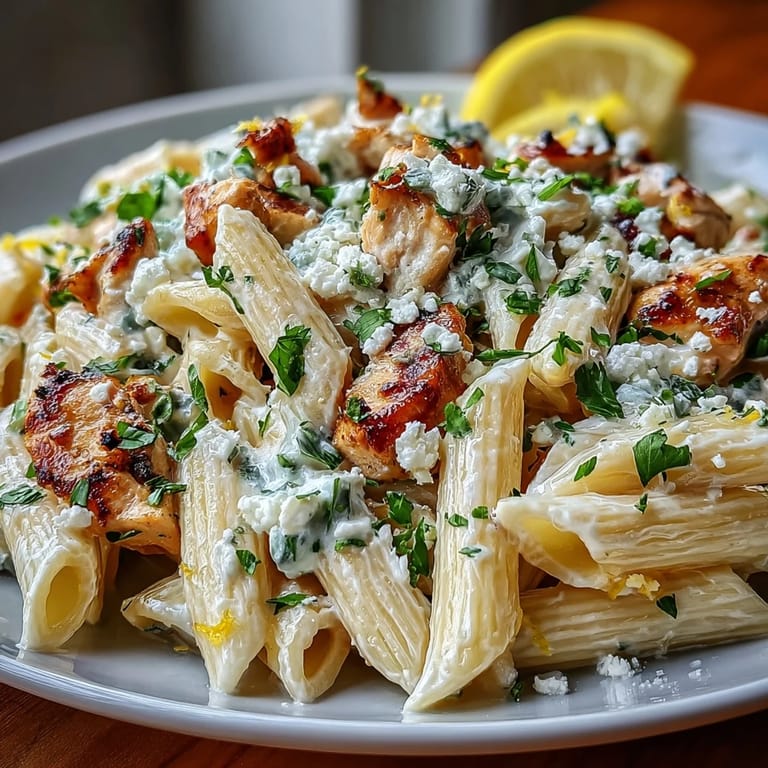
Save My neighbor stopped by unannounced on a Thursday evening, and I had nothing prepared except a pantry that somehow contained exactly what I needed for this dish. Twenty minutes later, she was twirling creamy lemon feta pasta on her fork, and I realized I'd stumbled onto something that felt restaurant-worthy yet completely manageable on a weeknight. The brightness of the lemon cuts through the richness in a way that makes you want another bite before you've finished the first.
I made this for my sister who'd just moved to a new apartment, and watching her face light up when she tasted it told me everything I needed to know. She asked for the recipe before she even finished eating, which never happens with her, and now she makes it whenever she wants to feel like she's got her life together.
Ingredients
- Penne or rigatoni (340 g / 12 oz): The tubes and ridges hold onto this cream sauce beautifully, and cooking it al dente means it won't turn mushy when you toss it with the hot lemon cream.
- Boneless, skinless chicken breasts (450 g / 1 lb, cut into bite-sized pieces): Cutting them into smaller pieces means they cook faster and distribute evenly throughout the dish instead of creating one big chunk in the middle.
- Dried oregano (1 tsp): This is your Greek anchor, the flavor that makes people say this tastes special without quite knowing why.
- Salt and black pepper (1/2 tsp each, plus to taste): Taste as you go because cheese and lemon are both bold, and you'll want to balance them just right.
- Olive oil (2 tbsp): Use something you'd actually cook with rather than your finest extra virgin, since it's going over high heat.
- Garlic (3 cloves, minced): Fresh garlic makes a difference here—jarred never quite captures that fragrant bite that wakes up the whole sauce.
- Lemon zest and juice (1 large lemon): Zest it before you juice it, and use fresh lemon every time because bottled versions taste flat and one-dimensional.
- Heavy cream (180 ml / 3/4 cup): This is what makes the sauce silky, but don't skip the pasta water later because it helps you control the thickness.
- Chicken broth (60 ml / 1/4 cup): A small amount adds depth without diluting the lemon and cheese flavors that define the dish.
- Feta cheese (100 g / 3.5 oz, crumbled): Buy a block and crumble it yourself if you can, because pre-crumbled versions often contain anti-caking agents that make the sauce gritty.
- Parmesan cheese (50 g / 1/2 cup, grated): Freshly grated makes the sauce incorporate smoothly, while pre-grated varieties can turn grainy.
- Fresh parsley (2 tbsp, chopped): Add it at the very end so it stays bright green and doesn't turn dark and bitter from the heat.
Tired of Takeout? 🥡
Get 10 meals you can make faster than delivery arrives. Seriously.
One email. No spam. Unsubscribe anytime.
Instructions
- Get the pasta going:
- Fill a large pot with salted water and bring it to a rolling boil while you prep everything else. The salt should taste like sea water, which seasons the pasta from the inside out as it cooks. Start timing once it hits al dente according to the package, then reserve that starchy pasta water before draining—you'll need it later to loosen the sauce.
- Season your chicken:
- While the water heats, toss your bite-sized chicken pieces with oregano, salt, and pepper in a bowl. This takes 30 seconds but makes all the difference because it flavors the meat as it cooks rather than waiting for sauce to do the work.
- Sear the chicken until golden:
- Heat olive oil in a large skillet over medium-high heat until it shimmers, then add the chicken in a single layer. Don't move it around for the first few minutes—let it develop a golden crust that locks in flavor and moisture. After 6 to 8 minutes total, it should be cooked through with no pink inside; transfer it to a clean plate.
- Build your flavor base:
- In that same skillet with all the browned bits stuck to the bottom (that's pure flavor), add your minced garlic and let it sizzle for about 30 seconds until fragrant. You want to catch it before it burns, so keep your heat at medium and stay close.
- Create the creamy lemon sauce:
- Pour in the lemon zest, lemon juice, heavy cream, and chicken broth, stirring as you go. Let it come to a gentle simmer—you'll see small bubbles breaking the surface—and watch how the lemon juice seems to brighten everything.
- Melt in the cheeses:
- Reduce heat to low, then whisk in your crumbled feta and grated Parmesan slowly, making sure each addition melts fully before adding more. If you rush this step or use high heat, the cheese seizes up instead of turning silky, so patience here pays off.
- Bring it all together:
- Return the cooked chicken to the skillet and add your drained pasta, then toss everything gently so the sauce coats every piece. If it feels thick, splash in some reserved pasta water a little at a time until you reach that creamy consistency that clings to the pasta without pooling at the bottom.
- Finish with brightness:
- Stir in the chopped parsley and taste the whole thing, adjusting salt and pepper as needed. Remember that the cheeses bring saltiness, so add gradually.
- Serve right away:
- Plate it immediately while it's hot and creamy, topping each bowl with extra crumbled feta, fresh parsley, or a tiny pinch of lemon zest if you want to show off.
 Save
Save 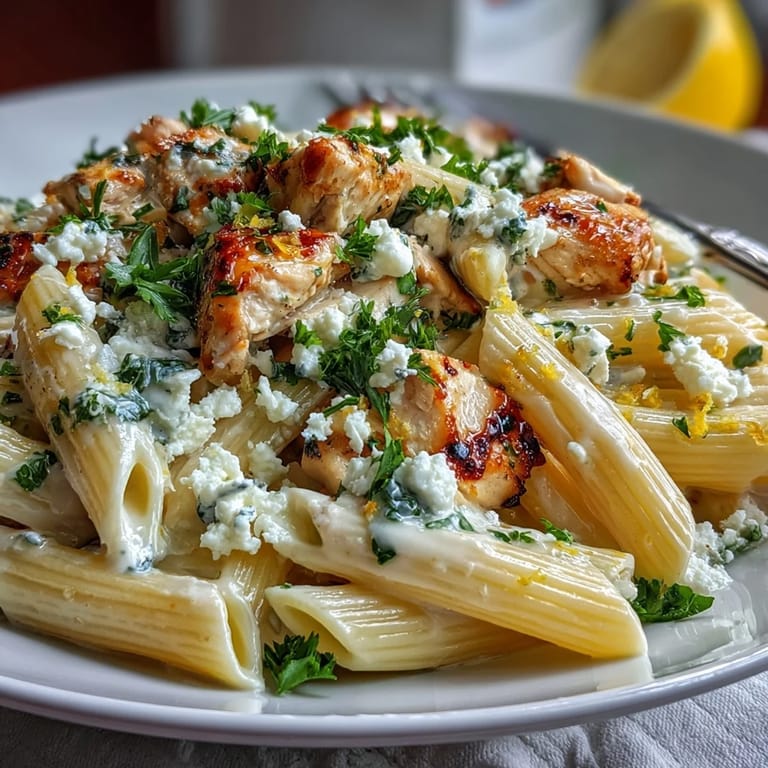 Save
Save My kids, who normally push pasta to the side of their plates and complain about "fancy," asked for seconds without me saying a word. That's when I knew this wasn't just another dinner—it was something that worked for everyone at the table.
Why This Greek Twist Works
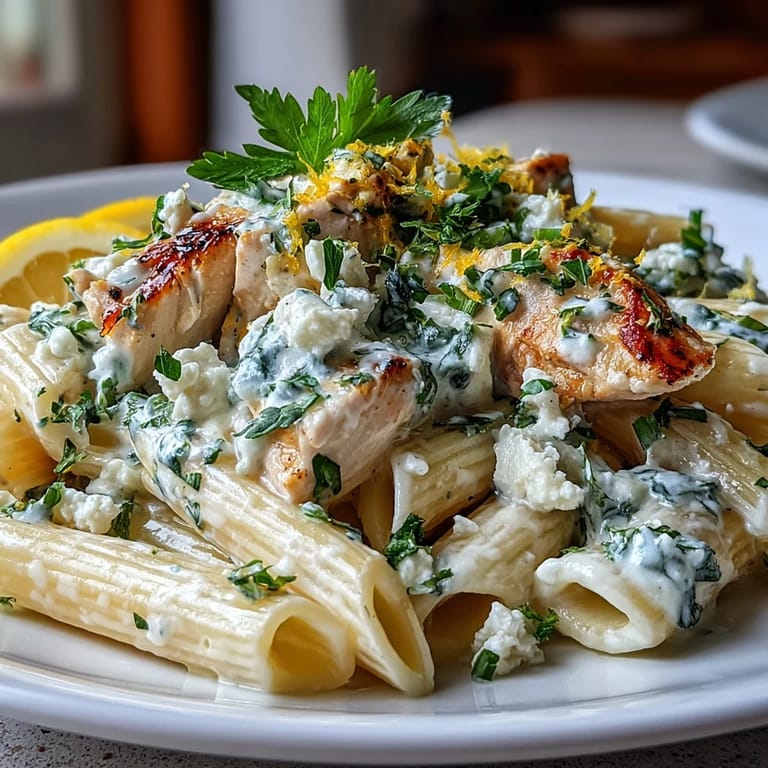
Mediterranean flavors have this way of feeling light even when they're creamy, and that's because lemon and herbs do the heavy lifting instead of relying purely on fat. The oregano ties everything to Greek traditions without being loud about it, and the feta brings a salty tang that makes your palate feel satisfied faster. This means you eat less while feeling more nourished, which is the opposite of how heavy cream dishes usually work.
Cooking Together, Every Step
What I love most about this recipe is how it invites you to use your senses at every stage. You'll hear the chicken sizzle when it hits hot oil, smell the garlic wake up in seconds, see the lemon juice transform the cream from opaque to luminous, and taste how each element—tang, richness, herbaceous warmth—plays against the others. There's no guesswork here because the dish tells you when something's ready.
Easy Swaps and Personal Touches
This recipe is sturdy enough to handle variations based on what you have or what you're craving. Spinach wilts right into the finished pasta and adds color without overwhelming the delicate lemon flavor, while cherry tomatoes burst with brightness if you want something to cut through the richness. Some nights I use Greek yogurt for half the cream to lighten things up, and it works beautifully as long as you keep the heat low so the yogurt doesn't curdle.
- Stir in a handful of fresh spinach or halved cherry tomatoes just before serving so they stay vibrant.
- Swap half the heavy cream for Greek yogurt if you want a tangier sauce that feels a bit lighter.
- A splash of white wine in the sauce adds complexity if you want to feel extra, but it's not necessary for something this good.
 Save
Save 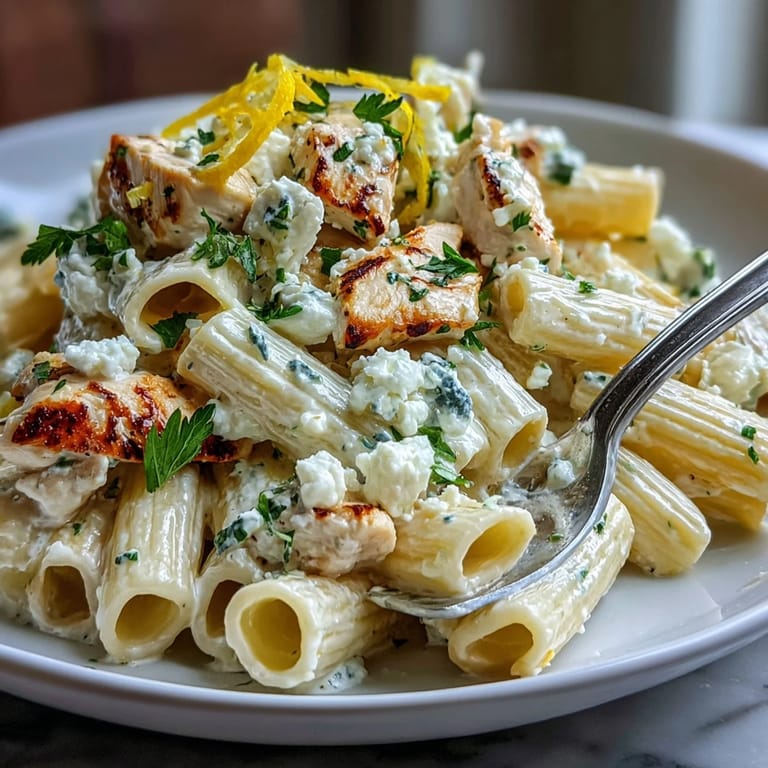 Save
Save This is the kind of dish that proves weeknight cooking doesn't have to mean sad or boring—it just means being intentional about every ingredient and step. Once you make it once, you'll find yourself returning to it again and again, tweaking nothing because it already knows what it's doing.
Recipe FAQs
- → Can I make this pasta ahead of time?
This dish is best served immediately, as the creamy sauce tends to thicken when refrigerated. If you need to prep ahead, cook and season the chicken in advance, then store it separately. Make the sauce fresh when ready to serve, and reheat the chicken gently in the sauce before combining with pasta.
- → What type of pasta works best for this dish?
Penne or rigatoni are ideal choices because their tube shapes and ridged surfaces capture the creamy sauce beautifully. However, other short pasta shapes like fusilli, farfalle, or even macaroni will work well. Avoid long strands like spaghetti—the sauce needs something substantial to cling to.
- → How can I lighten this dish?
Replace half of the heavy cream with Greek yogurt for a lighter version that still delivers creaminess. You can also increase the chicken broth ratio and reduce the cream slightly. Adding baby spinach or cherry tomatoes not only boosts nutrition but also adds volume without significantly increasing calories.
- → What wine pairs well with this lemon feta chicken?
A crisp Sauvignon Blanc or Greek Assyrtiko complements the bright lemon notes and cuts through the rich cream sauce. For red wine lovers, a light Pinot Noir or dry rosé works nicely without overpowering the delicate flavors. The acidity in these wines balances the tangy feta and lush cream perfectly.
- → Can I use chicken thighs instead of breasts?
Absolutely! Boneless, skinless chicken thighs work wonderfully and often stay more tender during cooking. Cut them into bite-sized pieces just as you would breasts. Thighs may take an extra minute or two to cook through, but they'll add even more richness to this already indulgent pasta.
- → Is there a substitute for feta cheese?
If you're not a fan of feta, try goat cheese (chèvre) for a similar tangy creaminess, or cotija for a salty crumble. For a milder option, extra Parmesan or Asiago will work but you'll lose some of that characteristic Greek tang. You could also blend ricotta with a bit of lemon juice to mimic feta's bright flavor profile.