 Save
Save Last winter, when everyone around me seemed to be fighting off some seasonal bug, I found myself craving something warm and gentle that felt like medicine without actually being medicine. My grandmother never made miso soup, but I stumbled upon it during a solo lunch at a tiny Japanese counter spot where the chef watched me take my first sip and smiled knowingly. That afternoon, I stopped at an Asian market on my walk home, clutching a small container of miso like I had discovered something ancient and secret. Now, whenever steam rises from my kitchen pot, carrying that unmistakable fermented aroma, I'm transported back to that rainy afternoon when something so simple felt like revelation.
I served this to my skeptical neighbor who claimed she could never like tofu, watching her face soften as she took that first tentative spoonful. She asked for seconds, then asked me to write down the recipe on the back of an envelope she pulled from her purse. That envelope is probably still stuck to her refrigerator somewhere.
Ingredients
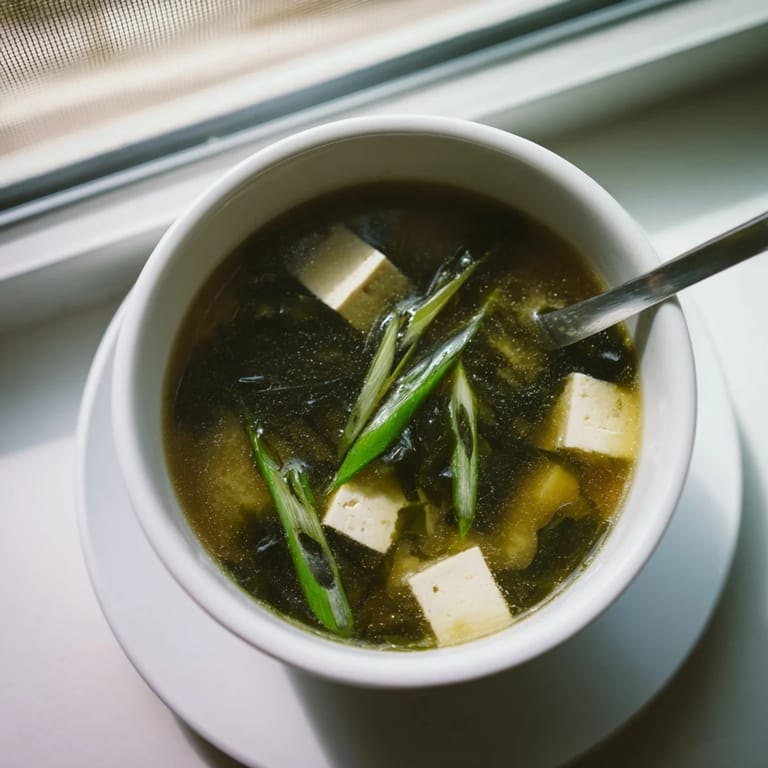
- 4 cups dashi stock: The foundation of everything that follows, and using vegetarian dashi made from kombu seaweed creates just as profound a depth as traditional fish-based versions
- 3 tablespoons miso paste: White miso brings sweetness and delicacy while yellow adds earthiness, but either one will transform plain water into liquid gold
- 200 g silken tofu: Handle it like you're cradling something fragile, cutting cubes with a sharp knife through the water in the package to keep it from breaking apart
- 2 tablespoons dried wakame: This seaweed expands magically in water, so a little goes incredibly far, adding ocean notes and a texture that somehow feels tender and substantial at once
- 2 scallions: Fresh green onion sprinkled on top provides the only crispness in an otherwise silky bowl, creating tiny explosions of bite against the smooth soup
Tired of Takeout? 🥡
Get 10 meals you can make faster than delivery arrives. Seriously.
One email. No spam. Unsubscribe anytime.
Instructions
- Warm the dashi gently:
- Bring your dashi stock to just below a bubble, watching for small movement rather than rolling boils, which can make the broth cloudy and tough
- Wake up the seaweed:
- Cover the dried wakame with cold water and watch it bloom and soften while your broth heats up, then drain it and marvel at how something so small transforms so completely
- Dissolve the miso properly:
- Whisk the miso paste in a separate bowl with some hot dashi until completely smooth, because nothing ruins the moment more than discovering salty clumps of undissolved paste in your first bite
- Add tofu and wakame:
- Lower your tofu cubes and expanded seaweed into the warm broth, letting them heat through gently for just a couple of minutes, treating the tofu as carefully as you would a sleeping cat
- Finish with miso:
- Remove the pan from heat completely before stirring in your dissolved miso, preserving those beneficial cultures and preventing that slightly bitter taste that comes from overheating fermented foods
- Garnish and serve immediately:
- Scatter fresh scallion slices across each bowl, their sharp green brightness cutting through the richness like sunlight through fog
 Save
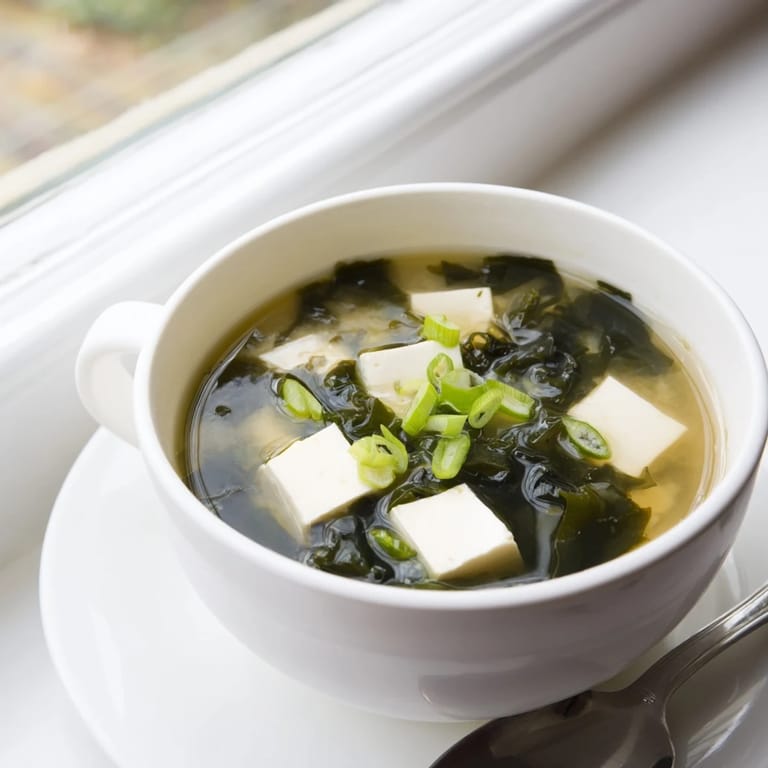
Save This soup became my go-to during a month when money was tight but I still wanted to eat something that felt nurturing and substantial. I learned that comfort doesn't always require complexity.
Building Layers of Flavor
There's a reason Japanese grandmothers rarely measure their miso, instead tasting and adjusting by instinct. Your first batch might feel too mild or slightly too intense, and that's exactly how you learn what your own perfect balance tastes like.
Make It Yours
Once you're comfortable with the basic version, consider adding shiitake mushrooms during the broth stage, their earthiness complementing the miso's fermented depth. Spinach leaves added in the final minute wilt beautifully without losing their bright green appeal.
Serving Suggestions
A bowl of miso soup can be anything from a starter to a complete meal, depending on what you serve alongside it.
- Steamed short-grain rice turns this into dinner
- A simple green salad with vinaigrette balances the salt
- Fresh gyoza on the side makes it feel like restaurant night at home
 Save
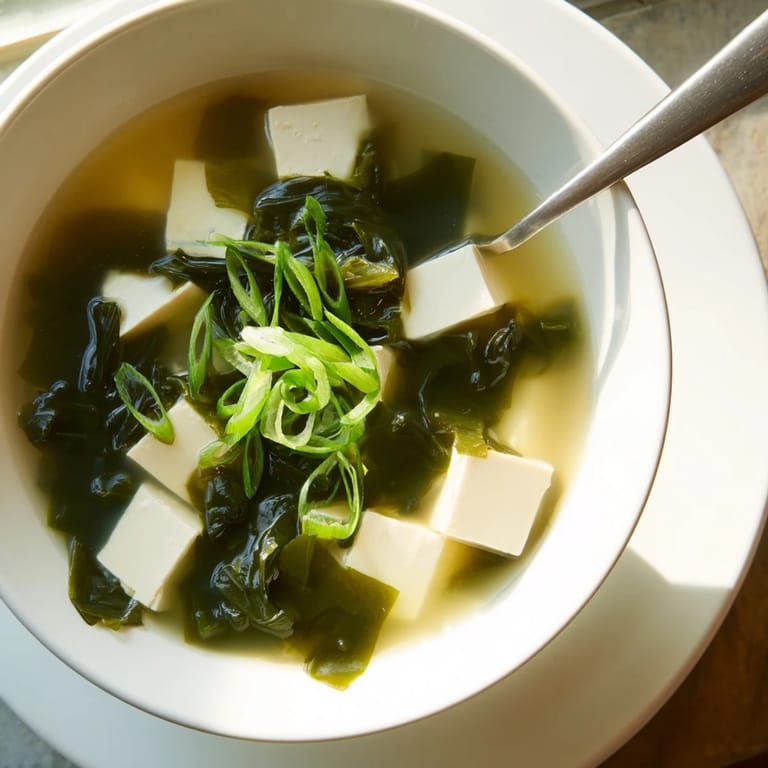
Save Some days this soup is just lunch, but other days it feels like an embrace in a bowl. Trust your gut, taste as you go, and let your own perfect version emerge.
Recipe FAQs
- → What type of miso works best?
White or yellow miso paste offers a milder, slightly sweet flavor ideal for this preparation. Red miso provides a stronger, deeper taste if you prefer more intensity.
- → Can I use vegetable stock instead of dashi?
Yes, vegetable broth works perfectly for a plant-based version. Traditional dashi made from kombu seaweed and dried shiitake mushrooms provides authentic umami flavor without fish products.
- → Why shouldn't I boil the miso?
Boiling miso paste destroys beneficial probiotics and enzymes, while also causing the flavor to become bitter and overly salty. Always remove from heat before stirring in the dissolved miso.
- → How do I store leftovers?
Store cooled soup in an airtight container for up to 2 days. Reheat gently over low heat without boiling. The tofu may become slightly softer but remains delicious.
- → What vegetables can I add?
Sliced shiitake mushrooms, baby spinach, thinly sliced carrots, or snow peas work beautifully. Add heartier vegetables earlier to ensure they cook through.
- → Is this suitable for meal prep?
The broth can be prepared ahead and stored separately. Add the miso paste and tofu just before serving for the best texture and maximum probiotic benefits.