 Save
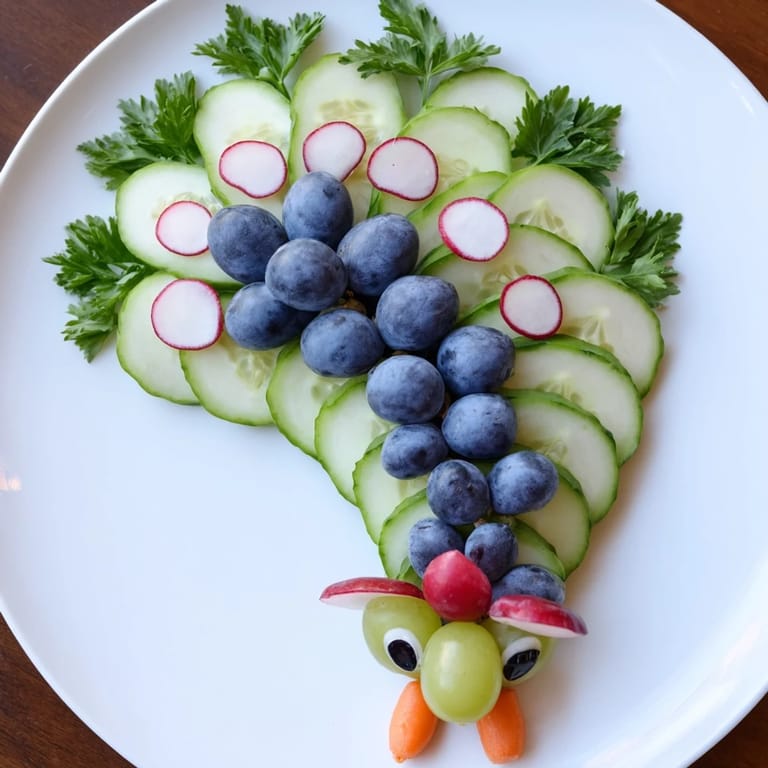
Save My daughter came home from school one afternoon absolutely mesmerized by a nature documentary about peacocks. She couldn't stop talking about their magnificent tail feathers, so when she asked if we could make something that looked like one, I realized the answer was sitting right in our crisper drawer. This Peacock Tail platter became our little secret—a way to turn an ordinary snack into something that made her eyes light up the same way those feathers did on screen.
I brought this to a potluck once, and it sat untouched for the first ten minutes because everyone was too busy taking pictures. Then someone broke the ice, and suddenly people were rearranging grapes to make it look even more peacock-like. That's when I knew it wasn't just food—it was an experience, a conversation starter, something that brought people together around the table with childlike wonder.
Ingredients
- Large cucumbers: The backbone of your peacock, and their thin slices become the perfect canvas for everything else.
- Blue or black seedless grapes: These jewel-toned clusters are what catch the eye, and their sweetness balances the crisp cucumber beautifully.
- Medium radishes: Sliced thin, they become those striking eye spots that give the peacock its personality and visual punch.
- Fresh parsley or dill sprigs: These feathery greens at the base complete the illusion and add a fresh herbal note.
- Small carrot: A few delicate strips become the beak and feet, grounding the whole composition.
Tired of Takeout? 🥡
Get 10 meals you can make faster than delivery arrives. Seriously.
One email. No spam. Unsubscribe anytime.
Instructions
- Prepare your canvas:
- Wash and dry all your produce thoroughly—any water spots will dull the visual magic you're about to create. Pat everything down gently with paper towels to ensure those cucumber slices and grapes stay gleaming.
- Master the bias slice:
- Hold your knife at a gentle angle and slice the cucumbers into thin, oval shapes. This angle creates an elegant, elongated leaf-like look that's far more dramatic than straight cuts.
- Create the radish accents:
- Slice your radishes paper-thin on a mandoline or with a sharp knife. The thinner they are, the more delicate and authentic they'll look as the peacock's eye spots.
- Build the tail foundation:
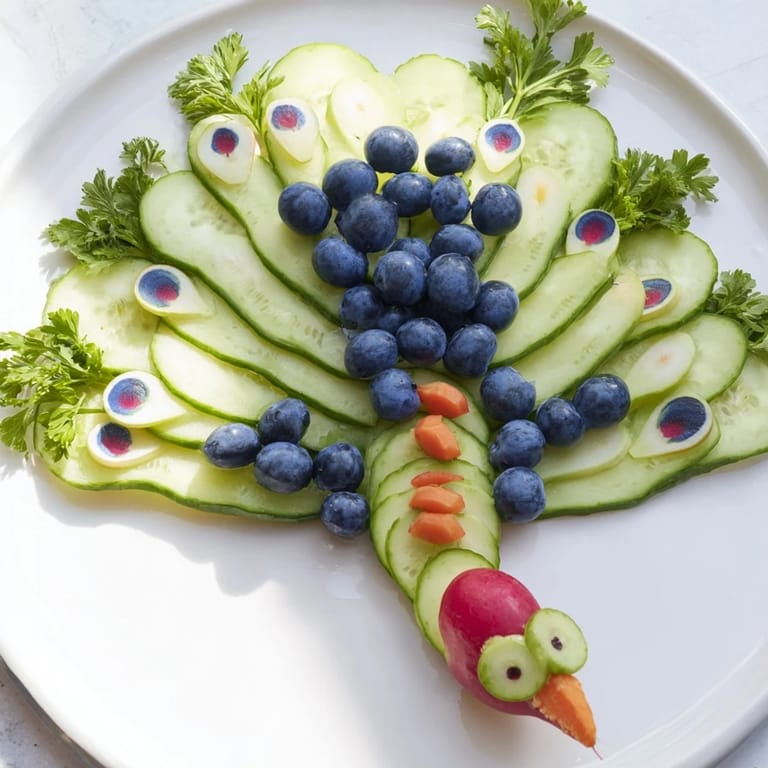
- Arrange your cucumber slices in overlapping rows on a large platter, starting narrow at one end and fanning outward like a real peacock tail. Each slice should overlap the last by about half to create that flowing, feathered effect.
- Add the jeweled eyes:
- Nestle clusters of blue grapes onto the cucumber slices, spacing them evenly across the tail. They should look purposeful, not random—think of them as the focal points of your design.
- Perfect the eye details:
- Center a thin radish slice on top of each grape cluster. This contrast of white and pink against the deep blue creates the mesmerizing eye pattern that makes people lean in closer.
- Finish with beak and feet:
- At the narrow end of your fan, arrange thin carrot strips to suggest a little beak and delicate feet. Keep it simple—just a suggestion is more elegant than obvious.
- Add the feathered base:
- Tuck fresh parsley or dill sprigs around the base of the fan where the tail meets the body. This greenery grounds the whole composition and adds authentic botanical texture.
- Serve at its peak:
- Bring it to the table immediately for maximum crispness and visual impact, or cover and refrigerate for up to two hours if needed.
 Save
Save What started as a way to entertain my daughter became something deeper—a reminder that the most memorable meals aren't always about complicated techniques or fancy ingredients. Sometimes they're about noticing the beauty in what you already have and taking the time to arrange it with intention.
Playing with Color
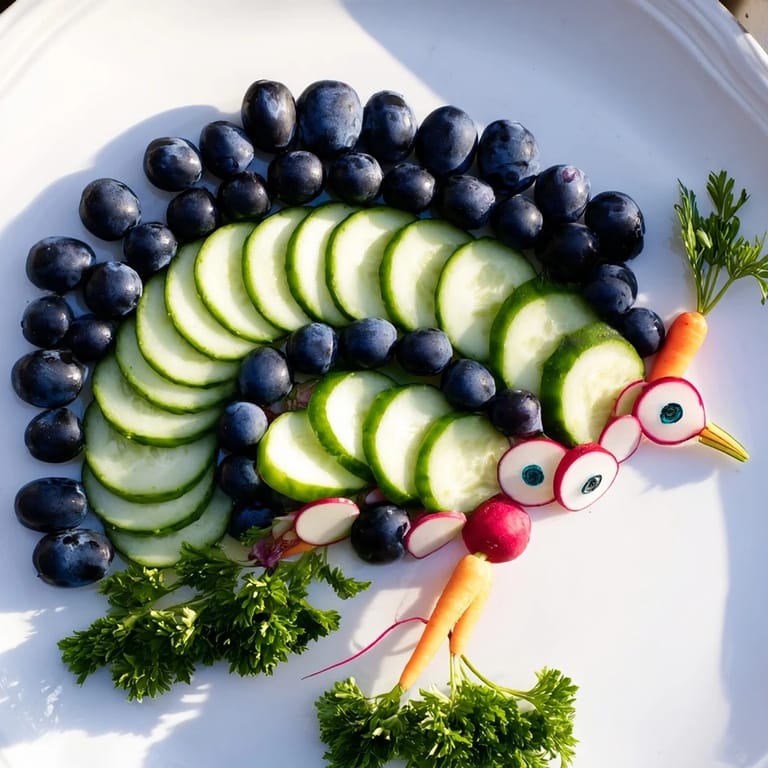
The moment you stray from traditional blue grapes, this platter becomes your personal art project. I've experimented with red grapes for warmth, golden beets for an earthy glow, and thin rings of colored bell pepper for geometric precision. Each variation tells a different story, but the magic stays the same—simplicity arranged with care.
Dips That Complement
A cool yogurt dip with fresh herbs beside this platter feels natural and grounding, while hummus adds richness without competing for attention. I once brought both and noticed people gravitated toward the yogurt first, letting the vegetables shine before adding anything extra. The platter deserves to be tasted on its own terms first.
Making It Your Own
This recipe is wonderfully flexible, and half the joy is deciding what variations speak to you. Some afternoons I keep it strictly traditional, while other times I've added thin slices of avocado for creaminess or scattered pomegranate seeds for tartness and visual drama.
- Yellow or red grapes can replace blue ones if that's what you have on hand.
- Thin apple or pear slices can create additional texture layers if you're feeling creative.
- A tiny dot of cream cheese under each radish eye spot adds an unexpected richness.
 Save
Save There's something quietly powerful about taking a handful of ordinary ingredients and turning them into something that makes people smile the moment they see it. This peacock tail has done that every single time.
Recipe FAQs
- → How should the cucumbers be sliced for this platter?
Slice cucumbers thinly on a bias to create oval-shaped pieces that overlap nicely for the fanned tail effect.
- → What variety of grapes works best for this display?
Use blue or black seedless grapes for vibrant color, though yellow or red grapes can be used for added variety and contrast.
- → How are the radish slices used in the presentation?
Thin radish rounds are placed atop grape clusters to mimic the eye spots of the peacock's tail feathers.
- → Can this platter be prepared in advance?
Yes, arrange shortly before serving for crispness, but you may cover and refrigerate for up to 2 hours if needed.
- → What garnishes help enhance the appearance of the tail?
Fresh parsley or dill sprigs add a feathered base, while thin carrot slices create a beak and feet accents for an artistic touch.