 Save
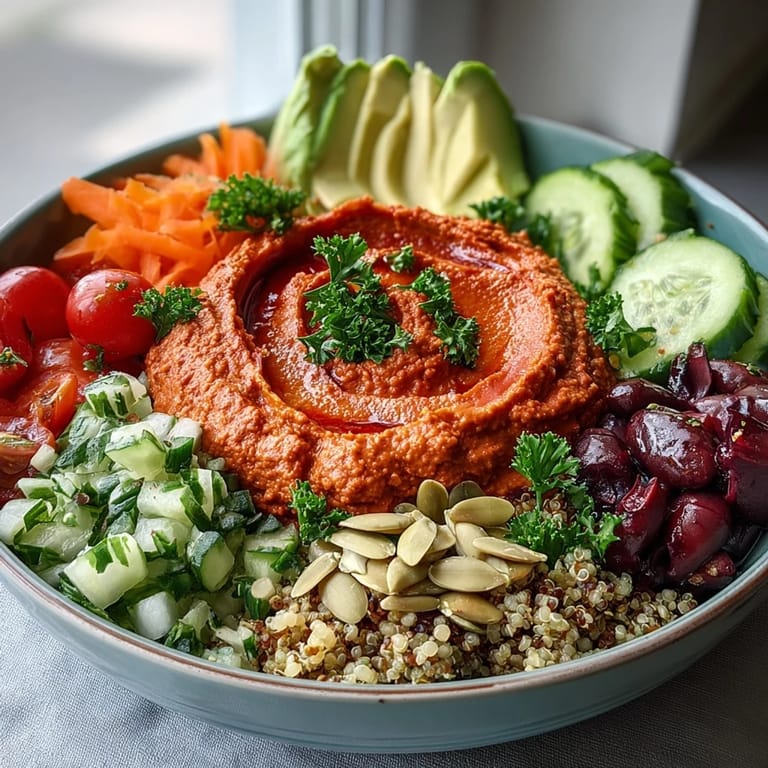
Save There's something about assembling a Buddha bowl that makes you feel like you're building art on a plate. I discovered these roasted red pepper hummus bowls during a particularly hectic week when I needed meals that felt both nourishing and effortless, something I could prep without much fuss but wouldn't bore me by Wednesday. The moment I blended those silky chickpeas with charred red peppers, the whole kitchen smelled like a Mediterranean market, and I knew I'd found something special. Now they're my go-to when I want to feel grounded and actually enjoy what's in front of me.
I made these for a friend who'd just started eating plant-based, and watching her face light up when she took that first bite—seeing the surprise that vegan food could be this vibrant and filling—reminded me why I love cooking. She kept saying the hummus was almost too pretty to eat, which made me laugh because that's exactly the point. Sometimes food needs to be a little joyful to taste right.
Ingredients
- Chickpeas: They're the foundation of everything here, and rinsing them thoroughly removes that starchy foam that can make hummus gluey instead of creamy.
- Roasted red bell pepper: Buying them jarred is totally fair game, but roasting your own takes five minutes and the flavor becomes so much deeper and sweeter.
- Tahini: This sesame paste is the secret to that silky texture—don't skip it or try to replace it with peanut butter, they do completely different things.
- Fresh lemon juice: It brightens everything and keeps the hummus from tasting one-dimensional, so freshly squeezed really does matter here.
- Garlic: Just one clove so it plays a supporting role rather than taking over the whole show.
- Extra virgin olive oil: Use something you actually like because you'll taste it, not the cheap stuff you use for roasting vegetables.
- Ground cumin and smoked paprika: These spices whisper rather than shout, adding warmth and complexity without being spicy.
- Cold water: This is your tool for getting the texture exactly right, added slowly so you don't overshoot into thin and soupy.
- Quinoa or brown rice: Pick whichever grain makes you happy; they all work beautifully as the anchor for everything else.
- Cherry tomatoes: Halved so they release a little juice that mingles with the dressing and adds natural brightness.
- Cucumber: The crispness here is essential for textural contrast, so use the freshest one you can find.
- Purple cabbage: It stays crunchy even after sitting in the bowl and adds an almost earthy sweetness that grounds the whole thing.
- Baby spinach: Raw spinach wilts slightly from the warm grain, becoming more tender without disappearing.
- Avocado: Slice it just before assembling or it'll oxidize and turn brown, but if it does, a squeeze of lemon fixes that right up.
- Shredded carrots: They add a subtle crunch and natural sweetness that ties everything together.
- Kalamata olives: Salty, slightly funky, and honestly essential for that Mediterranean feeling.
- Pumpkin seeds: Toasting them yourself for just a few minutes makes them taste nuttier and more alive than raw ones.
- Fresh parsley or cilantro: Whichever you love more, added at the very end so it stays bright and hasn't wilted into the bowl.
Tired of Takeout? 🥡
Get 10 meals you can make faster than delivery arrives. Seriously.
One email. No spam. Unsubscribe anytime.
Instructions
- Start with the hummus:
- Add your rinsed chickpeas, roasted red pepper, tahini, lemon juice, minced garlic, olive oil, cumin, paprika, and salt to a food processor and blend until it's completely smooth. This usually takes about three minutes of steady processing, and the whole thing will transform from chunky to velvety as the chickpeas break down and release their oils.
- Get the texture just right:
- Add cold water one tablespoon at a time, pulsing between additions, until the hummus reaches that perfect creamy consistency where it holds together but spreads easily. Taste it and adjust the salt or lemon juice if it needs a little more brightness or depth.
- Prepare your grains:
- Cook your quinoa, brown rice, or millet according to package directions if you haven't already, and let it cool to room temperature. Warm grains work fine too, but there's something about letting everything settle that makes assembly easier.
- Prep all your vegetables:
- Halve your tomatoes, dice your cucumber, shred your cabbage, slice your avocado, shred your carrots, and get all of it arranged where you can see it. This is the moment when everything feels organized and doable rather than overwhelming.
- Build your bowls:
- Start with a generous handful of cooked grain in each bowl as your base, then arrange everything else on top in a way that pleases you. There's no right way to do this—some people like organized sections, others like a casual tumble of colors.
- Add the hummus and finish:
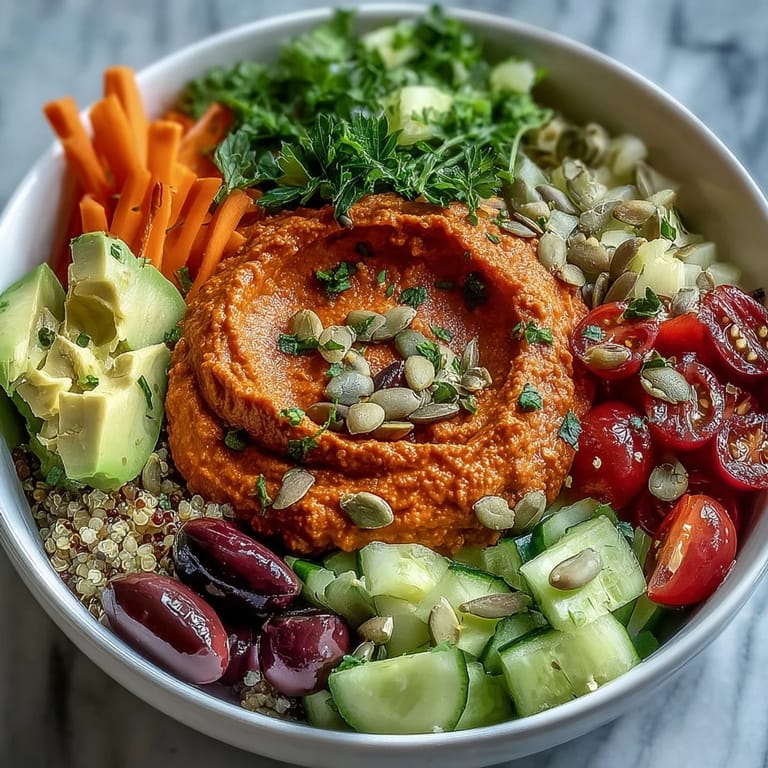
- Dollop a big spoonful of roasted red pepper hummus into the center or to the side of each bowl, scatter your toasted pumpkin seeds on top, and finish with fresh herbs. If you're drizzling dressing, whisk together lemon juice, olive oil, salt, and pepper first, then drizzle lightly so everything doesn't get soggy.
 Save
Save I remember sitting down with these bowls on a quiet Sunday morning, no agenda, no rush, just time to eat something that felt like self-care in edible form. That's when I realized these bowls had become less about convenience and more about giving myself permission to slow down and actually enjoy lunch.
The Hummus Technique
Making hummus from scratch feels like a small kitchen superpower once you understand how it works. The chickpeas break down gradually as you blend, releasing starches and oils that create that creamy base, and the tahini acts like an emulsifier keeping everything smooth and cohesive. The trick is not rushing it—let the food processor do its work for a full minute or two, and you'll end up with something silkier than you'd expect from just stirring things together by hand. If it seems too thick at first, resist the urge to add water immediately; sometimes you just need to let it process a bit longer.
Building Bowls That Actually Stay Together
The secret to a Buddha bowl that doesn't fall apart as you eat it is layering with intention. Put your grain down first as the structural foundation, then arrange vegetables that have different textures next to each other so you get a little of everything in each spoonful. Softer things like avocado and hummus should go in spots where they won't get crushed, and the crunchier elements—olives, pumpkin seeds, cabbage—can handle being stacked higher. Think of it like building a balanced bite rather than just throwing everything in randomly.
Making This Recipe Your Own
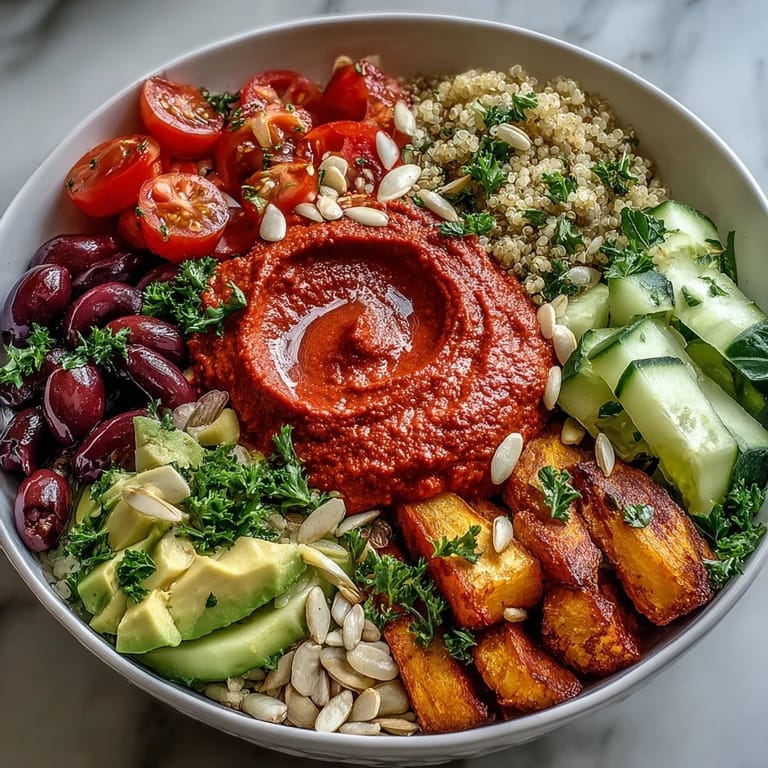
The beauty of Buddha bowls is that they're infinitely flexible once you understand the basic formula: a grain base, a protein-rich element like hummus or tofu, plenty of raw vegetables for freshness, and something crunchy to keep it interesting. You can swap out any vegetable depending on what's in season or what you actually like to eat—if you hate raw cabbage, don't force it into your bowl just because the recipe says so. The hummus is the star here, so that's the one constant, but everything else is really just your personal preferences organized on a plate.
- Try roasted chickpeas sprinkled on top instead of pumpkin seeds for extra crunch and protein.
- Add some marinated tofu or baked tempeh if you want something more substantial.
- Swap the lemon dressing for tahini dressing by whisking tahini with lemon juice and water until pourable.
 Save
Save These bowls have become my answer to wanting something that feels special but doesn't require special effort. They're the kind of meal that reminds you eating well doesn't have to be complicated.
Recipe FAQs
- → Can I make the hummus ahead of time?
Absolutely. The roasted red pepper hummus stores well in an airtight container in the refrigerator for up to 5 days. It actually develops deeper flavors after resting overnight.
- → What grains work best as the base?
Quinoa is excellent for its protein content and fluffy texture, but brown rice, millet, farro, or even bulgur work beautifully. Choose your favorite whole grain.
- → How do I roast red peppers at home?
Broil halved peppers skin-side up until charred (5-10 minutes), then cover to steam. The skins peel off easily. Alternatively, use jarred roasted peppers for convenience.
- → Can I add protein to make it more filling?
Definitely. Roasted chickpeas, crispy tofu cubes, grilled tempeh, or even pan-seared halloumi make excellent protein additions while maintaining the Mediterranean theme.
- → Are these bowls meal-prep friendly?
Yes. Store grains, hummus, and chopped vegetables separately in containers. Assemble fresh when ready to eat. The ingredients stay fresh for 3-4 days when properly stored.
- → What can I use instead of tahini?
Tahini provides authentic flavor and creaminess. If unavailable, sunflower seed butter or cashew butter work as substitutes, though the taste will differ slightly.