 Save
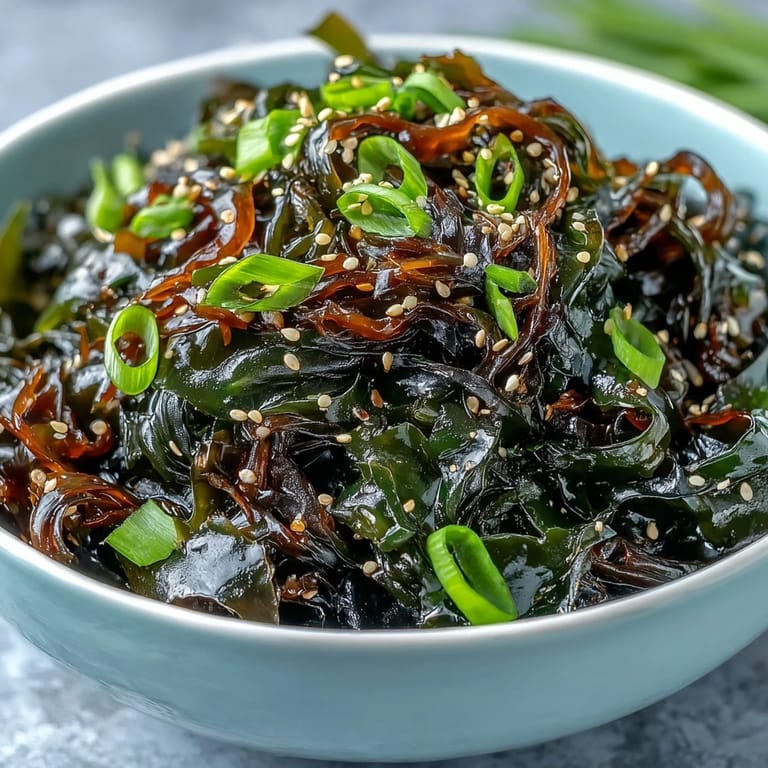
Save My first encounter with seaweed salad happened at a small Japanese restaurant wedged between two office buildings, the kind of place you'd walk past a hundred times before noticing. The chef handed me a bowl with this glistening dark tangle, and I was genuinely skeptical until that first bite—suddenly umami and brightness collided on my tongue, and I understood why people crave this stuff. Years later, I realized making it at home was almost embarrassingly simple, just needing patience to let the seaweed drink up cold water and a few minutes whisking together a dressing that tastes like the ocean decided to become elegant.
I made this for my sister one evening when she was stressed about something, and watching her face change from tired to genuinely happy over a simple salad reminded me that sometimes the best meals are the ones that don't demand anything from you except a few good ingredients and a willingness to let them shine. She's requested it almost every time she visits now, which feels like the highest compliment a cook can get.
Ingredients
- Dried mixed seaweed (wakame, hijiki, or arame): The foundation of everything here—choose whatever blend calls to you, though wakame is the gentlest introduction if you're new to seaweed. It transforms completely when hydrated, becoming tender without ever getting mushy.
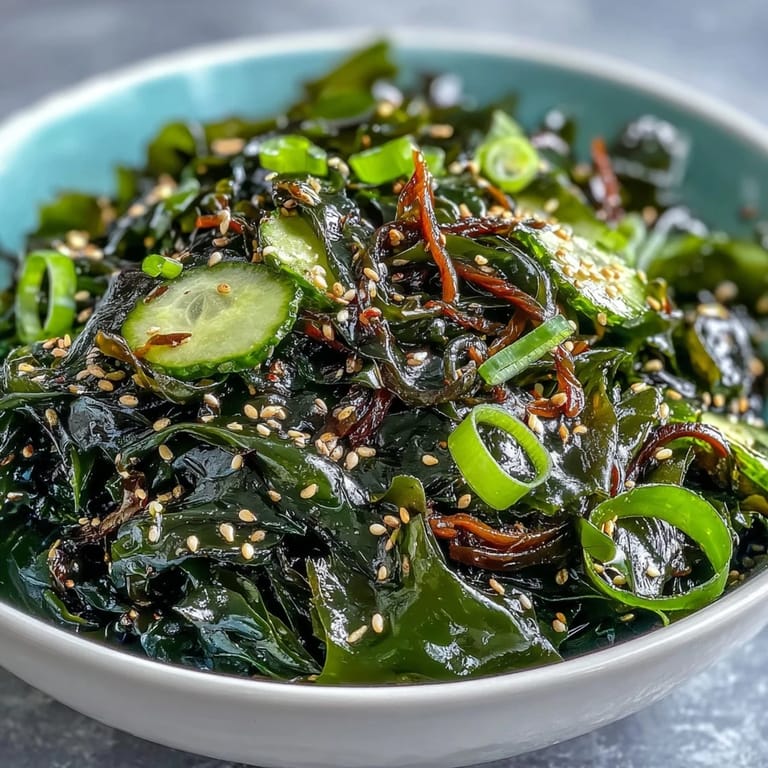
- Cucumber: Thin slices add this cool, clean contrast that keeps the whole salad from feeling heavy. I like to slice mine on the bias so they feel deliberate, almost ceremonial.
- Carrot: Julienned thin and bright, it brings a subtle sweetness and that delicate crunch that makes you want another bite.
- Scallions: Their quiet allium bite threads through everything, adding depth without overpowering the delicate seaweed.
- Ponzu sauce: This citrus-based wonder is the heartbeat of the dressing—search out a good one because it really matters here, bringing brightness and complexity that you can't replicate.
- Rice vinegar: A touch of gentle acidity that builds on the ponzu without making anything harsh or aggressive.
- Soy sauce or tamari: Use whichever suits your needs, but don't skip it—this is where the umami depth comes from that makes people wonder what you did to make a simple salad taste so complete.
- Toasted sesame oil: Just a tablespoon, but it's carrying the weight of flavor here, adding that warm, nutty dimension that makes everything feel intentional.
- Fresh ginger: Grate it right before using and you'll taste the difference—it's sharp and alive in a way that bottled ginger can never quite match.
- Sugar or maple syrup: A tiny bit to balance the sharp notes and let everything play together more kindly.
- Chili flakes: Optional, but they add this whisper of heat that comes in unexpectedly and reminds you to pay attention.
- Toasted sesame seeds: The final flourish that adds texture and reminds you why toasting things matters—they're deeper, more complex when you give them that brief moment of heat.
Tired of Takeout? 🥡
Get 10 meals you can make faster than delivery arrives. Seriously.
One email. No spam. Unsubscribe anytime.
Instructions
- Awaken the seaweed:
- Pour cold water over the dried seaweed until it's submerged, and then just wait. In about 10 minutes it'll unfurl and soften, becoming something almost alive again. Drain it thoroughly and use your hands to gently squeeze out the excess water—this step matters because soggy salad is nobody's friend.
- Gather your vegetables:
- Slice the cucumber thin enough to see light through it, julienne the carrot into delicate matchsticks, and slice the scallions. This isn't about perfection; it's about making everything the size of a casual bite.
- Build the dressing:
- In a small bowl, whisk the ponzu, rice vinegar, soy sauce, sesame oil, ginger, and sugar together until the sugar dissolves and everything becomes one unified, glossy mixture. Taste it at this point—this is your moment to adjust, to add more sweetness if it feels too sharp or more acid if it seems flat.
- Bring everything together:
- Toss the seaweed and vegetables in a large bowl with that dressing, moving everything gently so the seaweed stays tender and nothing bruises. You want every strand and slice kissed by that dressing, nothing hiding in the corners.
- Finish and serve:
- Transfer to your serving bowl or individual dishes, scatter sesame seeds across the top, and add red chili if you're feeling that heat. Serve it chilled or at room temperature—both ways are equally beautiful.
 Save
Save There's something almost meditative about the way this salad comes together, how a few items that might seem unusual in isolation become something you actually can't stop eating. I've served it to friends who swore they hated seaweed, and something about the combination—the tender seaweed, the crisp vegetables, that umami-forward dressing—changes their minds entirely.
The Seaweed Question
If you're nervous about seaweed, know that dried mixed seaweed is genuinely mild and approachable, especially when soaked properly. It develops a tender texture that's almost buttery, nothing like the strong ocean bite some people fear. The dressing wraps around it so completely that you're really tasting this balanced combination rather than seaweed on its own.
Why Cold Water Matters
Using cold water to rehydrate the seaweed keeps it tender and prevents it from getting mushy or tough, which warm water can sometimes do. I learned this the hard way after a few batches where the texture was just slightly off, and switching to cold water changed everything. It's one of those small details that seems insignificant until you taste the difference.
Customizing Your Bowl
The beauty of this salad is how happily it accepts additions depending on what you have or what mood you're in. Sometimes I add thin radish slices for extra crunch, or cooked edamame for protein, or even sliced avocado for creaminess. Trust yourself to play with it—this recipe is more of a foundation than a rigid formula.
- Radish slices add a peppery crunch that's really wonderful here.
- Edamame brings protein and substance without changing the flavor profile.
- Avocado slices make it feel more indulgent if you're serving it as a main course.
 Save
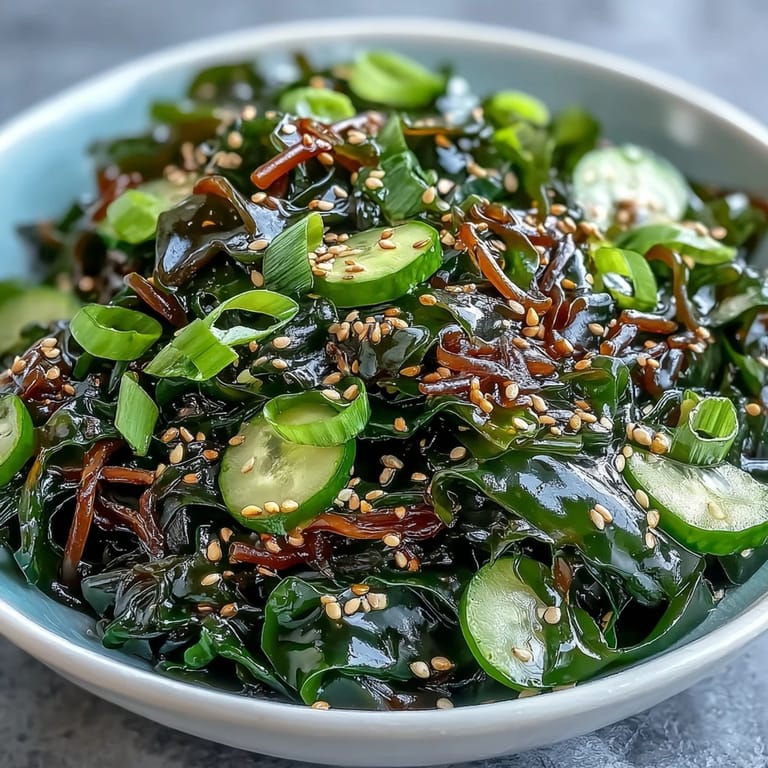
Save This seaweed salad has become one of those dishes I make when I want to feel nourished without fuss, when I want something that tastes bright and intentional without requiring hours of my attention. It's proof that the simplest things, done with care, are often the most memorable.
Recipe FAQs
- → How do I prepare the seaweed for this dish?
Soak dried seaweed in cold water for about 10 minutes until rehydrated, then drain thoroughly and squeeze out excess liquid before mixing.
- → Can I substitute ingredients in the dressing?
Yes, tamari can replace soy sauce for gluten-free options, and sugar can be swapped with maple syrup for sweetness.
- → What vegetables complement the seaweed well?
Thinly sliced cucumber, julienned carrot, and scallions add crispness and texture, balancing the tender seaweed.
- → Is this dish suitable for a vegan diet?
Absolutely, it uses plant-based ingredients and avoids dairy or animal products, making it vegan and dairy-free friendly.
- → How should this dish be served?
Serve chilled or at room temperature as a refreshing starter or side dish to complement various meals.
- → Can I add extra crunch to this salad?
Yes, adding thinly sliced radish or edamame provides additional texture and flavor contrasts.