 Save
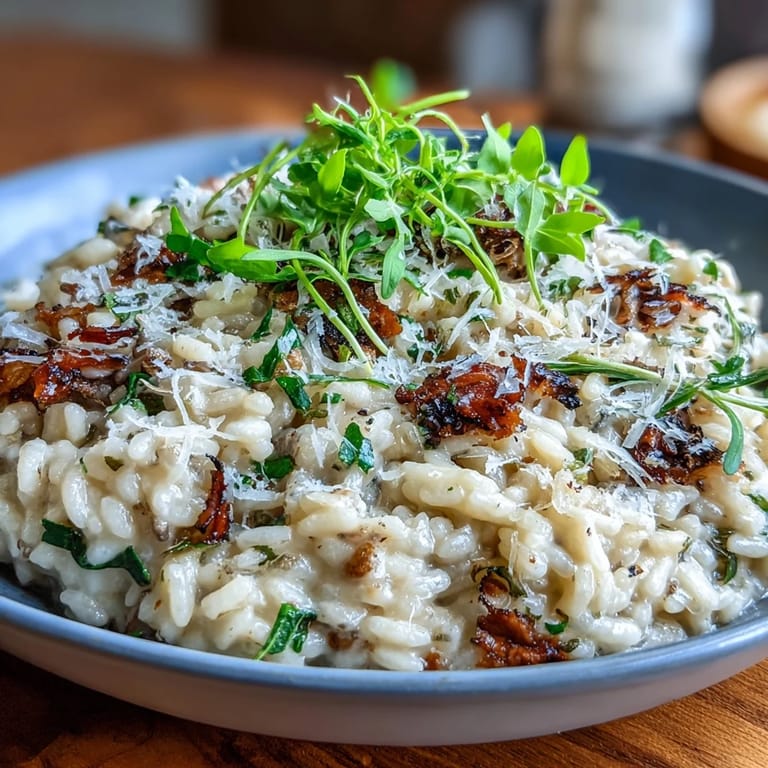
Save The first time I made truffle risotto, I was standing in my kitchen at dusk, watching the sun catch the steam rising from the pot, and I realized this wasn't going to be like any other dinner I'd cooked. My friend had brought back a small vial of truffle oil from a trip to Italy, left it on my counter with a note that said "for something special," and suddenly I was committed. What started as curiosity about that earthy, mysterious ingredient turned into an evening of constant stirring, careful listening for the quiet whisper of rice softening, and the kind of focus that makes cooking feel almost meditative.
I made this for my partner's birthday dinner, and what I remember most isn't the compliments, though there were plenty, but the moment they closed their eyes after the first bite. The whole table went quiet in that way it does when food is genuinely delicious, and I realized the truffle oil had done its job—it had transformed something familiar into something that felt like a gift. That's when I understood risotto isn't actually about showing off; it's about the care you pour into those thirty minutes of stirring.
Ingredients
- Arborio rice: This short-grain Italian rice has a special starch that releases gradually while stirring, creating that signature creamy texture without any cream at all (well, almost—we do add a little for luxury).
- Vegetable stock: Keep it warm in a separate pot so each ladle you add stays at temperature and the rice cooks evenly; cold stock will shock the cooking process and mess with your timing.
- Unsalted butter and olive oil: The butter gives you that rich, golden base while olive oil prevents the butter from burning—this combination is non-negotiable for proper flavor.
- Onion and garlic: Chop them fine because they need to almost dissolve into the risotto, becoming part of the flavor foundation rather than staying as distinct pieces.
- Dry white wine: This adds acidity and brightness that cuts through the richness; don't skip it or the risotto will taste flat and one-dimensional.
- Parmesan cheese: Use freshly grated, never the pre-shredded stuff—it melts differently and will make your risotto creamy instead of gluey.
- Heavy cream: A small amount at the end makes everything taste like a hug; it's the final flourish that turns good into unforgettable.
- Truffle oil: This is the whole reason we're here, so buy a bottle you'd actually want to use beyond this recipe—good truffle oil enhances everything from eggs to pasta.
- Fresh black truffle: If you can find it, shave it thin with a truffle shaver or very sharp knife; if not, truffle paste works beautifully and costs a fraction of the price.
- Pea shoots: These tender, slightly sweet greens are your final textural contrast—hunt for them at farmers markets or specialty grocers, and use them the day you buy them while they're still crisp.
Tired of Takeout? 🥡
Get 10 meals you can make faster than delivery arrives. Seriously.
One email. No spam. Unsubscribe anytime.
Instructions
- Set your mise en place:
- Before you turn on the heat, chop your onion and garlic, warm your stock in a separate pot, and have everything else measured and ready. This is non-negotiable because risotto waits for no one, and you'll be adding ingredients in quick succession.
- Build the flavor base:
- Heat butter and olive oil in your heavy saucepan over medium heat, then add the onion and let it soften until it's almost translucent—this takes about 3 to 4 minutes and you'll know it's ready when it smells sweet and fragrant. Add the garlic and stir for just one minute so it perfumes everything without turning bitter.
- Toast the rice:
- Stir the Arborio rice constantly for about 2 minutes until the grains are coated and the edges turn slightly translucent, almost glassy—this step seals the outside of each grain so it releases starch gradually rather than all at once. You'll hear a subtle clicking sound as the grains move against the spoon, and that's exactly what you want.
- Add the wine:
- Pour in your white wine and keep stirring until it's mostly absorbed, which takes about 3 to 4 minutes and fills your kitchen with the most incredible aroma. The wine will hiss and steam, and that's the acid working to break down the rice's surface.
- Begin the ladle method:
- Now for the rhythm that makes risotto special—add one ladle of warm stock, stir frequently, and wait until the liquid is almost completely absorbed before adding the next ladle. This takes about 18 to 20 minutes total, and it's meditative work; some people put on music, some people stand there quietly, but everyone agrees it's the part that makes risotto worth making.
- Test for doneness:
- The rice should be creamy but still have a slight bite when you taste it (we call this al dente), and you should be able to draw a line across the pan with your spoon that slowly fills back in. If the rice still feels hard, add another ladle of stock and keep going; if it's too soupy, stop adding liquid and just stir.
- Finish with luxury:
- Remove the pan from heat, stir in the heavy cream and freshly grated Parmesan, then drizzle generously with truffle oil and fold in half the pea shoots gently so they don't break down from the heat. Taste as you go and season with salt and pepper—remember that Parmesan is already salty, so go easy.
- Plate and serve:
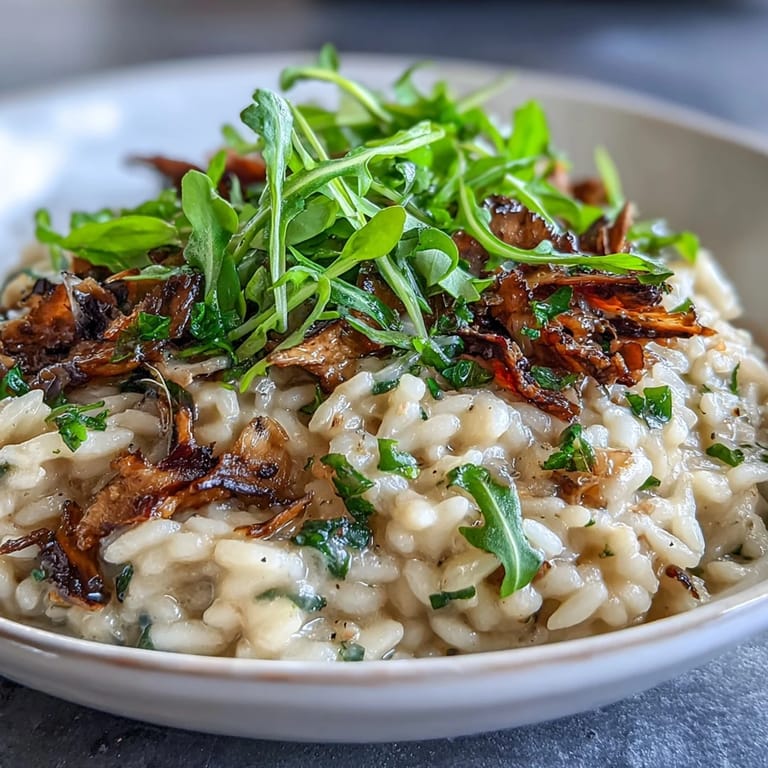
- Spoon the risotto into warm bowls (cold bowls will cool your risotto faster than you'd like), top with the remaining pea shoots and your shaved fresh truffle, and serve immediately because risotto doesn't wait around.
 Save
Save There's something about risotto that transforms the person making it, not just the people eating it. My grandmother once told me that any recipe you have to stand over and tend to with your hands and attention is teaching you patience, and I finally understood what she meant that evening with the truffle oil and pea shoots. It wasn't fancy because of the ingredients; it was fancy because of the care.
The Truffle Oil Question
I've learned the hard way that truffle oil is one of those ingredients where quality actually matters in a way that's immediately noticeable. The cheap stuff tastes synthetic and chemical, like someone tried to convince truffle by committee, but a good bottle has earthy complexity and a subtlety that makes people lean in and ask what that amazing smell is. For this recipe, I'd rather use less of a better oil than more of something mediocre, so invest in a small bottle from a source you trust and save it for dishes where it's the star.
Risotto Variations You Can Try
Once you nail this version, the technique stays the same but you can completely transform the dish by swapping ingredients. I've made it with wild mushrooms and sage, with saffron and scallops, even with roasted butternut squash and crispy sage—the risotto base is flexible, but the method is what matters. The beauty is that you're learning a foundational technique that opens doors to hundreds of different directions depending on what you find at the market or what's sitting in your pantry.
Wine Pairing and Serving
This risotto pairs beautifully with a chilled glass of Chardonnay, which echoes the wine you cooked with and cuts through the richness with crisp acidity. I like to serve it as a main course for a special dinner, but honestly, it's elegant enough to impress without being fussy about it—it's approachable luxury, which is maybe the best kind there is. A simple green salad with lemon vinaigrette on the side keeps things from feeling too heavy, and that's all you really need.
- Serve the risotto immediately in warmed bowls so it stays at the perfect temperature and texture.
- If you're cooking for guests, you can prepare everything up to the final ladle of stock in advance, then finish the dish right before serving.
- Leftover risotto can be refrigerated and turned into risotto cakes the next day—press it into patties, pan-fry until golden, and serve with extra truffle oil.
 Save
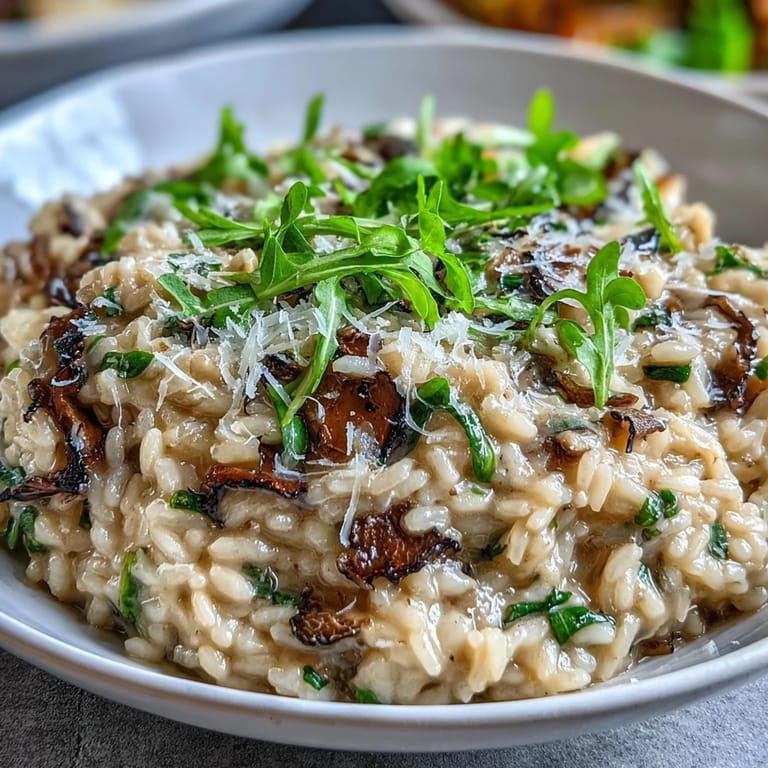
Save This risotto has become my answer to the question "what do you make when you want to feel like you've cooked something special?" Every time I make it, I remember why risotto is worth the standing and stirring. It's the kind of dish that reminds you why cooking for people you care about is its own kind of luxury.
Recipe FAQs
- → What type of rice is best for this risotto?
Arborio rice is ideal due to its high starch content, which gives risotto its creamy texture while keeping the grains firm.
- → Can I substitute fresh truffle if unavailable?
Yes, truffle paste or additional truffle oil can provide similar earthy flavors if fresh truffles are hard to find.
- → How do pea shoots enhance this dish?
Pea shoots add a fresh, crisp texture and a subtle sweetness that balances the rich, creamy components of the risotto.
- → What wine pairs well with this risotto?
A chilled glass of Chardonnay complements the creamy texture and earthy truffle notes beautifully.
- → Is it necessary to add white wine to the cooking process?
White wine adds acidity and depth to the dish, helping to balance the richness, but it can be omitted or replaced with a mild broth if preferred.