 Save
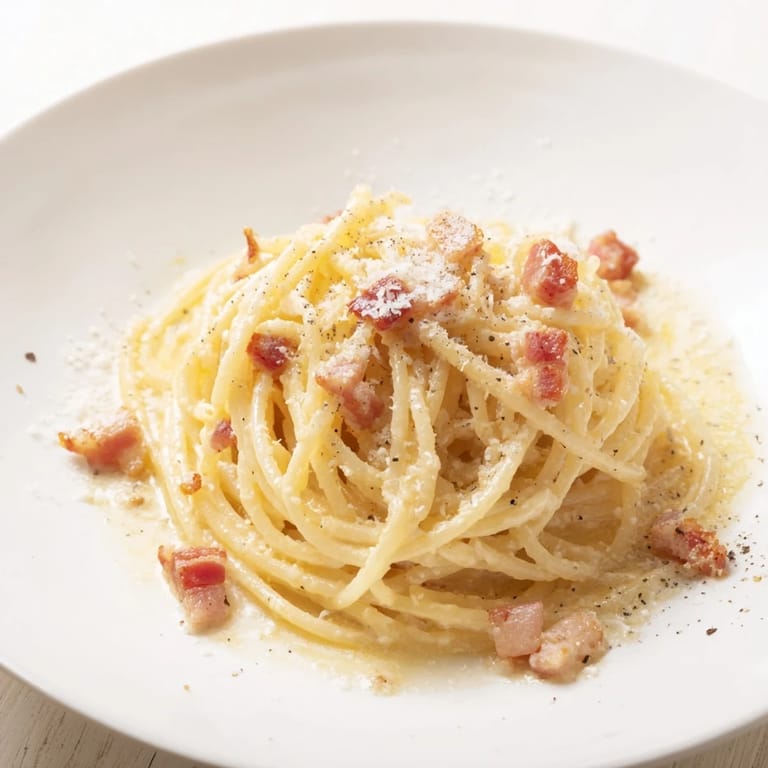
Save I discovered the real magic of carbonara by accident one weeknight when I was too hungry to overthink it. No cream, no garlic, just eggs and cheese meeting hot pasta in a controlled chaos that somehow transforms into silk. The Romans knew something we spend years trying to understand, and honestly, the fastest version is often the truest one.
I made this for my partner on a random Tuesday after a long day, and watching their face when they realized there was actual sauce on the plate—not cream, just the pasta starch and eggs doing their thing—made them ask for it three times that week. It became our weeknight anchor, the meal we turn to when we need something that feels indulgent but doesn't require planning.
Ingredients
- Dried spaghetti (200 g): You need the right amount to cling to the sauce properly; too much pasta and you'll be adding water endlessly.
- Eggs (2 large): These are your sauce, so use room-temperature eggs if you can—they're more forgiving when meeting hot pasta.
- Freshly grated Parmesan (40 g): Pre-grated cheese has anti-caking agents that won't melt smoothly; grate it fresh or the sauce turns grainy instead of silky.
- Freshly ground black pepper (1/4 tsp): Don't skip this—it's not a garnish here, it's a building block of the flavor.
- Bacon or pancetta, diced (100 g): Pancetta is the traditional choice, but good bacon works just as well if you crisp it properly.
- Extra Parmesan and black pepper: For finishing, because the dish deserves a final gesture of generosity.
Tired of Takeout? 🥡
Get 10 meals you can make faster than delivery arrives. Seriously.
One email. No spam. Unsubscribe anytime.
Instructions
- Boil the water and pasta:
- Salt the water generously—it should taste almost like the sea. Cook the spaghetti until it's al dente, which means it still has a slight resistance when you bite it, not soft all the way through. Before draining, capture about 80 ml of that starchy pasta water in a measuring cup; it's liquid gold for what comes next.
- Prepare the egg mixture:
- Whisk your room-temperature eggs with the grated Parmesan and black pepper until it's completely combined and looks uniform. This is your sauce base, and it needs to be ready the moment the hot pasta is in the pan.
- Crisp the bacon:
- While the pasta cooks, heat a large skillet over medium heat and add your diced bacon. Let it cook undisturbed for the first minute or two so it renders its fat properly, then stir occasionally until it's golden and crispy, about 3 to 4 minutes total. This is when your kitchen starts smelling like the best decision you made all day.
- Combine off heat:
- Remove the skillet from the heat—this is crucial because the residual heat is enough to cook your eggs gently into a sauce without scrambling them. Add the drained pasta directly to the bacon and its fat, then immediately pour in your egg-Parmesan mixture while tossing constantly and vigorously.
- Build the sauce:
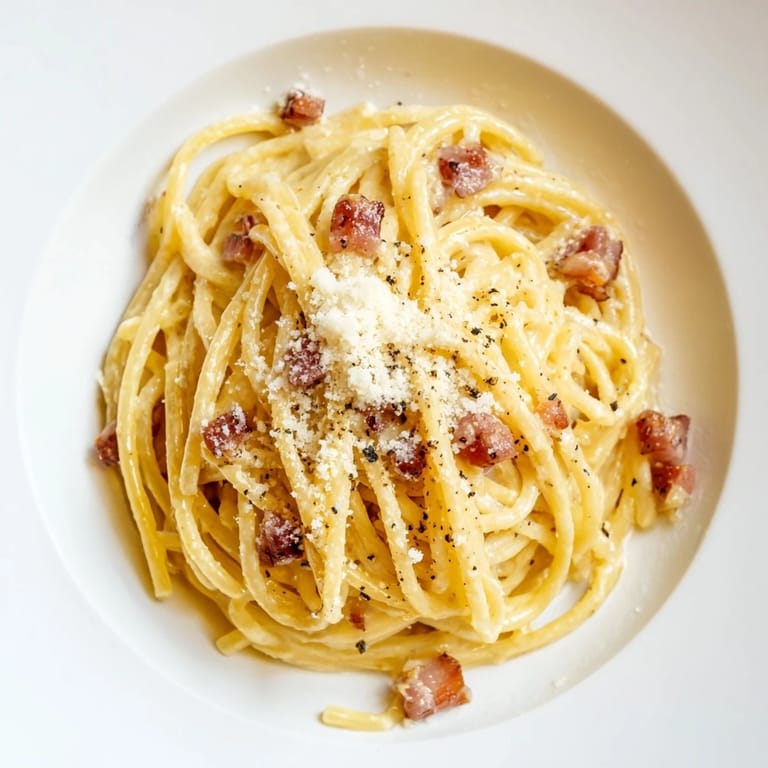
- As you toss, add the reserved pasta water a little at a time, just a splash or two at first, watching as the whole thing slowly transforms into something creamy and glossy. The starch in that water is what's doing the magic here, emulsifying everything into a coating that clings to each strand. Keep tossing until it looks like there's a proper sauce, not just clumps of cheese and egg.
 Save
Save There's a moment when the sauce comes together—when what looked like separate ingredients suddenly becomes one unified, glossy coating—and that's when I knew I'd finally understood why this dish has survived centuries. It's not complicated; it's just honest.
The Magic of Timing
Speed matters here, but not in a stressful way—it's more about confidence and rhythm. Once the pasta hits the skillet, you have maybe two minutes before the residual heat starts to fade and your window closes. I used to worry I was doing it wrong because it all happened so fast, but that quickness is exactly right. The faster you work, the creamier your sauce becomes, because you're harnessing that perfect window of temperature before the eggs would even think about setting.
Authenticity Versus Shortcuts
You'll see versions with cream, with garlic sautéed first, with all sorts of additions, and they're fine—but they're not carbonara anymore. The purity of this dish is what makes it work: eggs, cheese, pasta, and pork fat. That's it. I tried adding things once and immediately understood why the Italians didn't bother. When you strip away everything, what's left is perfect, and there's no improving on that.
Variations and Personal Touches
Once you've mastered the basic version, you have permission to play within its constraints. Some nights I use Pecorino Romano instead of Parmesan for a sharper, more authentic Roman bite. Other times, I'll add a single minced garlic clove to the bacon as it cooks, then remove it before tossing the pasta—it adds a whisper of something without overpowering the delicate balance. The fundamental technique stays the same; only the supporting flavors shift. You can also crack a whole egg yolk on top at the very end for richness, though honestly, it's never necessary.
- Pecorino Romano gives you that authentic Roman edge if you want to chase tradition.
- A tiny pinch of red pepper flakes scattered on top adds warmth without heat.
- Serve in warmed bowls so the pasta stays at the right temperature longer.
 Save
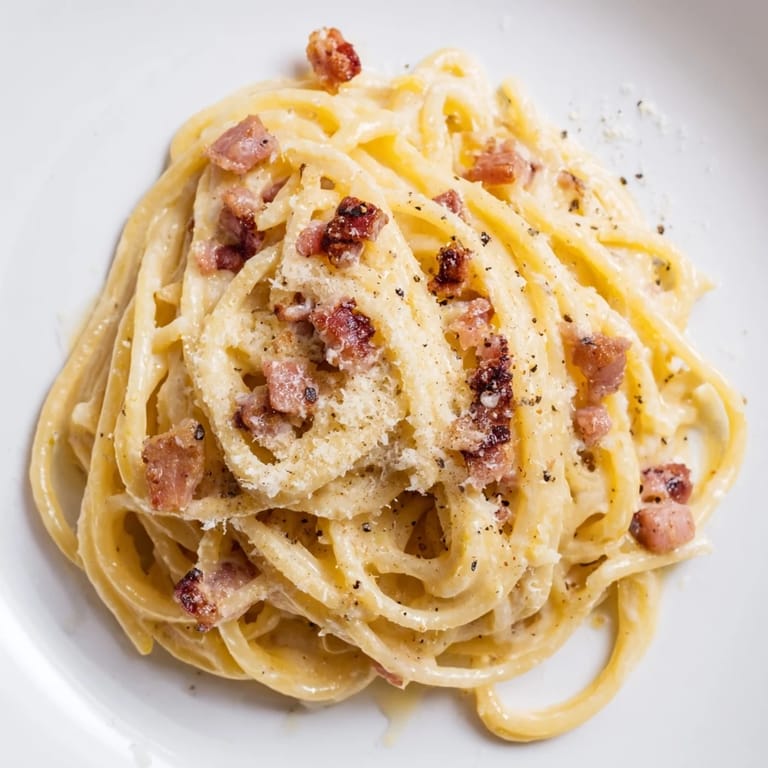
Save This is the kind of meal that teaches you that sometimes the most elegant food comes from constraints, not abundance. Make it tonight and taste why it's lasted this long.
Recipe FAQs
- → How do I prevent the egg sauce from scrambling?
Remove the skillet from direct heat before adding the egg and cheese mixture. Toss quickly while adding reserved pasta water gradually to create a smooth, creamy sauce.
- → Can I substitute bacon with pancetta?
Yes, pancetta works perfectly for this dish, providing a similar salty and savory flavor profile with a slightly different texture.
- → What type of cheese is best for this dish?
Freshly grated Parmesan is traditional, but Pecorino Romano can be used for a sharper, more authentic taste.
- → Is it necessary to reserve pasta water?
Yes, reserved pasta water helps loosen the sauce and binds the ingredients together, resulting in a silky texture.
- → Can I add garlic for extra flavor?
Adding a clove of minced garlic to the bacon while frying enhances flavor. Remove it before tossing the pasta to keep the sauce smooth.