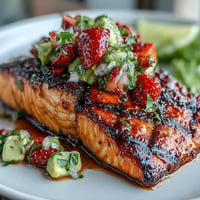
 Save
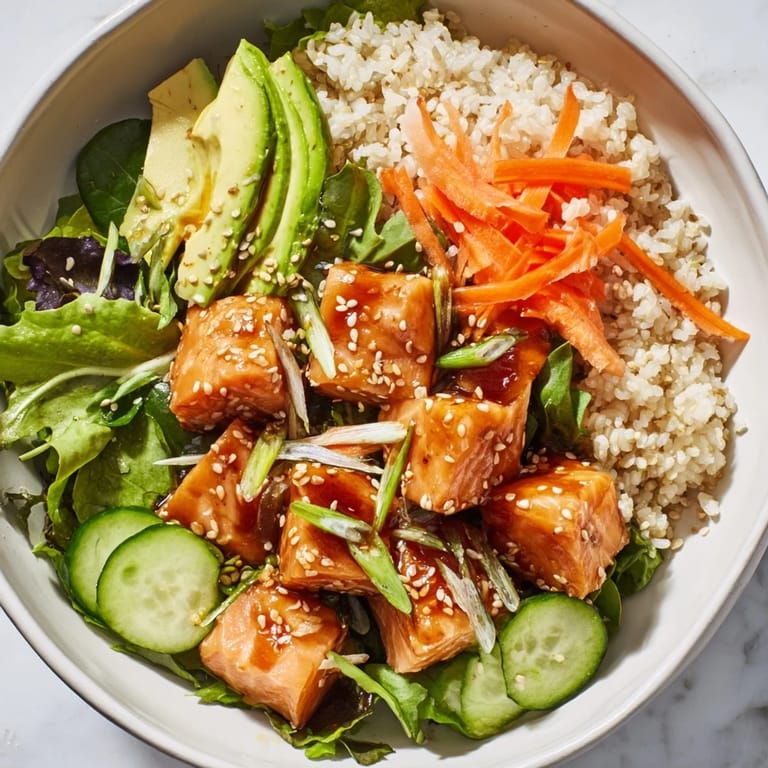
Save There's something about assembling a poke bowl that feels less like cooking and more like creating. I discovered this dish on a humid summer afternoon when my friend texted from a new spot downtown, raving about the salmon she'd just eaten. Two weeks later, tired of restaurant prices and craving that same bright, clean feeling, I decided to recreate it in my own kitchen. The marinade came together in minutes, but what really won me over was how the ginger and sesame perfumed the air as the fish sat quietly in the fridge, transforming into something restaurant-worthy with almost no effort.
I made this for my sister's lunch when she was visiting, and she kept saying it was restaurant-quality while casually scrolling through emails, which somehow made the compliment feel even better. She asked for the recipe before she'd finished, and that's when I knew I'd stumbled onto something worth keeping in rotation. Now whenever someone needs a meal that looks impressive but won't keep them stuck in the kitchen, this is what I suggest.
Ingredients
- Sushi-grade salmon or tuna: Buy from a reputable fishmonger or sushi counter—this is not the place to skimp, as the fish will sit raw in the marinade. The quality of your fish is everything here.
- Soy sauce: Use tamari if you need gluten-free, and don't be shy about tasting the marinade before you add the fish—it should hit that salty-umami sweet spot that makes you want to taste it again.
- Sesame oil: The toasted kind is crucial; it brings a warmth that regular oil simply won't deliver.
- Rice vinegar: This keeps things bright and clean tasting without overpowering the delicate fish.
- Fresh ginger: Freshly grated makes an enormous difference; the peppery bite is what ties everything together.
- Honey: Just enough to round out the sharp edges and make the fish shine.
- Mixed greens: Whatever feels fresh at the market; arugula adds a pleasant peppery note while spinach keeps things mild.
- Cucumber and avocado: These bring cooling, creamy elements that balance the rich fish and bold marinade.
- Sushi rice or brown rice: Optional but recommended; it turns this from a side into a satisfying main that keeps you full.
- Nori strips: A whisper of the ocean that reminds you where this dish comes from.
- Toasted sesame seeds: Buy them pre-toasted if you can; they add texture and a nutty warmth that feels essential.
Tired of Takeout? 🥡
Get 10 meals you can make faster than delivery arrives. Seriously.
One email. No spam. Unsubscribe anytime.
Instructions
- Make the marinade:
- In a small bowl, whisk soy sauce, sesame oil, rice vinegar, ginger, honey, and garlic until smooth and glossy. Taste it with a clean spoon—this is your flavor foundation, so adjust ginger or soy to your preference before the fish goes in.
- Marinate the fish:
- Cut your fish into small cubes, add it to the marinade, and toss very gently so the pieces stay intact. Cover and slide it into the fridge for at least ten minutes; this time lets the flavors seep in and makes serving feel special rather than rushed.
- Prep your components:
- While the fish sits, slice your cucumber thin, avocado into clean pieces, and julienne your carrots into thin matchsticks. This is meditative work, and the thin cuts help everything come together gracefully in the bowl.
- Build the bowls:
- Arrange greens as your base, then add cucumber, avocado, carrots, and rice if using, creating gentle hills of color. Each component should be visible; the beauty of the bowl matters as much as the taste.
- Add the fish and finish:
- Spoon the marinated fish over the top along with every drop of marinade, then scatter sesame seeds, scallions, nori strips, pickled ginger, and chili across the bowl. Serve right away while everything still feels bright and alive.
 Save
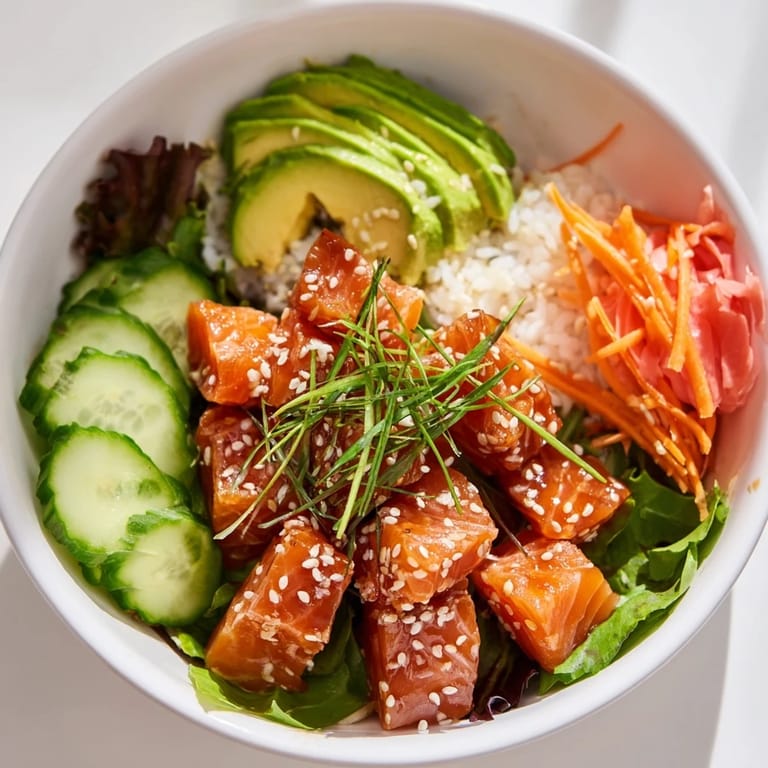
Save The first time I made this for myself after a long week, I sat at my kitchen counter and didn't think about work or anything else for fifteen minutes. That's when I understood why poke bowls have become such a thing—they're not just beautiful and nutritious, they're also quietly centering.
Why This Works as a Main Course
Poke bowls sit in this perfect middle space between salad and sushi, so they feel light enough for lunch but substantial enough for dinner. The rice, if you choose to use it, anchors everything and makes the meal more filling without weighing you down. Most importantly, the abundance of fresh vegetables and omega-3 rich fish means you finish eating feeling satisfied rather than uncomfortably full.
Building Your Own Variations
Once you've made this once, you'll notice it adapts to whatever's calling to you. I've made it with shrimp when salmon looked tired at the market, added edamame for extra crunch, and once threw in crispy chickpeas when someone needed a vegetarian version. The marinade is so forgiving that you can play with ratios—add more ginger if you want heat, less honey if you prefer sharper edges. What matters is that the soy, sesame, and ginger stay in the mix; everything else is just decoration.
Serving and Pairing Ideas
Serve this in wide, shallow bowls so all the colors show and everything stays separate until you get a forkful with every element. A crisp white wine like Sauvignon Blanc is the obvious choice, but I've also paired it with a cold sake or even just sparkling water with lemon. The best pairing, honestly, is good company and natural light, so time these for lunch on a day when you can actually sit down and enjoy what you've made.
- Chill your bowls in the fridge for five minutes before assembling if you want the salad to stay cool longer.
- Make the marinade ahead of time and store it in a mason jar in the fridge for up to three days.
- If you're feeding a crowd, set up a DIY station where people can customize their own bowls rather than making individual ones.
 Save
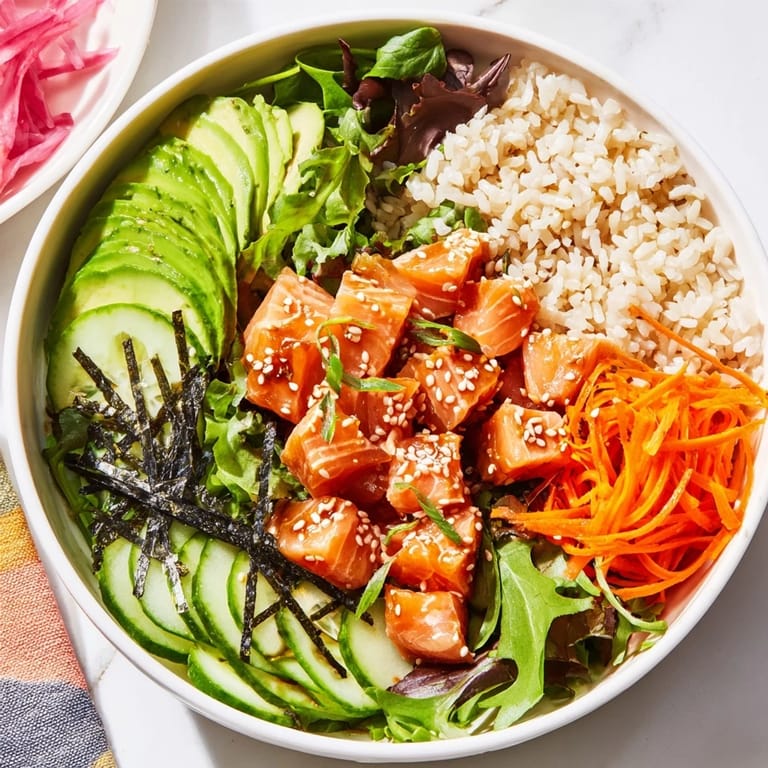
Save This bowl became a summer ritual for me, something I crave when the weather gets warm and I want to eat something that feels nourishing without any fuss. Once you master it, you'll find yourself making it again and again.
Recipe FAQs
- → What fish can I use for this poke bowl?
Sushi-grade salmon or tuna are ideal, cut into small cubes to absorb the marinade fully.
- → Can I make this dish gluten-free?
Yes, by using certified gluten-free soy sauce such as tamari, you can enjoy a gluten-free version.
- → What are good vegetarian alternatives for the fish?
Diced marinated tofu or tempeh work well as flavorful plant-based substitutes.
- → How long should the fish marinate?
Marinating for at least 10 minutes allows the flavors to develop without overwhelming the fresh fish texture.
- → What toppings enhance this bowl’s flavor?
Toasted sesame seeds, scallions, nori strips, pickled ginger, and sliced red chili add texture and layers of flavor.
- → Can I substitute white rice with something else?
Brown rice can be used as a wholesome alternative, or the dish can be enjoyed without rice for a lighter option.