 Save
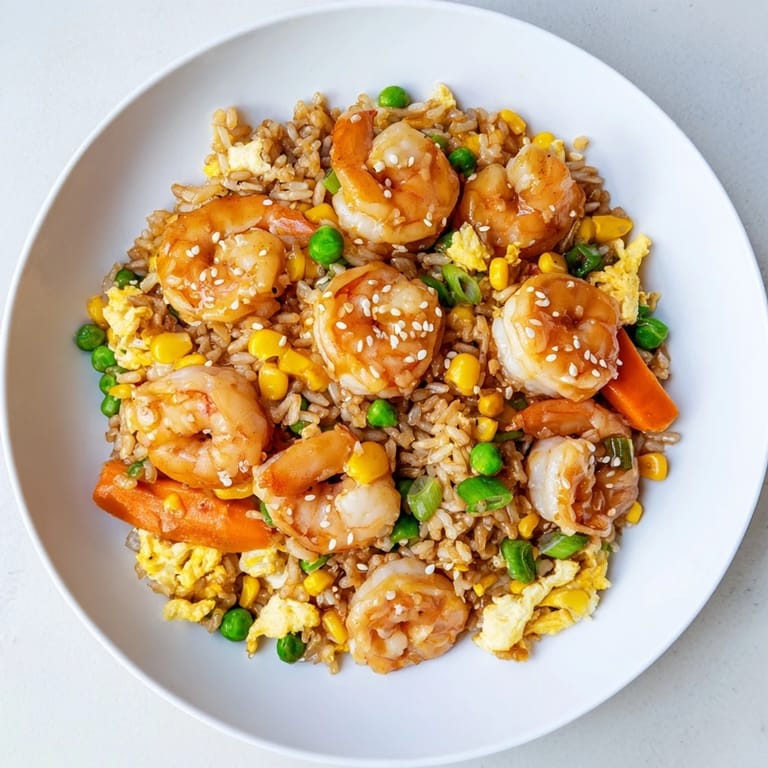
Save There's this moment when you're standing in front of your fridge at 6:45 PM, knowing someone's coming over in twenty minutes, and you spot a container of leftover rice staring back at you like it's begging for redemption. That's exactly when I discovered this shrimp fried rice hack—not in some fancy cooking class, but out of pure necessity and a determination to not order takeout for the hundredth time that month. The beauty of it hit me instantly: everything comes together so fast that you're actually eating dinner before you've finished convincing yourself you should have just ordered in. Now it's become my go-to move whenever I need to pull off something that tastes way more impressive than the effort it takes.
I made this for my neighbor last summer when she stopped by unexpectedly, complaining that every fried rice she'd attempted turned into a mushy, regrettable mess. Watching her face light up when she took that first bite—realizing it was crispy, savory, and absolutely nothing like her past disasters—made me realize this wasn't just a quick dinner hack, it was confidence in a bowl. She's made it seventeen times since then and texted me photos of each batch like they were her children.
Ingredients
- Medium shrimp, peeled and deveined (200 g): These cook in minutes and give you that satisfying protein hit; frozen works beautifully if you thaw them first, and honestly, they're often fresher than what's sitting in the case.
- Large eggs (2): They scramble into silky ribbons that coat every grain of rice, adding richness without any fuss.
- Frozen mixed vegetables (100 g): Peas, carrots, and corn are your time-savers here; they're already the perfect size and cook through in the residual heat.
- Scallions (2), sliced: These bring a sharp, fresh bite that cuts through the richness and keeps everything from feeling heavy.
- Cooked jasmine rice, chilled (300 g): Day-old rice is non-negotiable—warm rice turns into mush, but cold rice stays separate and gets gloriously toasted.
- Soy sauce (2 tbsp): This is your umami anchor; it's what makes people ask if you added something secret.
- Oyster sauce (1 tbsp, optional): A small drizzle adds depth and a subtle sweetness that ties everything together.
- Sesame oil (1 tsp): Just a teaspoon of this stuff transforms the entire dish from good to absolutely haunting in the best way.
- Ground white pepper (1/2 tsp): It gives you heat without the visual speckles, keeping your fried rice looking restaurant-clean.
- Vegetable oil (1 tbsp): High heat, neutral flavor, gets your pan hot enough to actually sear things instead of steam them.
Tired of Takeout? 🥡
Get 10 meals you can make faster than delivery arrives. Seriously.
One email. No spam. Unsubscribe anytime.
Instructions
- Get Your Pan Screaming Hot:
- Pour the vegetable oil into your skillet or wok and crank the heat to medium-high, letting it shimmer and move freely. You'll know it's ready when a grain of rice dropped in sizzles instantly—this is what separates fried rice from steamed rice.
- Sear Those Shrimp:
- Add the shrimp and let them sit undisturbed for about a minute so they actually make contact with the pan. After 2-3 minutes total, they'll turn pink and firm; the moment they do, pull them out and set them on a plate.
- Scramble the Eggs:
- Beat your eggs in a bowl first, then pour them into the still-hot pan and scramble them quickly until they're barely set with a little moisture still clinging to them. Push them to one side so you have space for what comes next.
- Add the Vegetables:
- Toss in your frozen vegetables and let them warm through for about a minute, stirring occasionally so they stay separate and don't clump together.
- Break Up and Toast the Rice:
- Add your cold rice and use your spatula to break apart any clumps, then stir constantly for about two minutes until everything gets coated in oil and starts to smell toasty. This is the moment the rice actually fries instead of just heats.
- Bring It All Together:
- Return the shrimp to the pan and pour in your soy sauce, oyster sauce, sesame oil, and white pepper, stirring everything until it's evenly coated and fragrant. The sauces will create a light glaze that makes every grain shine.
- Finish with Scallions:
- Toss in your sliced scallions and give everything one final minute together, letting the heat soften them just slightly while keeping their bite alive. Taste and adjust—sometimes you want more soy, sometimes more sesame.
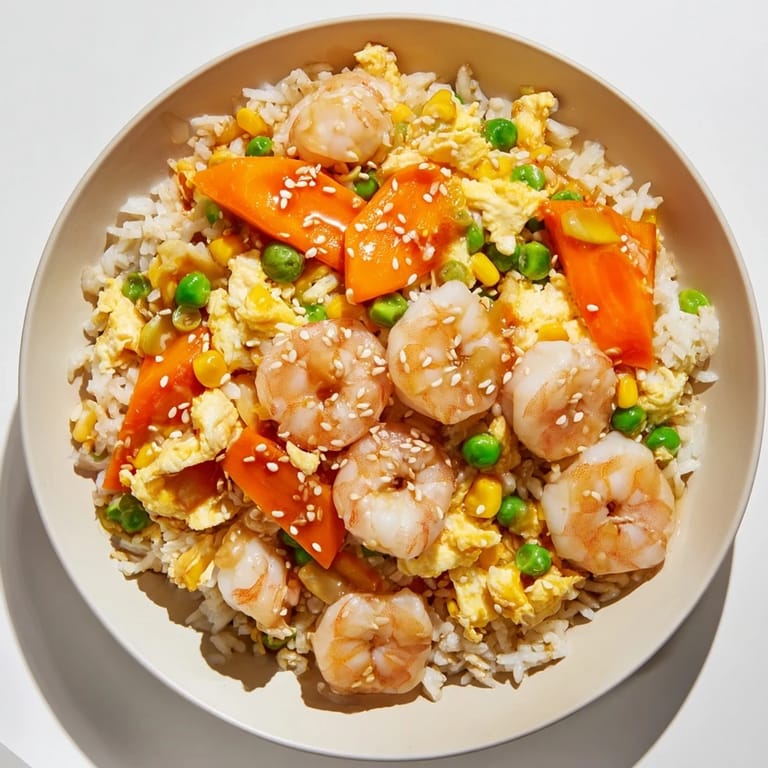 Save
Save There was this one Friday night when my teenage niece, who claims to hate seafood, actually asked for seconds of this fried rice and forgot to complain about the shrimp until she was halfway through her bowl. That's when I knew it wasn't just about speed or convenience anymore—it had become something I could actually be proud of.
The Rice Question
The single biggest difference between restaurant-quality fried rice and home kitchen mush comes down to one thing: your rice temperature. When you use warm rice, the starch granules are still soft and clinging to each other, which means your spatula just pushes them around in a sad, starchy clump. Cold rice, especially from yesterday, has firm grains that stay separate and actually have a chance to kiss the hot pan and develop that faint, nutty crust that makes everything taste better. I learned this the hard way after making fried rice fifteen times with warm rice, each batch more disappointing than the last, until a friend finally asked me if my rice was cold. It changed everything.
Building Layers of Flavor
This dish works so well because you're not just throwing everything into one pot and hoping; you're building the flavors in stages, and each stage matters. The shrimp gets a proper sear so it develops flavor, the eggs scramble until they're silky, the vegetables warm through gently, and the rice actually gets toasted. Then the sauces come in at the end, clinging to everything without burning away, and the sesame oil hits at the very last second so it stays bright and aromatic. It's the difference between eating something thrown together and eating something that was actually thought through.
Shortcuts That Actually Work
The whole appeal of this recipe is that you're not sacrificing quality for speed, but that doesn't mean you can't be smart about what you use. Frozen shrimp is genuinely excellent if you thaw it properly, and frozen vegetables are already prepped and perfectly portioned, which means you're not spending time chopping while your pan gets cold. Even frozen scallions work in a pinch, though fresh ones add a brightness that takes you an extra thirty seconds to get right. The beauty is that there's almost nothing in this recipe that actually requires fancy, expensive, or hard-to-find ingredients.
- Swap the shrimp for chicken breast cut thin, tofu if you're going vegetarian, or even skip the protein entirely and double the vegetables.
- If you don't have oyster sauce, the dish works without it; if you don't have sesame oil, don't skip it, but a tiny drizzle of soy sauce mixed with a bit of butter gets you close.
- Any rice works, but jasmine is worth seeking out because it stays separate better than longer-grain varieties.
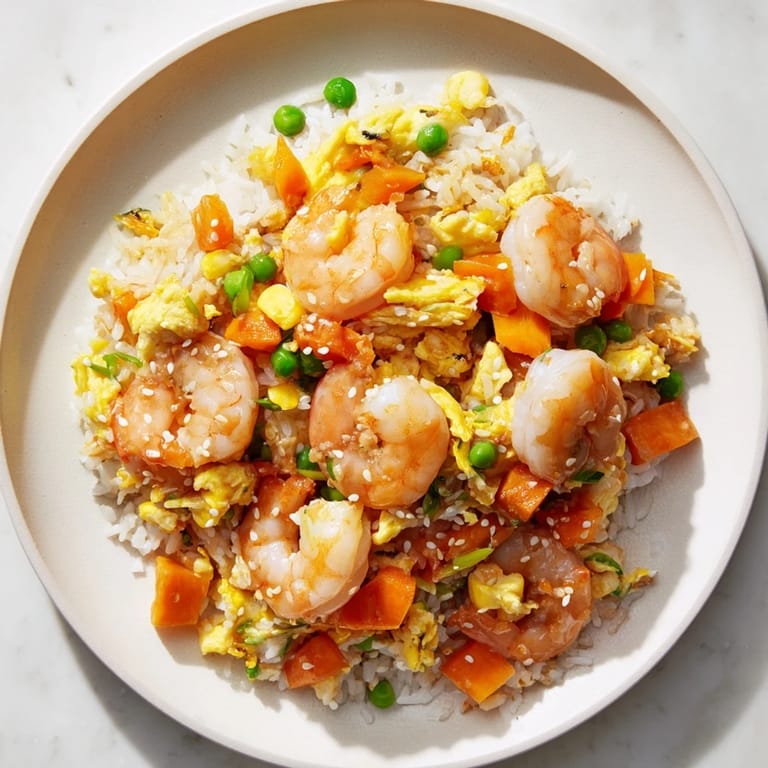 Save
Save This recipe has become my proof that you don't need hours or complicated techniques to feed yourself and the people you care about something genuinely delicious. It's how weeknight dinners should feel: fast, foolproof, and absolutely satisfying.
Recipe FAQs
- → What type of rice works best?
Day-old jasmine rice is ideal as it remains firm and prevents clumping during stir-frying.
- → Can I substitute shrimp with other proteins?
Yes, chicken or tofu are great alternatives to accommodate different dietary preferences.
- → How can I add a spicy touch?
Incorporate a dash of chili sauce or fresh chilies during cooking to introduce heat.
- → What is key to achieving the right texture?
Using cold rice and cooking over medium-high heat helps achieve separate grains and a pleasant bite.
- → Are there garnish options to enhance flavor?
Extra sliced scallions and toasted sesame seeds add freshness and a nutty crunch to finish the dish.