 Save
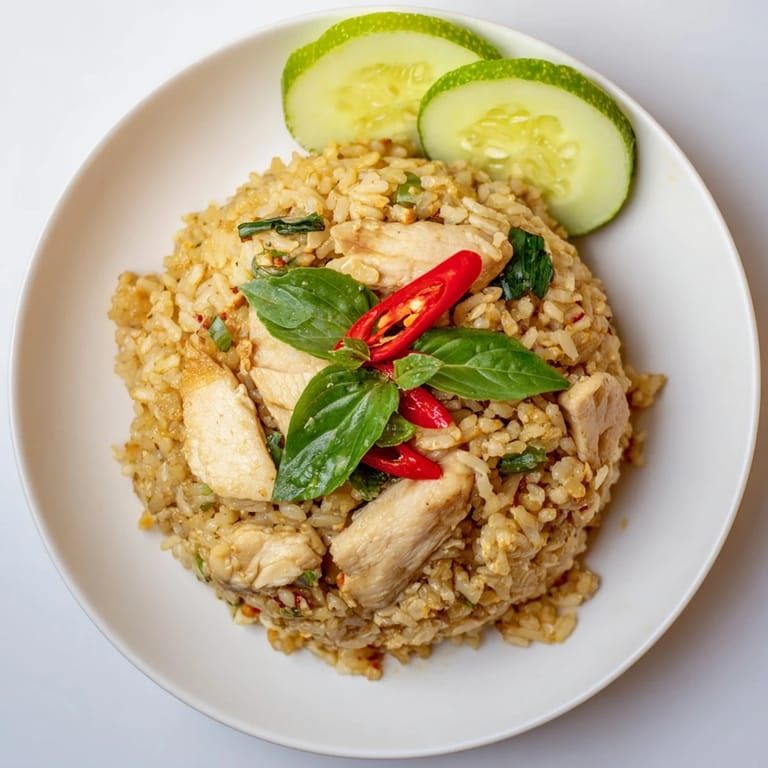
Save My tiny apartment kitchen filled with the most incredible aroma when I finally attempted to recreate that fried rice from the street vendor in Bangkok. The holy basil hit the hot wok and suddenly I was transported back to those humid evenings, watching the cook's lightning-fast movements with absolute fascination. I've made this dish countless times since, tweaking and adjusting until it felt right in my own hands. There's something magical about how quickly it comes together.
Last Tuesday, my roommate walked in just as I was tossing in the basil leaves, and she literally stopped in her tracks. We ended up eating standing up at the counter, too hungry to bother with plates, both of us slightly burning our tongues because we couldn't wait for it to cool down. That's the kind of meal this is.
Ingredients
- Chicken: Thighs stay juicier than breasts during high heat cooking, but either works beautifully
- Day-old jasmine rice: Fresh rice turns to mush, while refrigerated rice gets that perfect separated texture
- Holy basil: This is non-negotiable for authentic flavor, though Thai basil works in a pinch
- Thai chilies: Leave them whole if you want milder heat, slice them thin for fire
- Fish sauce: Don't be scared off by the smell, it transforms into pure umami when cooked
- Soy sauce: Use regular, not low sodium, you need that salt punch
- Oyster sauce: Adds a subtle sweetness and depth that soy alone can't provide
- White pepper: Ground white pepper blends seamlessly into the rice without visible specks
Tired of Takeout? 🥡
Get 10 meals you can make faster than delivery arrives. Seriously.
One email. No spam. Unsubscribe anytime.
Instructions
- Get everything ready before you start:
- Mise en place isn't fancy restaurant talk, it's essential for stir-fry success because everything moves fast once heat is involved
- Heat your wok until smoking:
- A properly hot wok creates that coveted smoky flavor and prevents sticking
- Wake up the aromatics:
- Garlic and chilies hit hot oil for just 30 seconds, releasing their oils without burning
- Cook the chicken properly:
- Let it develop some color in stages, don't keep moving it around constantly
- Add the vegetables:
- Onions and peppers need just enough time to soften but still maintain crunch
- Introduce the rice:
- Break up clumps with your hands before adding, then use a tossing motion to distribute evenly
- Season everything at once:
- Pour sauces around the edges of the wok where they're hottest, letting them caramelize slightly before tossing
- The basil finale:
- Add holy basil off the heat, stirring just until wilted to preserve its bright green color and fresh flavor
 Save
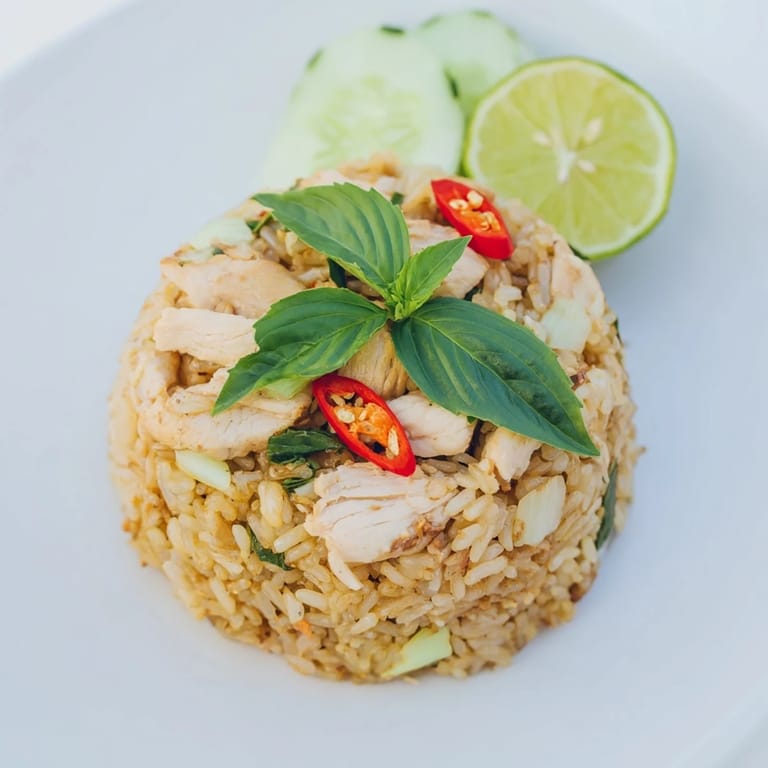
Save This recipe became my go-to comfort food during graduate school when time and money were both tight. Something about the rhythm of stir-frying, the sizzle, the intensity, made me feel capable and grounded.
Getting the Rice Right
Cook your rice the day before and spread it on a baking sheet to cool completely before refrigerating. This extra step prevents clumping and ensures each grain maintains its individual character. I learned this the hard way after three failed attempts with freshly cooked rice that turned into fried porridge.
Heat Management Secrets
Professional wok cooks have the advantage of serious BTUs, but home cooks can compensate by preheating pans longer than seems reasonable. If you're using a non-stick wok, you can work at slightly lower heat, but carbon steel or cast iron needs to be properly hot before any ingredients hit the surface.
Building Your Flavor
The sauce ratio I've landed on after years of tweaking hits that perfect balance, but taste preferences vary. Some nights I want more funk, others more sweetness or heat. Keep the basic ratios in mind but trust your palate.
- Start with less fish sauce and add more if needed
- A pinch of sugar can rescue a dish that's too salty
- Always taste before serving, adjusting with lime juice at the end
 Save
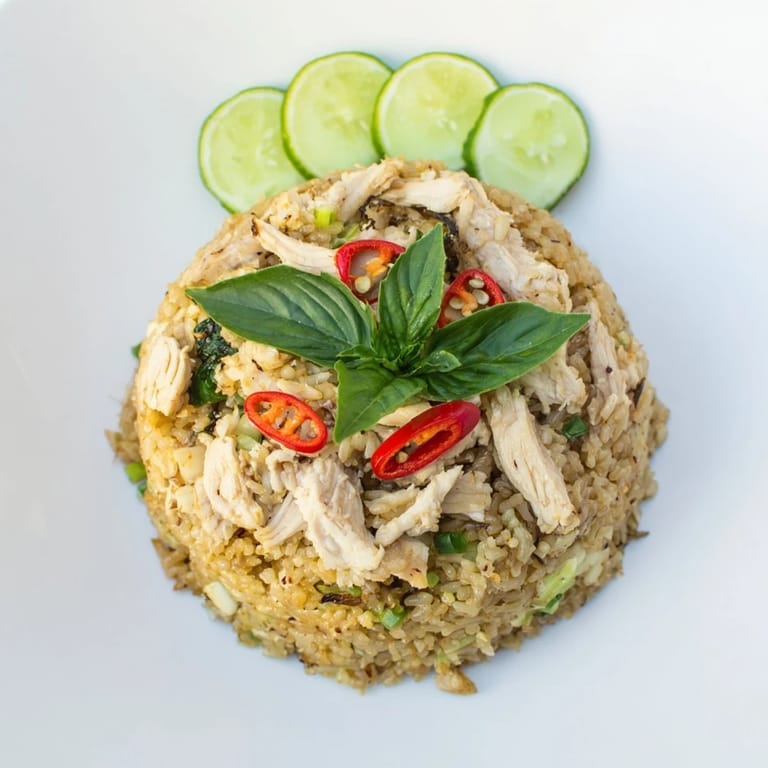
Save Squeeze that lime wedge over your steaming bowl, take that first spicy, fragrant bite, and remember why homemade will always beat takeout.
Recipe FAQs
- → Why use day-old rice for fried rice?
Day-old rice has dried out slightly, which prevents it from becoming mushy during stir-frying. The grains separate easily and absorb sauces better while maintaining a fluffy texture.
- → Can I substitute holy basil with regular basil?
While regular basil works, holy basil (also known as Thai basil) has a distinct peppery, anise-like flavor that's essential to this dish's authentic taste. Thai basil from Asian markets is the best alternative.
- → How spicy is this dish?
With 2-3 Thai chilies, this dish has medium heat. Adjust the spice level by reducing chilies for milder flavor or adding more for extra kick. You can also include the seeds for additional heat.
- → What protein alternatives work well?
Shrimp, pork, tofu, or beef all substitute beautifully for chicken. Adjust cooking times accordingly—shrimp cooks faster, while beef may need slightly longer to become tender.
- → Can I make this dish gluten-free?
Use tamari instead of soy sauce and ensure your oyster sauce is gluten-free. The rest of the ingredients are naturally gluten-free, making this an easy dish to adapt.